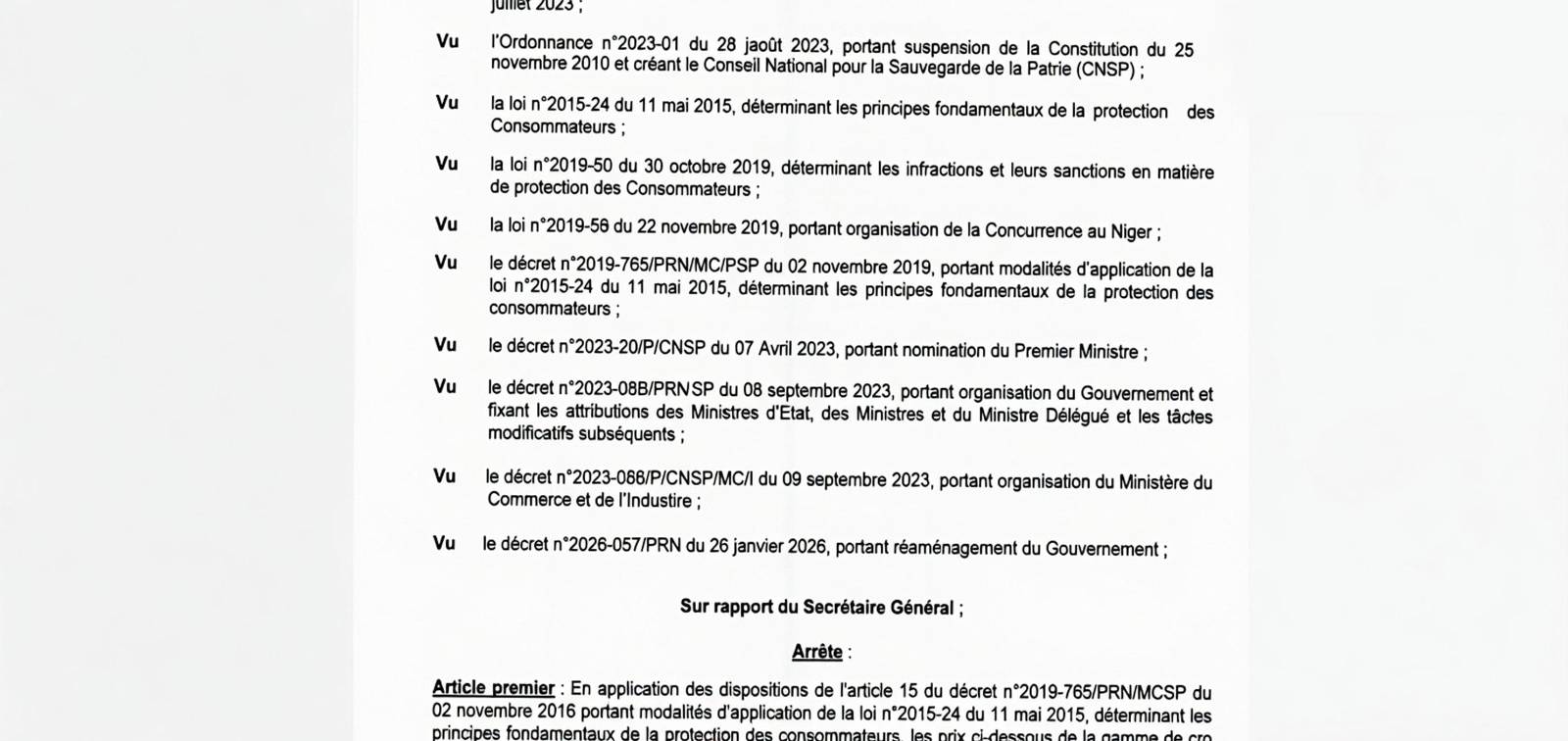
The Government of Niger has taken decisive action to address the escalating cement prices and reported shortages across multiple regions. On July 13, 2026, the Ministry of Commerce and Industry issued two decrees imposing a price ceiling on 42.5 N cement and introducing strict penalties for non-compliant operators, including the seizure of illegally hoarded stockpiles.
Officials cite the urgent need to curb speculative practices by some traders, who have allegedly exploited high demand to inflate prices or artificially restrict supply. The stated goal is to protect consumers and safeguard household purchasing power from excessive commercial practices.
Limited impact of administrative measures
While the intentions behind this intervention are understandable, the price cap may prove to be more of a short-term fix than a sustainable solution. International precedents show that price controls, when not paired with supply-side policies, often lead to unintended consequences. Without addressing the root causes of price inflation—such as production costs, transportation expenses, or import barriers—the measure risks exacerbating market distortions.
Industry stakeholders warn that enforcing a maximum price without ensuring sufficient supply could discourage legitimate sales, reduce procurement volumes, or push transactions into an unregulated parallel market where prices remain unchecked.
Concerns over enforcement mechanisms
The decision to confiscate non-compliant stocks introduces another layer of complexity. While it may deter fraudulent behavior, the lack of transparent oversight mechanisms raises concerns about potential abuse. Without clear legal safeguards, such measures could lead to arbitrary interpretations, administrative disputes, or reputational harm to otherwise law-abiding businesses.
Structural vulnerabilities in the cement sector
Beyond addressing isolated cases of misconduct, the current crisis underscores deeper weaknesses within Niger’s cement market. Chronic supply shortages, high logistics costs, import constraints, and insufficient local production capacity cannot be resolved through administrative orders alone. Economic actors emphasize that sustainable price stability depends on a well-functioning, adequately supplied market.
Without investments in production infrastructure, streamlined import processes, and improved distribution networks, shortages are likely to persist despite regulatory enforcement. The government’s decision reflects an immediate response to mounting public dissatisfaction, yet it risks treating symptoms rather than addressing the underlying ailments of the sector.
A call for comprehensive reforms
The long-term solution lies in restoring trust between authorities, manufacturers, distributors, and consumers. A holistic strategy must focus on eliminating speculation and ensuring consistent supply, rather than relying solely on punitive measures. While price controls may offer temporary relief, they are unlikely to resolve the structural imbalances that continue to undermine market stability.
Without such reforms, the short-term benefits of the price cap could quickly fade, leaving Nigerien households once again vulnerable to renewed disruptions and inflated costs.