
Why this diplomatic mission matters
When a new Prime Minister assumes office, his inaugural foreign visits often set the tone for his government’s priorities. Sébastien Lecornu’s first international trip—stopping first in Doha, then heading to Rabat—sends a clear message about France’s diplomatic focus.
Both Qatar and Morocco are key allies, but their strategic importance differs: Qatar in the Gulf, Morocco in North Africa. While the visits follow diplomatic protocol, they carry far greater political weight.
In Doha, the focus was on paying respects following the passing of Qatar’s former Emir, Sheikh Hamad bin Khalifa Al Thani. In Rabat, the aim was to solidify a growing partnership between France and Morocco, particularly after France’s landmark 2024 stance on Western Sahara, which recognized Morocco’s autonomy plan as the sole basis for resolving the conflict—a move that strained relations with Algeria.
A diplomatic courtesy with deeper implications
The stop in Doha was brief yet symbolically significant. Accompanied by Jean-Yves Le Drian, former Foreign Minister and a seasoned Gulf diplomacy expert, Lecornu underscored France’s commitment to continuity in its regional engagement.
The late Emir, who ruled from 1995 to 2013, was praised for modernizing Qatar and maintaining an active foreign policy. Beyond the tribute, France’s visit reinforced the strength of a long-standing relationship built on shared economic interests—over 6,000 French expatriates reside in Qatar, and defense and aviation contracts have deepened ties over the years.
In a volatile Gulf region, maintaining strong channels with Qatar is crucial for France. For Doha, Paris remains a reliable partner, offering political backing on regional issues.
Morocco: turning diplomatic warmth into action
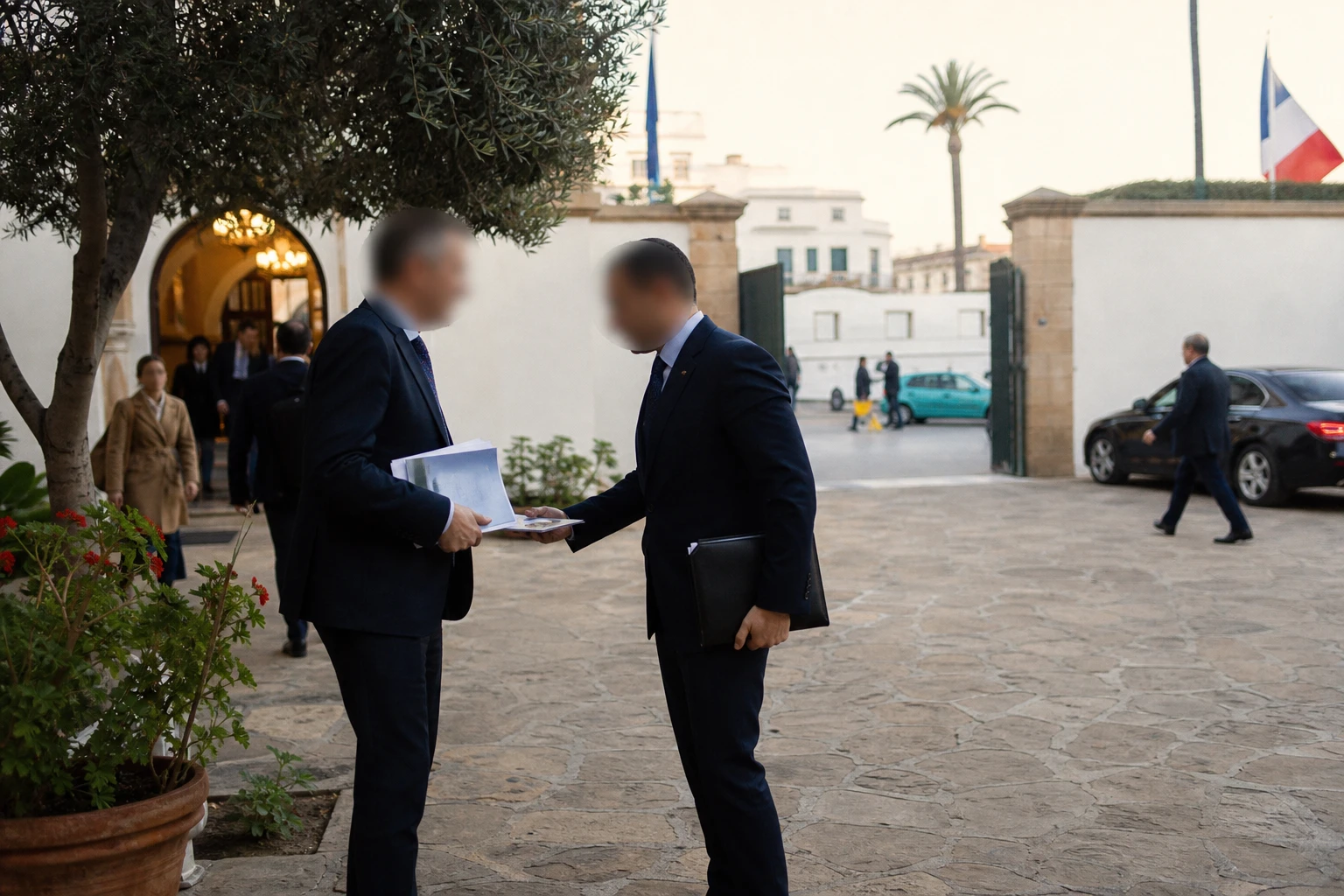
The real test came in Rabat, where Lecornu engaged in high-level talks with Moroccan officials—the first such meeting since 2019. A dozen French ministers, including Jean-Noël Barrot and Laurent Nuñez, joined the delegation, signaling Paris’s intent to move beyond symbolic gestures and lock in a stronger bilateral relationship.
The shift in Franco-Moroccan relations began in mid-2024, when France officially recognized Morocco’s sovereignty over Western Sahara by endorsing Rabat’s autonomy plan. This was followed by a state visit from President Macron in October 2024, where both nations signed a declaration on an “enhanced exceptional partnership” and unveiled over €10 billion in agreements and investments.
For Morocco, the alliance with France strengthens its diplomatic hand in Western Sahara, a cornerstone of its foreign policy. For France, the benefits are twofold: securing a strategic economic foothold and reclaiming influence in a country where it has historically held significant sway.
The diplomatic fallout with Algeria
However, France’s stance on Western Sahara has deepened tensions with Algeria. In response to France’s 2024 decision, Algiers recalled its ambassador from Paris, marking a sharp deterioration in relations. Since then, France has walked a tightrope—strengthening ties with Morocco while leaving room for dialogue with Algiers.
Lecornu’s visit to Rabat underscores this balancing act. It signals France’s strategic realignment in the Maghreb, favoring Morocco while not entirely closing the door to Algeria. The immediate beneficiary is Morocco, whose position is reinforced. The most evident loser is Algeria, which views this as a clear French alignment with Rabat.
Criticism has also emerged from pro-independence Western Sahara groups, including the Polisario Front, which argues that France’s support for Morocco’s autonomy plan legitimizes an occupation. Paris, however, frames its position as a basis for negotiation rather than a final resolution.
What’s next for France’s Maghreb strategy?
The future of this diplomatic pivot hinges on two key developments. First, the concrete outcomes of the agreements discussed in Rabat—ranging from economic cooperation to security, migration, and mobility initiatives. Second, the potential visit of Morocco’s King Mohammed VI to France, which could formalize a new Franco-Moroccan partnership treaty.
At the heart of this strategy lies a critical question: How far can France deepen its ties with Morocco without permanently damaging relations with Algeria? Lecornu’s visit doesn’t resolve this tension, but it clearly defines the path Paris has chosen to follow.