DR Congo at un demands fair global mining governance and targets Rwanda
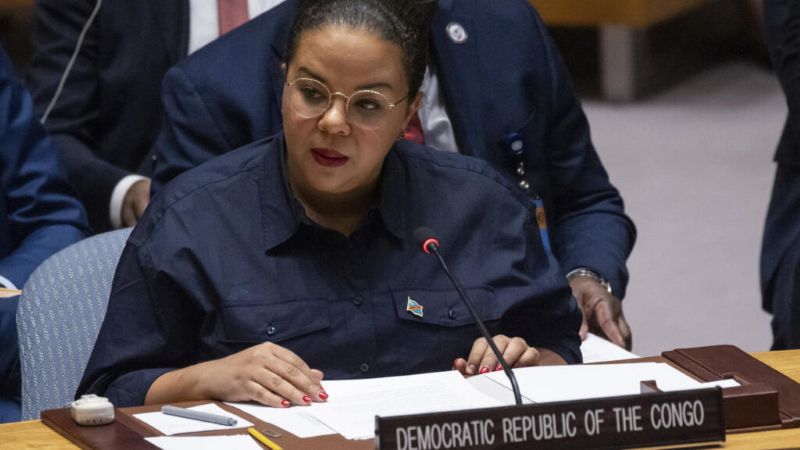
« Natural wealth only becomes a blessing when it strengthens a nation’s sovereignty instead of fueling its instability.» This principle guided the Democratic Republic of the Congo’s bold diplomatic stance at the United Nations this week. On Tuesday, July 15, 2026, Kinshasa did not merely defend its economic interests—it delivered a sharp political indictment of a global system it deems rigged against countries rich in critical minerals.
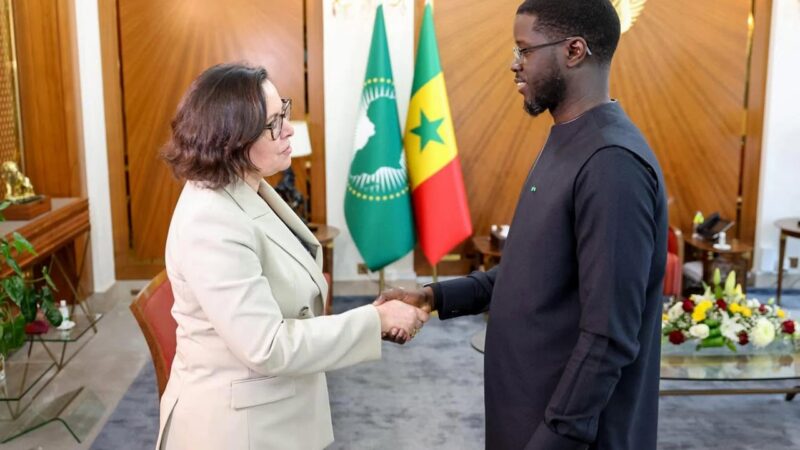
Speaking at the UN High-Level Meeting on Critical Minerals for the Energy Transition, Foreign Minister Thérèse Kayikwamba Wagner outlined a vision to transform the DRC from a mere raw material exporter into a central hub for processing, innovation, and industrial value creation in the global energy transition. Her message was clear: the era of exporting wealth must end.
From supplier to industrial powerhouse
In a speech blending diplomacy with geopolitical urgency, the Congolese foreign minister challenged the international community to rethink how the world sources the minerals powering electric vehicles, digital technologies, and renewable energy. She argued that true « energy justice » cannot exist as long as producer nations continue to export unprocessed ores while the added value flows to consumer countries.
« The question is no longer just where these minerals come from, but where the value they generate actually resides,» she declared. « The DRC demands a seat at the table—not as a supplier, but as an equal partner in the transformation of our resources.»
Kayikwamba emphasized the need for massive investments in infrastructure, energy access, research, and technology transfer. She also stressed the modernization of artisanal mining—long a backbone of Congo’s cobalt and copper sectors—to ensure it operates within legal and sustainable frameworks. Her goal: to position the DRC as Africa’s leading industrial center for processing critical minerals.
Connecting minerals, security, and regional stability
The minister did not limit her critique to economic inequality. She directly linked the governance of critical minerals to peace and security, particularly in eastern DRC. Citing findings from UN expert reports, she highlighted the case of Rubaya—a mining site supplying nearly 15% of global tantalum demand. According to the experts, over 1,400 tons of coltan were illegally smuggled into Rwanda after the M23 rebel group, with alleged Rwandan support, seized control of the area. This illicit trade has reportedly generated approximately $800,000 monthly for the armed movement.
Despite these documented flows, Rwanda has yet to face UN sanctions, sparking deep frustration in Kinshasa. « The international system’s failure to act reveals a dangerous gap in global governance,» she stated. « We cannot allow the funding of conflict to persist under the guise of unchecked mineral trade.»
A call for systemic reform
During the DRC’s presidency of the UN Security Council, Kayikwamba announced that Kinshasa is pushing for a new international framework linking natural resource governance to conflict prevention, peacebuilding, and sustainable development. She urged all stakeholders—producers, traders, refiners, financial institutions, and consumer nations—to take responsibility for ensuring mineral traceability. The goal: to dismantle smuggling networks, cut off funding to armed groups, and protect legitimate artisanal miners from indiscriminate penalties.
The foreign minister framed the DRC’s intervention as part of a broader effort to reposition the debate on critical minerals. No longer content with defending its resources, the country is now demanding a fundamental reform of global energy transition governance—one that guarantees producer nations a fair share of the economic benefits derived from their natural wealth.
By taking this stand at the United Nations, the Congolese government seeks not only to increase pressure on Rwanda over illicit mineral exploitation in eastern DRC, but also to place the issue of critical minerals at the heart of international discussions on peace, security, and sustainable development—proving that the country’s mineral wealth can be a force for stability, not conflict.