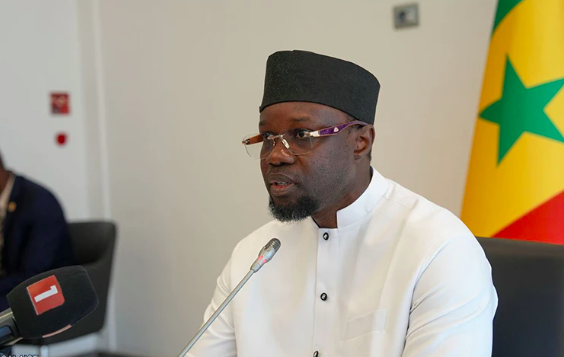
The Prime Minister of Senegal, Ousmane Sonko, has revealed shocking figures about the country’s economic challenges. Speaking in Dakar, he disclosed that 245 stalled infrastructure projects, with a combined public investment of 279 billion West African CFA francs, have been identified across the nation.
This revelation came during a high-level interministerial meeting focused on infrastructure development and completion. The projects span various sectors, including transport, energy, and public utilities, and have been either abandoned mid-construction or completed but left unused due to multiple obstacles.
Financial constraints emerge as the primary barrier, according to Ousmane Sonko. Many of these projects were halted due to insufficient funding, while others faced technical challenges, administrative delays, or operational oversights. The Prime Minister emphasized that the lack of foresight in planning has led to these ‘dormant assets,’ representing significant economic losses for the country.
Sonko highlighted that some infrastructures were built without considering their operational viability, a critical oversight that contributed to their current state. ‘It is unacceptable to construct facilities without ensuring their functionality,’ he stated. ‘This negligence has resulted in substantial financial losses that we can no longer afford.’
The Prime Minister announced decisive measures to address the situation. He ordered the creation of a dedicated committee at the Prime Minister’s office to oversee and finalize the inventory of these projects. Additionally, he instructed relevant authorities to expand the scope of the assessment, as he believes the current list is far from comprehensive.
Ousmane Sonko also called for proactive planning to prevent future technical issues, particularly concerning the connection of hydraulic and electrical networks to these infrastructures. He stressed the need for zero tolerance toward negligence, laxity, and unethical practices that have contributed to the delays and failures in project delivery.
‘The consequences of these poor practices are dire,’ he warned. ‘We must adopt a strict approach to ensure timely delivery and prevent further economic wastage.’