West Africa’s democracy dilemma: when term limits clash in the ECOWAS bloc
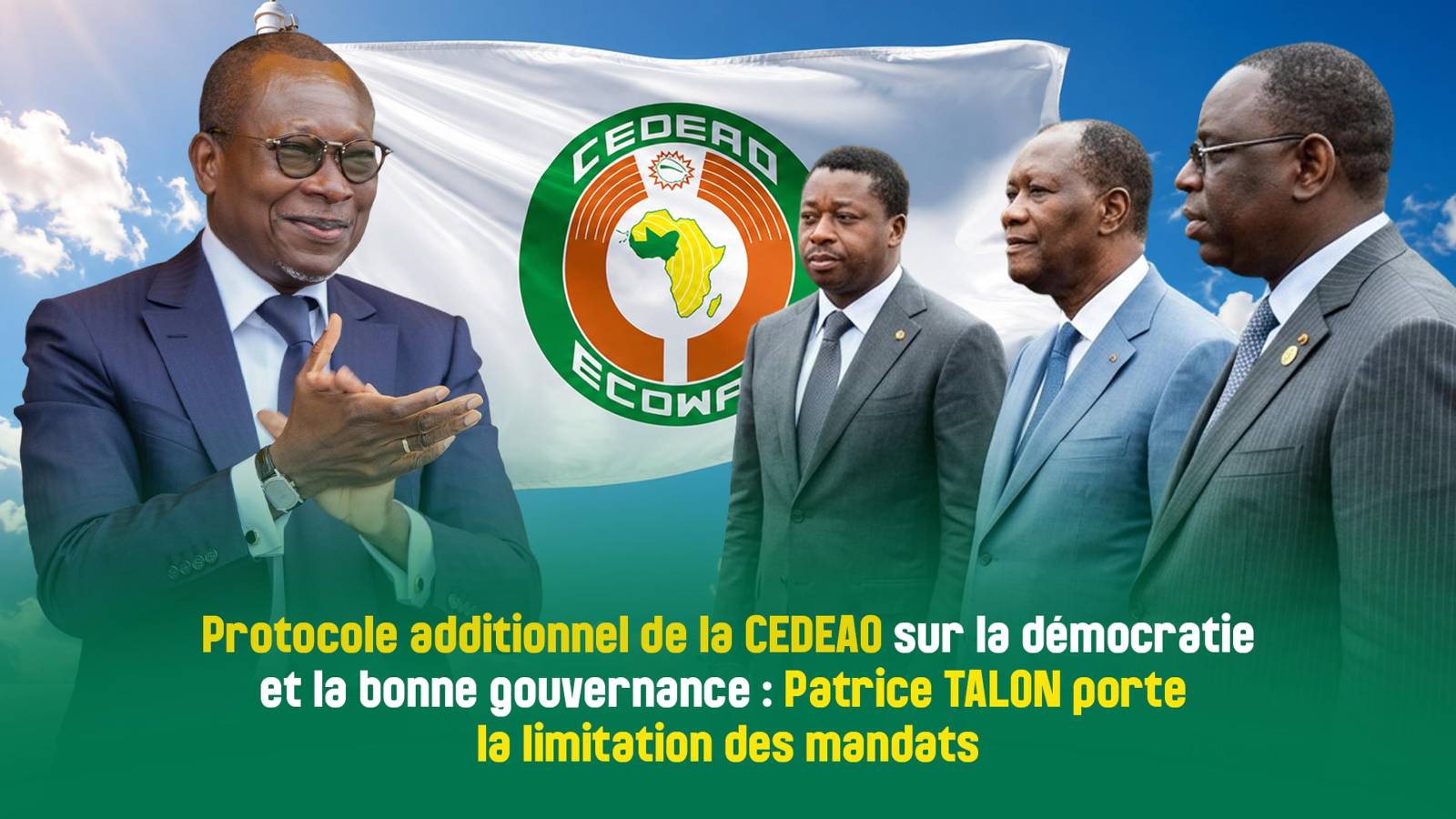
The Economic Community of West African States (ECOWAS) is grappling with a deep ideological divide as its member states confront recurring democratic crises. At the center of the standoff is a foundational principle: the strict limitation of presidential terms. While President Patrice Talon of Bénin has emerged as a leading advocate for mandatory term limits, he faces staunch opposition from a powerful faction of long-standing leaders, including Faure Gnassingbé of Togo, Alassane Ouattara of Côte d’Ivoire, and the former president of Sénégal, Macky Sall. This clash of visions is redefining Bénin’s regional influence and forcing a reckoning over what democracy truly means in West Africa.
The Bénin push for constitutional reform
Patrice Talon, since taking office in 2016, has made the enforcement of presidential term limits a cornerstone of his foreign policy. For the government in Cotonou, the persistent instability across the ECOWAS region—evidenced by coups in Mali, Burkina Faso, and Niger—stems directly from leaders clinging to power beyond constitutional limits. In response, Bénin has championed a radical proposal: a blanket prohibition on more than two presidential terms in all member states, with no exceptions allowed, even through constitutional amendments.
For Talon, this is not just a policy—it’s a moral imperative. He argues that without such a rule, ECOWAS risks becoming a hollow institution, undermined by leaders who rewrite laws to stay in power, thereby fueling the very instability the bloc claims to combat. His goal is clear: to restore credibility to ECOWAS by ensuring that democratic norms are not just suggested, but strictly enforced.
A united front against change
Yet the call for reform has met a wall of resistance. In Lomé, Faure Gnassingbé has framed the proposal as a violation of national sovereignty, especially after Togo transitioned to a parliamentary system that extends executive longevity without violating term limits. Meanwhile, in Abidjan, Alassane Ouattara has defended the idea that term limits should remain a domestic issue—despite his own controversial third term in 2020, which he still holds. Over in Dakar, the stance under Macky Sall was equally unyielding: the Sénégal government rejected any supranational authority over constitutional matters, even as the country navigated its own political tensions on the issue before the 2024 transition. For these leaders, ECOWAS’s priorities should be security and economic integration—not policing presidential mandates.
Diplomacy by absence: the cost of principle
The impasse has led to a striking consequence: Bénin’s growing absence from key ECOWAS summits. Patrice Talon has made no secret of his disapproval, skipping multiple high-profile meetings in protest. While some observers view this as isolation, Cotonou defends it as a principled stand. The message is unmistakable: Bénin refuses to endorse an organization that applies different standards—condemning military coups while tolerating constitutional manipulations by civilian leaders. For Talon, consistency is non-negotiable. A regional bloc cannot claim to uphold democracy when its own members bend the rules to retain power.
The reformer’s lonely stand
Despite the resistance from regional heavyweights, Patrice Talon’s position is gaining traction among civil society groups across West Africa. His commitment to stepping down in 2026—after serving two terms—has positioned him as one of the few leaders who prioritizes institutional strength over personal ambition. In a region where term extensions and third-term bids have triggered instability, Bénin’s adherence to a strict two-term rule stands out as a rare example of democratic integrity.
For Talon, the stakes are existential. He believes that without a binding, universal rule on term limits, ECOWAS will remain a club of leaders disconnected from the aspirations of a youthful population hungry for real change. His gamble is that history will vindicate his stance—that true stability can only be built on rules that apply equally to all, without loopholes or legal gymnastics.
ECOWAS at a crossroads
The debate over term limits is more than a legal dispute; it reflects a West Africa at a pivotal moment. By defying allies like Ouattara and Gnassingbé, Patrice Talon has chosen to prioritize democratic ethics over diplomatic niceties. While the opposition may have won a technical battle, Bénin’s model of strict alternation remains, for many, the last line of defense against regional instability. The question now is whether principle will eventually prevail over the preservation of power—or if the bloc will continue to fracture under the weight of conflicting visions.