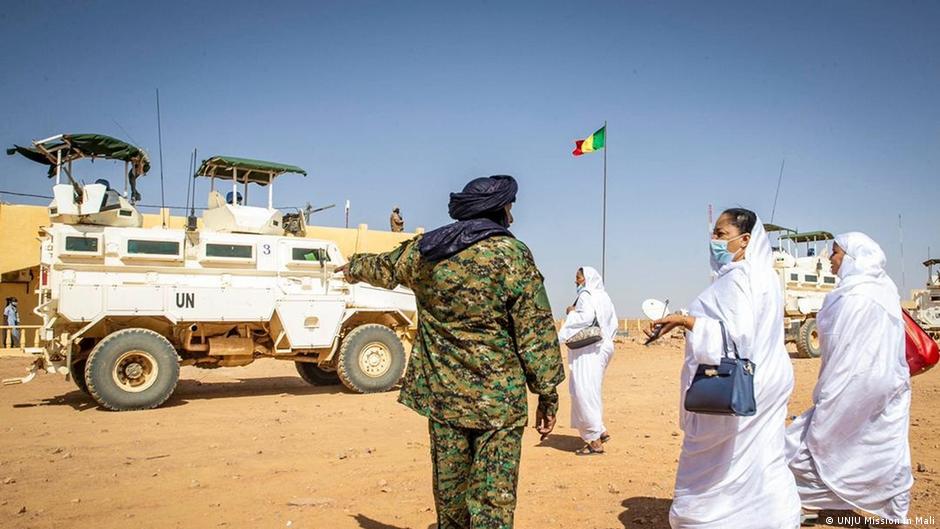
The unfolding situation in Mali continues to be a source of deep concern as the nation increasingly succumbs to instability, marked by persistent attacks from various armed groups. The critical questions remain: How can this deadlock be broken, and how can the delicate fabric of intercommunal coexistence, severely strained by years of crisis, be safeguarded?
For years, Mali has been engulfed in a profound security and political maelstrom.
The nation’s security landscape remains volatile, plagued by relentless assaults from jihadist and separatist armed factions. A particularly brazen incident on April 25th saw the capital, Bamako, targeted, claiming the life of Defense Minister Sadio Camara, among others.
Concurrently, a deep political crisis persists, characterized by the suspension of political party operations and the military’s firm grip on power, a dominance established following the coups of 2020 and 2021.
A significant development occurred in November 2023 when the Malian Armed Forces (FAMA), bolstered by Russian paramilitaries from the Wagner group, successfully reclaimed Kidal. This strategic city had been under the sway of rebel groups since 2012. This aggressive reassertion of control effectively signaled the collapse of the 2015 Algiers Accord, an agreement forged between the Malian government and northern separatists, aimed at fostering reconciliation.
The formal abandonment of the Algiers Accord became official on January 25, 2024, when the Malian government declared its “immediate termination.” With the peace framework dismantled, open warfare reignited. A mere two years later, on April 25, 2026, separatist forces from the Front de libération de l’Azawad (FLA) and the Groupe de soutien à l’islam et aux musulmans (JNIM) orchestrated a coordinated series of assaults across multiple urban centers, including Bamako, swiftly re-establishing their presence in Kidal.
For deeper insights into these unfolding events, we turn to expert analysis from Étienne Fakaba Sissoko of the CFR, Gillles Yabi of WATHI and the respected sociologist Mohamed Abdellahi Elkhalil.