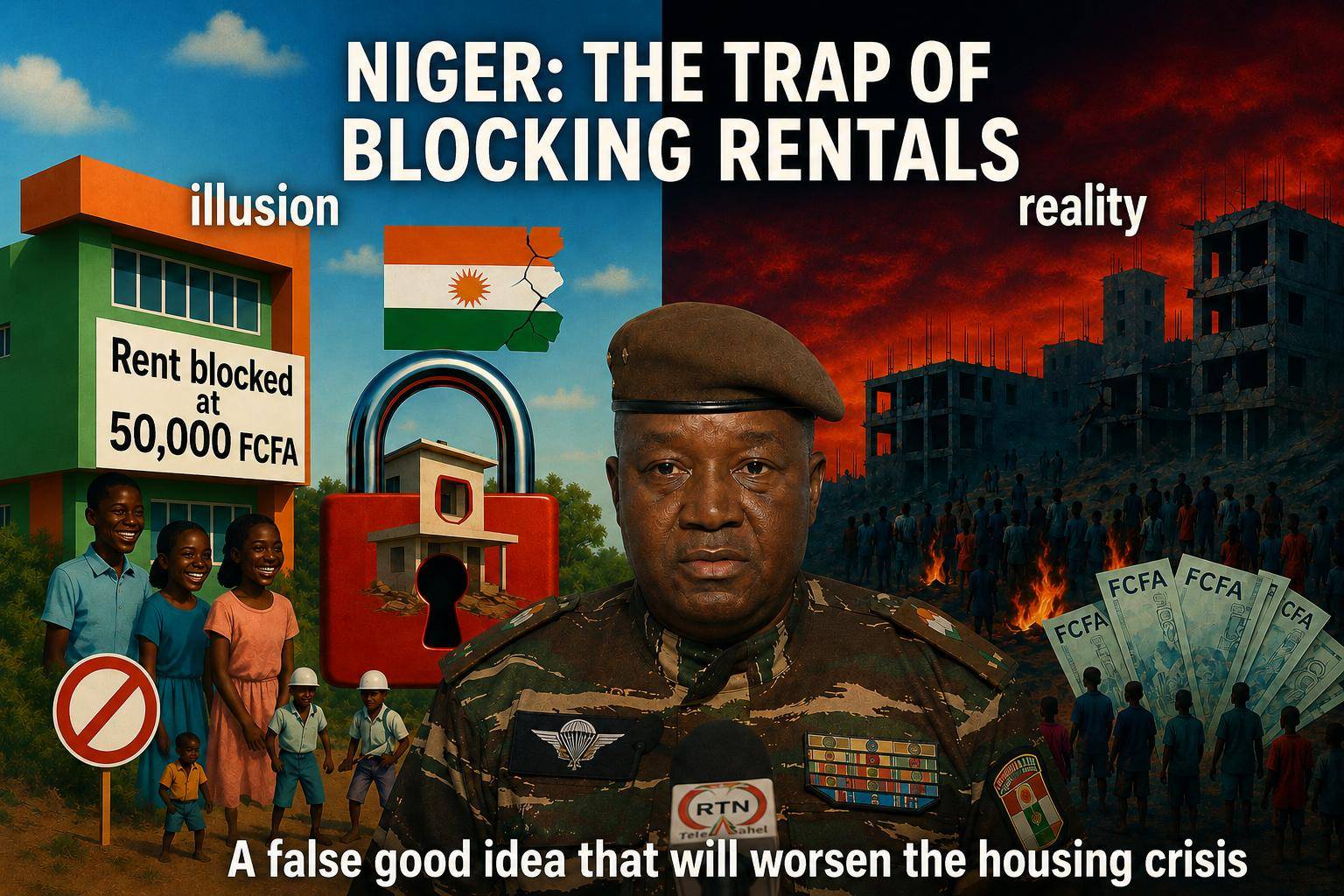
The Nigerien transitional administration has recently enacted a decree establishing rental price ceilings between 15,000 and 80,000 West African CFA francs in Niamey. While the policy aims to alleviate pressure on low-income households, economic experts warn it may inadvertently trigger a severe housing shortage by discouraging residential development.
Economic principles versus political expediency
Government officials justified the intervention as a means to curb excessive rental increases and combat real estate speculation. However, economic history demonstrates that price controls imposed through administrative measures rarely achieve their intended objectives. The decree, though popular among urban residents, may ultimately undermine the very housing accessibility it seeks to improve.
Mechanisms through which price controls backfire
Investment deterrence
The financial viability of construction projects depends on achievable returns. By capping potential rental income at levels that may not cover development costs, the decree removes the primary incentive for investors and property developers to initiate new projects. The predictable consequence will be a sharp reduction in housing supply.
Deferred maintenance and property degradation
Property owners facing reduced revenue streams will rationally prioritize cost-cutting measures. Essential maintenance—roof repairs, plumbing upgrades, and structural upkeep—will likely suffer first. Over time, the city’s existing housing stock will deteriorate, further reducing available livable space.
Emergence of informal rental markets
When legally sanctioned pricing fails to align with actual market conditions, alternative payment structures emerge. Prospective tenants may find themselves compelled to offer additional payments—commonly referred to as “under-the-table” fees—to secure accommodation. This not only undermines the policy’s fairness but also entrenches corruption within the housing sector.
Government capacity and broader economic impact
The decree’s success would require the state to spearhead a massive public housing initiative to offset the private sector’s withdrawal. However, Niger’s strained fiscal situation—compounded by political instability and reduced international assistance—makes such an undertaking implausible. The policy also risks eroding investor confidence in the banking sector, as diminished real estate activity would translate to fewer construction loans and reduced economic activity across related industries.
A counterproductive short-term solution
Ultimately, this decree represents a politically motivated measure designed to garner urban support during a transitional period. Yet, by disrupting market mechanisms that naturally balance supply and demand, the government risks converting a cost-of-living crisis into an acute housing shortage. For Niamey’s residents, securing adequate shelter may soon become an even more daunting challenge than it already is.