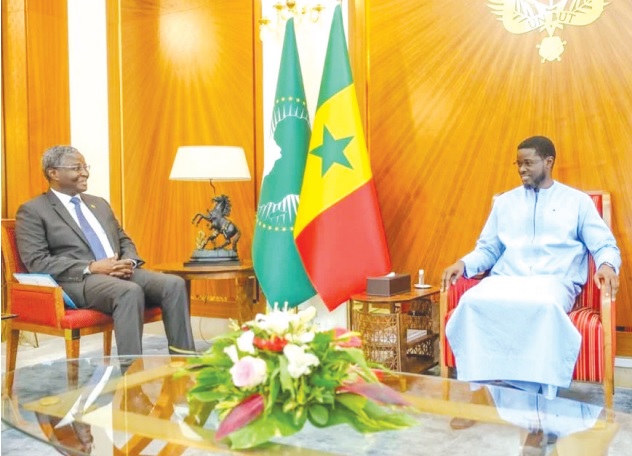
Dakar hosted the political phase of the 11th annual review of UEMOA community reforms yesterday, following a one-day postponement. The event brought together key figures including Abdoulaye Diop, President of the UEMOA Commission, to assess Senegal’s progress on structural adjustments demanded by the regional bloc.
The review, conducted after a technical assessment in November 2025, revealed a provisional implementation rate of 76.45% across 145 reforms, down from 78.59% in 2024—a drop of 2.14 points. While the overall performance remains acceptable, officials are now under pressure to implement rapid corrective actions to meet UEMOA’s standards before the next evaluation cycle.
Key Areas Requiring Immediate Attention
Several critical domains showed concerning setbacks:
- Economic governance and convergence suffered a decline of 6.3 points, alongside structural reforms—both flagged as weak links in Senegal’s compliance efforts.
- The 2024 annual report for the single window for financial statement deposits was not submitted to the UEMOA Commission, highlighting administrative gaps.
- Sectors like culture, tourism, handicrafts, quality standards, and the business climate emerged as primary areas needing urgent strengthening.
Notable Progress in Other Sectors
Despite these challenges, agriculture, livestock, fisheries, and the environment made significant strides, improving by 12 points. Human and social development also rose by 6.5 points, while energy modernization gained 3 points. Legal, accounting, and statistical frameworks advanced by 5.5 points, reflecting targeted improvements in governance.
Cheikh Diba, Senegal’s Minister of Finance and Budget, confirmed that the review’s findings will be presented to the Prime Minister in an upcoming meeting with the UEMOA Commission President. This high-level engagement underscores the government’s commitment to accelerating reforms ahead of the next review session.
Institutional Framework and Next Steps
Established by an additional act from the UEMOA Heads of State Conference in October 2013, this annual review evaluates collective progress toward the bloc’s treaty objectives. Abdoulaye Diop emphasized its role in identifying shortcomings and proposing actionable recommendations. Since 2014, Senegal has undergone ten such reviews, with generally satisfactory results. This year’s session marks the eleventh edition and the second under the biennial political configuration introduced in July 2023.
With the next review approaching, Senegalese authorities are prioritizing swift administrative adjustments to bridge the gaps. The focus remains on ensuring full alignment with UEMOA norms to avoid further penalties and reinforce the country’s economic resilience within the regional framework.