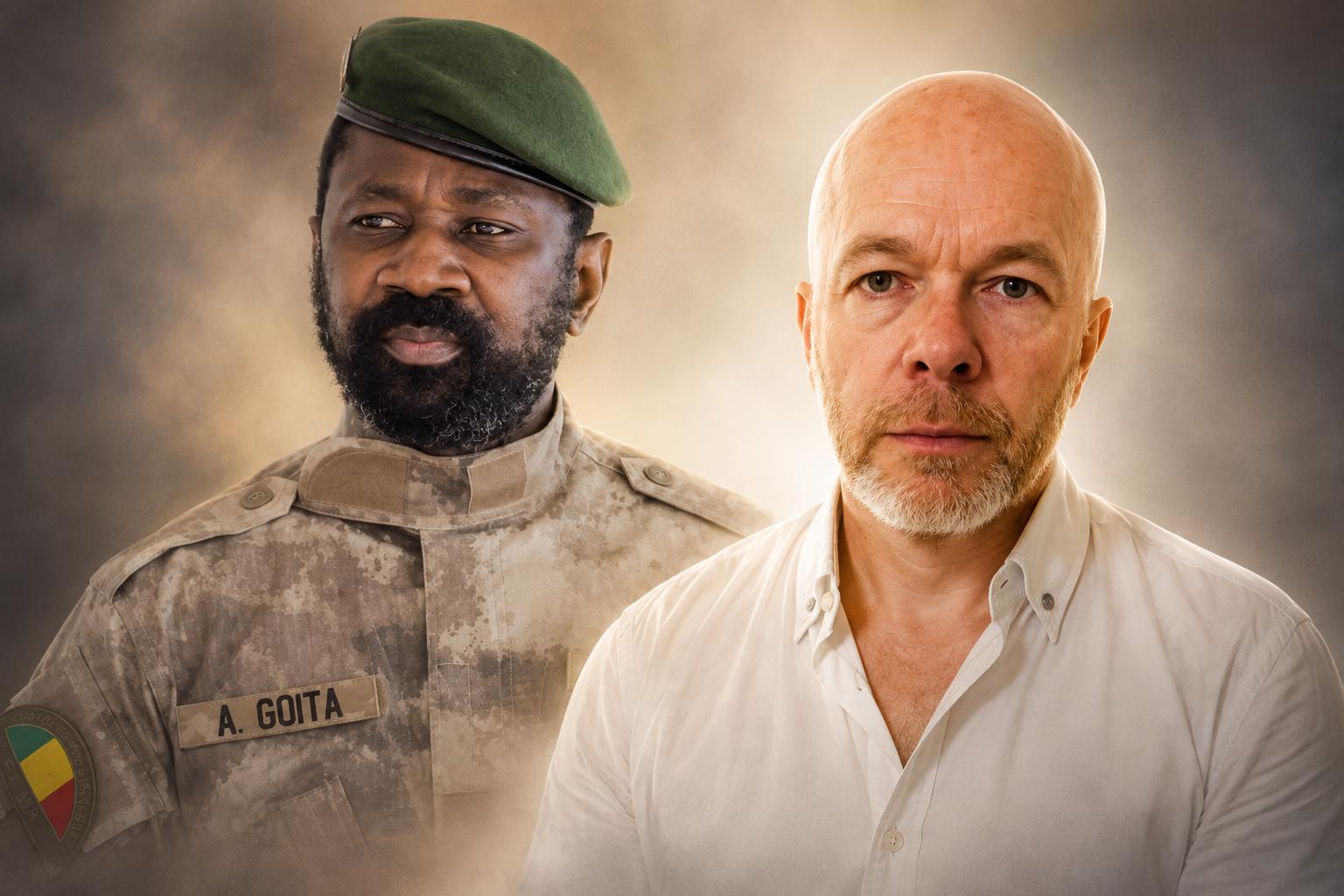
In a move cloaked in the usual pomp of state sovereignty, Malian authorities have granted a presidential pardon to Yann Vézilier, a French intelligence officer detained in Bamako a year prior. Recently sentenced to two decades in prison on charges of « attempting to destabilize the state, » he is now set to return to French soil. Yet, while the Malian administration frames this resolution as an act of magnanimity and national forgiveness, the underlying circumstances paint a far more complex picture.
Behind the diplomatic curtain: Pragmatism over principle
The ceremonial announcement masks a calculated strategy rather than a spontaneous gesture of clemency. This was never about justice in the traditional sense; it was the final act of a meticulously staged performance designed to serve a political agenda. The courtroom theatrics and subsequent pardon were never meant to resolve a legal matter but to fulfill a much broader objective.
Official narratives emphasize the regime’s moral superiority, but behind the scenes, a far less flattering reality emerges. Despite claims of absolute control over security operations, Malian forces have not engaged directly with insurgent factions such as the Coordination des Mouvements de l’Azawad (CMA) or the Jama’at Nusrat al-Islam wal Muslimin (JNIM). Contrary to public assertions, Russian military instructors associated with the Africa Corps played no active role in these confrontations and remained largely inactive.
To secure the release of captured Malian soldiers, the authorities pursued discreet negotiations with rebel leaders, striking financial deals that included substantial payments. This pragmatic approach starkly contrasts with the rhetoric of military firmness and judicial severity, revealing a regime more inclined toward compromise than confrontation.
The trial as a political tool: Shaping national narrative
From the moment of his arrest in August 2025, Yann Vézilier’s case was never about individual guilt or innocence. As an accredited officer, his presence in Mali was an open secret within the country’s security apparatus. His sudden rebranding as a « foreign conspirator » was a deliberate political maneuver to rally domestic support by demonizing an external adversary.
The harsh twenty-year sentence handed down in June was not merely punitive—it was strategic. It served two key purposes: first, to project an image of unyielding justice capable of defying former colonial powers; and second, to create a high-value diplomatic bargaining chip. The trial itself was a carefully constructed spectacle, devoid of public evidence and rushed through with little regard for procedural fairness.
From sentence to pardon: The art of state-hostage diplomacy
Legal observers and diplomats agree that the trial’s speed and lack of transparency exposed its political nature. The absence of substantiated evidence and the vague charges of « endangering state security » were tools to manufacture a narrative of aggression, while the eventual pardon was merely the final act in a calculated performance.
Presenting the pardon as an act of presidential clemency is nothing more than a semantic veil. Releases of foreign intelligence operatives are rarely driven by constitutional mercy; they result from behind-the-scenes negotiations, indirect concessions, and security arrangements negotiated far from public view. By invoking the pardon, Bamako secures a symbolic victory: it reasserts the supremacy of state authority, maintains control over the narrative, and preserves the political capital gained from the initial trial. The Vézilier affair will not be remembered as an example of judicial mercy but as a chilling demonstration of how justice can be weaponized—from verdict to clemency—as a tool of statecraft.