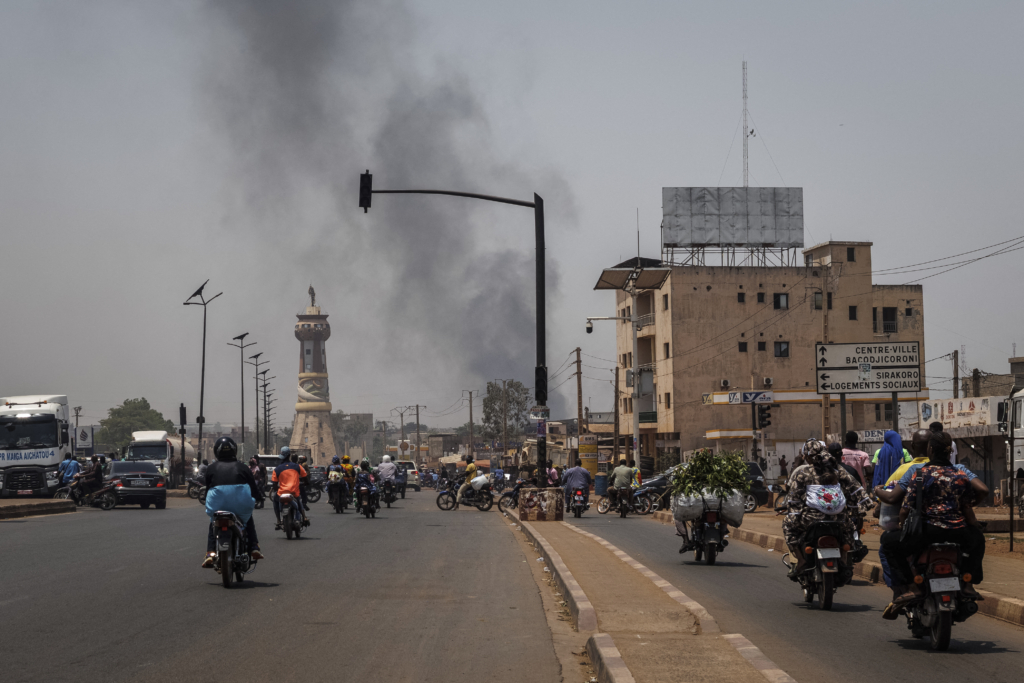
The ongoing blockade of Bamako is pushing the civilian population to the brink, with severe restrictions on movement and dire consequences for food security, healthcare access, and basic rights. Amnesty International is urging the Group to Support Islam and Muslims (GSIM), an armed faction linked to Al-Qaïda, to immediately cease its blockade and uphold international humanitarian law to protect civilians.
Since April 28, three of the six major routes supplying Bamako have been obstructed by GSIM attacks, cutting off essential supplies from regional ports. On May 6, the group targeted a civilian convoy transporting fruits and goods from Bougouni to Bamako. According to verified reports, the trucks were unarmed and carried no military personnel or equipment, violating the fundamental principle of distinguishing between combatants and civilians in armed conflict.
« Targeting civilian vehicles is a blatant breach of international humanitarian law,» stated Marceau Sivieude, Regional Director for West and Central Africa at Amnesty International. « All parties in conflict must ensure that civilians and civilian infrastructure remain protected. Attacks on essential goods, vehicles, or supply routes that sustain civilian life are strictly prohibited.»
Blockades must not infringe upon the economic and social rights of the civilian population. The GSIM must comply with international humanitarian law and guarantee uninterrupted access to food, water, and other lifeline supplies.
Marceau Sivieude, Regional Director for West and Central Africa, Amnesty International
How the blockade violates the rules of war
The April 28 announcement by the GSIM declared a full blockade of Bamako, unlike the September 2025 restrictions that solely targeted fuel tankers. This time, all commercial trucks entering the capital are under threat, disrupting supply chains and driving up prices of essential goods. By May 15, three of the six primary routes connecting Bamako to regional hubs were impassable due to relentless attacks on incoming traffic.
« The blockade is not only a military tactic but a humanitarian crisis,» emphasized Sivieude. « Civilians in Bamako must have consistent access to potable water, food, and medical supplies. Any obstruction to these necessities constitutes a violation of their basic rights.»
On May 5, the UN Human Rights Office (OHCHR) issued an urgent call for an immediate halt to hostilities, urging all warring factions to prioritize civilian protection and respect international humanitarian standards. While the GSIM announced a partial easing of the blockade on May 6, allowing medical evacuations, the group’s compliance remains unverified.
An unlawful and deadly assault on a civilian fuel convoy
Amnesty International documented a harrowing attack on a military-escorted fuel convoy in late January 2026, between Diboli and Kayes. Survivors described a coordinated ambush by over 200 GSIM fighters on motorcycles, who opened fire on the unarmed trucks. The attackers executed at least 12 drivers and apprentices after forcing them to dig graves for fallen GSIM members and then slaughtering them.
The GSIM must immediately halt all attacks targeting civilians, including indiscriminate violence. The Malian authorities must investigate these atrocities, which may amount to war crimes, and ensure justice for victims and survivors.
Marceau Sivieude, Regional Director for West and Central Africa, Amnesty International
Earlier, in September 2025, the GSIM had vowed to disrupt fuel shipments to Bamako, attacking tankers from Dakar on the Kayes-Bamako route. By November, the group declared drivers of fuel tankers as legitimate targets, equating them with combatants.
Escalating violence and civilian toll in Mali
The blockade follows a wave of coordinated GSIM attacks on April 25 across multiple cities, including Bamako, Kati, Mopti, Sévaré, Gao, and Kidal. The assaults targeted military bases and residences of political and military figures, including the home of Mali’s Defense Minister, Sadio Camara, which was struck by an improvised explosive device.
On May 6, GSIM fighters launched another brutal assault on the villages of Kori Kori and Gomassagou in central Mali, resulting in at least 40 deaths and multiple disappearances, according to local reports. The violence underscores the escalating humanitarian crisis gripping the region.