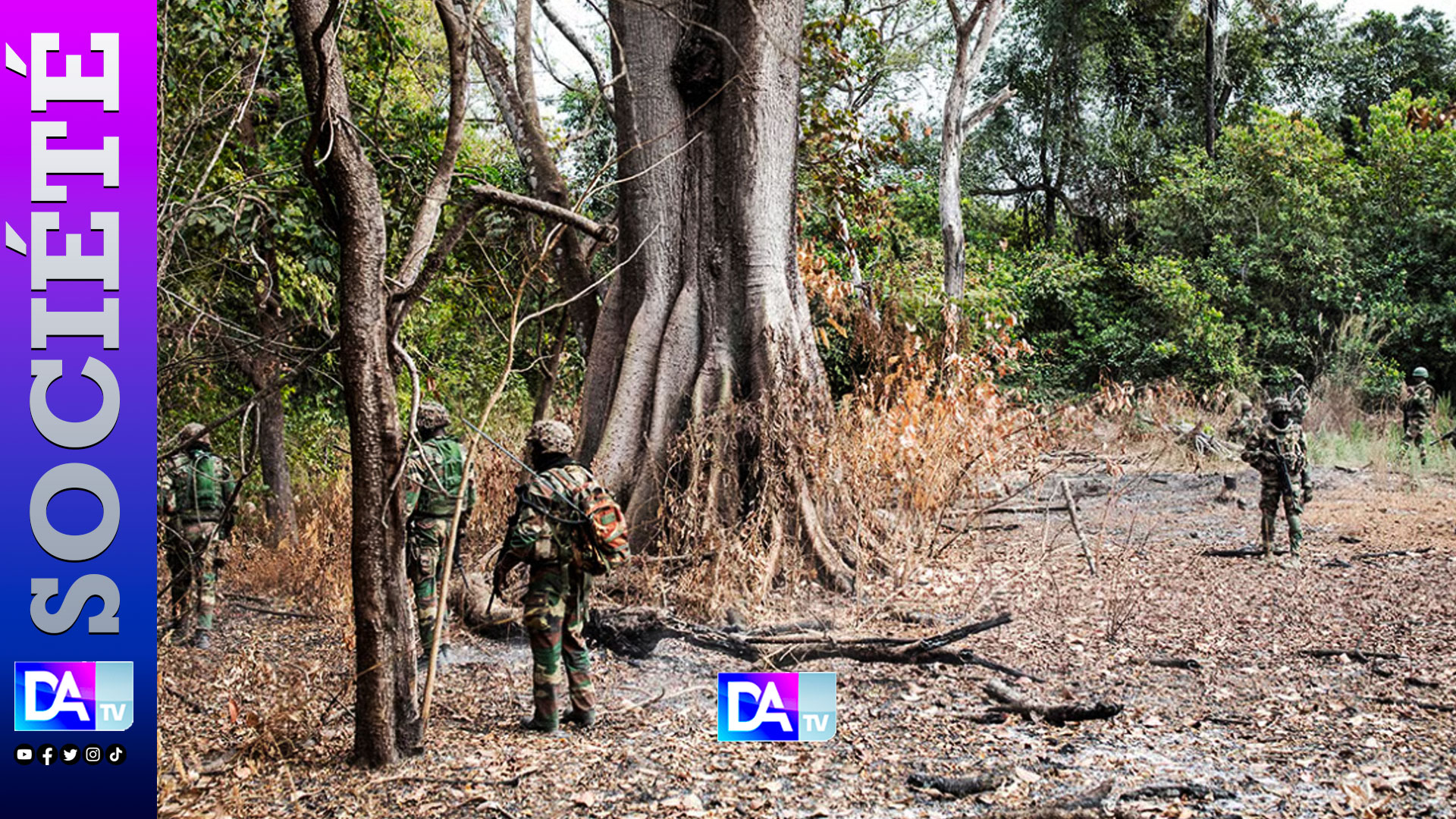
In early May, Senegalese soldiers and gendarmes, supported by drug-sniffing dogs, destroyed cannabis fields in Casamance. This operation marks the latest chapter in one of Africa’s longest-running conflicts, which has simmered for over four decades in southern Senegal despite the significant weakening of the separatist rebellion.
The military action took place near the Gambian border, where fighters from the Movement of Democratic Forces of Casamance (MFDC)—active since December 1982 in pursuit of regional independence—have maintained strongholds. According to Colonel Cheikh Guèye, regional army commander in Ziguinchor, the operation proceeded “without major difficulties,” resulting in 14 arrests, the seizure of war weapons, and more than six tons of cannabis. Ziguinchor is one of three administrative regions forming Casamance and remains the epicenter of this low-intensity conflict that has claimed thousands of lives.
Rebellion in decline: aging fighters and dwindling support
Once a formidable force, the MFDC now faces severe challenges. “The movement is drastically weakened,” said a security analyst familiar with the dossier. “It retains only residual troops, no longer recruits new members, and is struggling with an aging combatant base.” Meanwhile, government forces have expanded in both personnel and equipment, further reducing the rebels’ operational capacity.
The rebellion also suffers from deep internal divisions, with political and military factions increasingly at odds. Compounding these issues, arms and ammunition supplies have dwindled since neighboring Gambia and Guinea-Bissau—traditional rear bases for the MFDC—have intensified cooperation with Dakar to curb cross-border trafficking and insurgent activity.
Local support for the movement has eroded over time. A civil society leader from Casamance explained, “The rebellion has gradually lost its political and emotional foundation among communities. Many locals once backed the MFDC, but disillusionment has set in. Today, people overwhelmingly yearn for peace.”
Political developments at the national level have further diminished the rebellion’s appeal. The rise of leaders from Casamance—such as Prime Minister Ousmane Sonko, head of the country’s ruling party—has given local communities a stronger voice in national politics. “Many now feel a sense of justice and inclusion,” the source noted. “They see Casamance gaining recognition it once lacked.”
Cannabis trade fuels instability and finances armed groups
Prime Minister Sonko, speaking in Ziguinchor in mid-March, emphasized the persistent threat posed by cannabis cultivation. He pointed out that the MFDC has waged its struggle for over “40 years without ever controlling a single village.” His remarks followed a tragic incident on March 17, when an accidental explosion during anti-drug operations killed three soldiers and injured three others. Just days earlier, on March 11, another soldier was killed and six wounded in similar clashes. In November 2025, a soldier held captive for seven months by armed groups was finally released.
Sonko stressed that while some rebels may still invoke independence as a principle, the real issue is the cannabis economy. “We do not believe the MFDC still seriously pursues independence,” he said. “The main problem is cannabis cultivation. We will deploy all necessary means to eliminate it.” The drug trade, he added, provides armed factions with critical funding for their activities.
Colonel Guèye echoed this view, stating that the May operation aimed to strike at the heart of the rebels’ financial lifeline. “Cannabis cultivation allows armed groups to finance their operations and sustain their criminal enterprises,” he said. “Destroying these fields directly weakens their capacity to wage war.”
The border area with Guinea-Bissau has seen relative calm since 2021, when military strikes destroyed rebel bases in the region. However, recent violence has shifted to the northern Sindian area, near the Gambia. This densely forested and isolated zone remains a hotspot for illicit activities, despite its agricultural potential. Poor infrastructure prevents local farmers from transporting goods to markets, leaving many communities economically vulnerable.
Local residents have admitted to relying on cannabis trafficking for income. “Some have even asked religious leaders whether Islamic law permits cannabis cultivation,” revealed a local administrator. Sonko, while expressing openness to dialogue with the MFDC, made it clear: “We cannot accept any compromise on national territorial integrity.”
Fragile peace: partial disarmament and ongoing challenges
In a sign of cautious progress, a faction of the MFDC and the government signed a peace agreement three years ago near Ziguinchor. Another accord was reached in February 2025 with a different faction in Bissau, although several previous agreements have failed to take hold. According to a civil society representative, displaced populations are gradually returning to villages as hostilities ease and partial disarmament takes effect.
However, the path to lasting peace remains uncertain. “The process is far from complete,” the representative cautioned. “Some armed elements continue to resist disarmament, and the underlying grievances that fueled the conflict have not fully disappeared.”