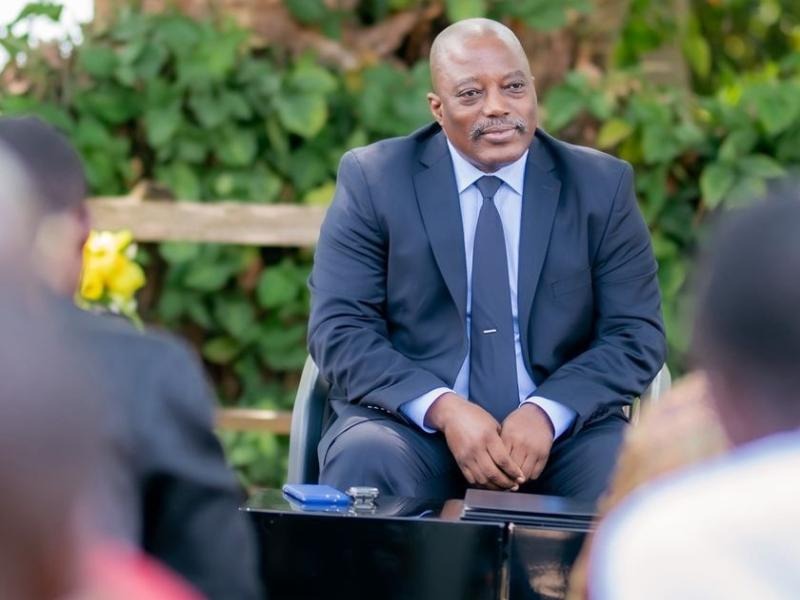
Former Democratic Republic of Congo (DRC) president Joseph Kabila has taken the helm of the newly formed Front for the Refoundation of the Nation (FRN), a politico-military coalition announced on October 12 in Goma. The alliance brings together prominent figures from the Congo River Alliance (AFC) and the M23 rebel group, both actively opposing Félix Tshisekedi’s government.
What the FRN promises and its implications for the DRC
The FRN’s founding declaration, read by advisor Claude Ibalanky, pledged to unite resistance forces and dismantle what it describes as a «tyrannical» regime—by force if necessary. Unlike conventional opposition groups, the coalition’s leaders have not yet outlined a concrete timeline or military strategy, leaving analysts and regional stakeholders scrambling to interpret its long-term objectives.
The announcement marks a significant shift in the power struggle gripping eastern DRC, where AFC and M23 fighters have already seized control of key territories, including Goma, following their 2025 offensive. The coalition’s formation coincides with a volatile moment: ceasefire agreements remain fragile, diplomatic talks in Doha have yielded limited progress, and Kinshasa’s relations with Kigali continue to deteriorate.
A reshuffle of opposition leadership
The FRN’s leadership structure reads like a who’s who of Congo’s armed opposition. Joseph Kabila, who ruled the DRC from 2001 to 2019, was named its president. Corneille Nangaa, former head of the Independent National Electoral Commission and AFC leader, and Bertrand Bisimwa, M23’s political chief, were appointed vice presidents. Military strategist General Sultani Makenga has been tapped to lead the coalition’s armed wing, the Congolese Revolutionary Army, while Freddy Rukema Kaniki was named secretary general.
The FRN’s charter explicitly states that it will replace the AFC, effectively dissolving the alliance. The status of the M23 within the new structure remains ambiguous, raising questions about its future role and internal cohesion.
Accusations of systemic failure fuel the coalition’s rise
In its founding statement, the FRN accused Kinshasa’s government of exacerbating political, economic, and social crises through corruption, institutional weakening, and systemic discrimination. The coalition also challenged the legitimacy of the 2023 election results, echoing long-standing grievances from opposition factions. While these claims reflect genuine public discontent, they have not been independently verified.
The timing of the FRN’s emergence is no coincidence. The coalition was announced as the M23 and government forces continue their bloody standoff in eastern DRC, with the rebels maintaining de facto control over large swaths of territory. International observers, including the UN, have repeatedly accused Rwanda of supporting the M23—an allegation Kigali continues to deny.
From denial to confrontation: Kabila’s evolving stance
Joseph Kabila’s leadership of the FRN represents a dramatic departure from his previous denials of ties to the M23. For years, Congolese authorities have accused him of backing the AFC/M23 coalition—a charge he has consistently dismissed as politically motivated. In 2025, a military court in absentia sentenced Kabila to death on charges including treason and war crimes, though he maintains the trial was a fabrication.
The government of Félix Tshisekedi has yet to respond to the FRN’s formation, but the move thrusts Kabila back into the spotlight as a central figure in a movement that not only challenges Kinshasa’s authority but also threatens to derail fragile peace initiatives. With the FRN vowing to use « all means necessary » to achieve its goals, the region braces for further instability.
Key questions unanswered
- Military strategy: The FRN has provided no details on its operational plans, leaving observers to speculate about its next moves.
- Internal divisions: The coalition’s heterogeneous makeup—including both political and armed factions—raises concerns about long-term unity and cohesion.
- Diplomatic fallout: With ceasefires already on shaky ground, the FRN’s emergence could escalate tensions between Kinshasa and international partners.
The road ahead: instability or negotiation?
As the FRN solidifies its leadership and mobilizes supporters, the DRC stands at a crossroads. Will this coalition unite opposition forces under a coherent agenda, or will infighting and lack of clear strategy weaken its impact? With Kinshasa’s response pending and regional diplomats scrambling to prevent further escalation, one thing is certain: the FRN’s formation has already redrawn the conflict map in eastern DRC.