Gabon’s Nkok special economic zone: a model for africa
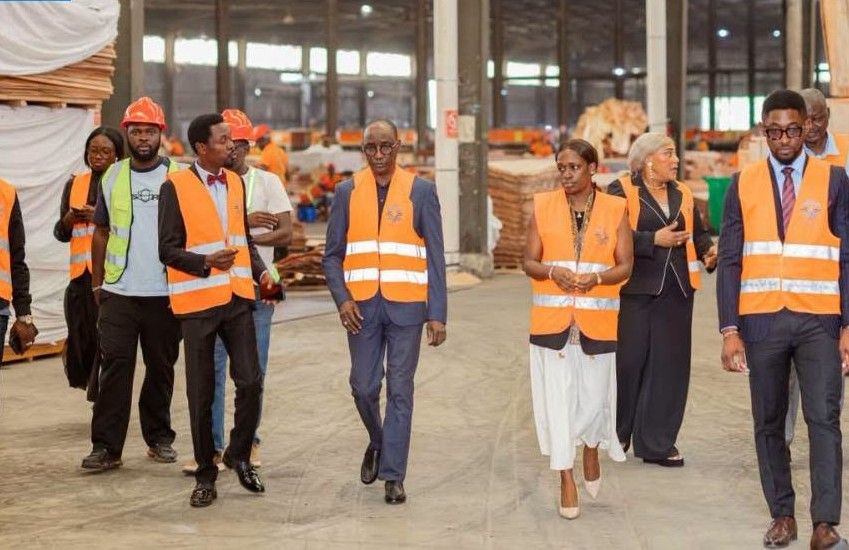
Libreville, Saturday, June 27, 2026 — Barely had the new extraordinary and plenipotentiary ambassador of Chad to Gabon, Zakaria Fadoul Kittir Jr., presented his credentials to President Brice Clotaire Oligui Nguema than he immediately set off to explore one of Gabon’s most striking economic transformations.
The diplomat chose the Special Investment Zone of Nkok, a state-of-the-art industrial hub that has evolved into a continental benchmark for local resource enhancement and value addition.
This early visit during his diplomatic mission was far from mere protocol. It underscored the growing fascination across Africa with Gabon’s innovative model—a blueprint for economic diversification, industrial upgrading, and maximizing returns from raw material exports.
Timber transformation: a case study in industrial success
At the heart of the ambassador’s tour was Gabon’s timber industry, a cornerstone of the country’s economic strategy. The Chanta Group’s facilities, which specialize in plywood and veneer production, drew particular attention. Their output serves markets across Africa and beyond, showcasing how local processing can elevate raw materials into high-value products.
This transformation reflects a deliberate policy shift. Historically, Gabon exported most of its timber as unprocessed logs. By mandating local processing, authorities have retained greater value within the country while creating skilled employment and fostering knowledge transfer.
The results are visible at Nkok. Dozens of factories now operate on-site, transforming timber into finished goods that meet international standards. For African policymakers, this integrated approach stands as one of the continent’s most successful models for resource-based industrialization.
Beyond timber: a diversified industrial ecosystem
Nkok’s appeal extends well beyond forestry. As a fully integrated industrial platform, it hosts enterprises spanning metallurgy, construction materials, agro-processing, and light manufacturing. This diversity makes it a linchpin of Gabon’s economic diversification strategy, especially in a global climate of volatile commodity prices.
The ambassador’s interest mirrors a broader trend. More African nations are seeking ways to localize resource processing, build national value chains, and reduce reliance on raw material exports.
A catalyst for regional influence
Nkok is fast becoming more than an economic engine—it is a diplomatic and industrial showcase for Gabon. Each high-profile visit reinforces its reputation as a hub of national expertise and a magnet for foreign investment.
For Libreville, this recognition is vital. It validates the government’s vision of positioning Gabon as a regional industrial hub, capable of attracting capital, technology, and strategic partnerships.
The timing of the Chadian ambassador’s visit coincides with a broader shift in African economic cooperation. Today’s exchanges focus not just on commodities, but on industrial models, processing techniques, and value-creation strategies.
By capturing the attention of diplomats, investors, and policymakers, the Special Investment Zone of Nkok is proving itself as a pan-African reference point. It is redefining how the continent thinks about industrialization, local transformation, and sustainable development pathways.

François Mvondo
Journalist
Related Story