Libreville – The modernization of government administrations is no longer solely judged by the quality of infrastructure or the speed of procedures. In today’s interconnected world, a state’s capacity to digitize its public services has become a critical indicator of its competitiveness, transparency, and institutional efficiency. Gabon is now firmly committed to embracing this global transformation.
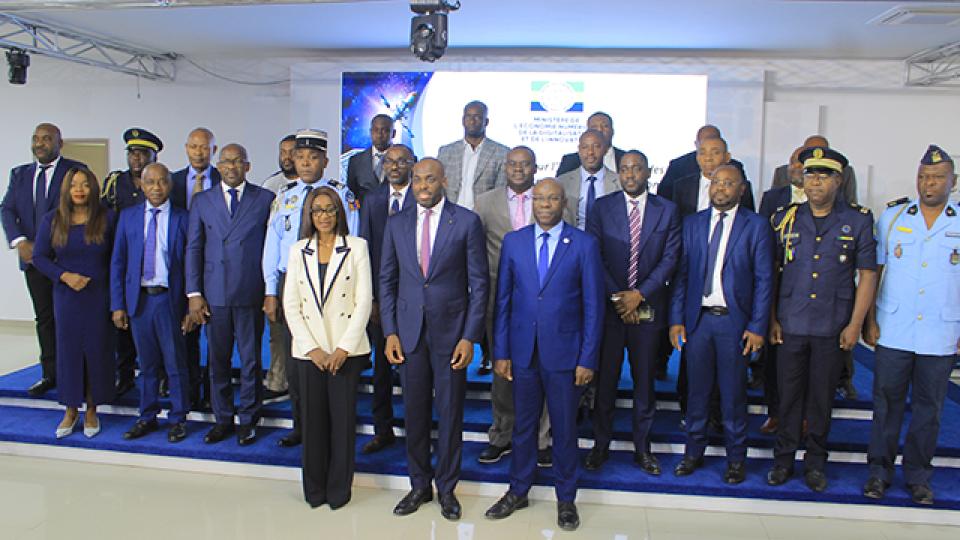
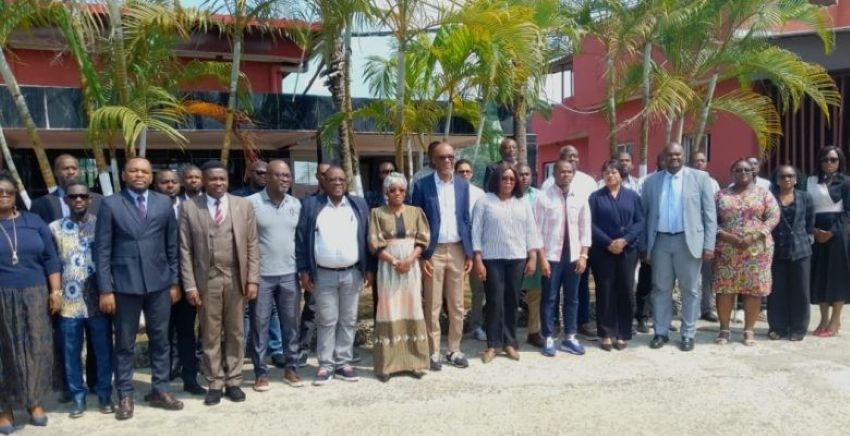
In Nkok, within the Ntoum commune, the launch of institutional capacity-building workshops marks a pivotal moment in shaping Gabon’s future digital state. These sessions are specifically focused on modeling public services, mapping business processes, and the digital transformation of administrative bodies.
Coordinated by the Government’s General Secretariat as part of the Gabon Digital program, this initiative transcends a mere technical exercise. It stands as one of the most ambitious administrative reforms undertaken in recent years, aiming to progressively shift Gabonese administration towards a model that prioritizes user experience, procedural speed, and the seamless interconnection of public services.
Underlying this approach is a broader aspiration: to dismantle administrative fragmentation, burdensome bureaucracy, and the proliferation of physical procedures that continue to impede citizens, businesses, and investors across many African nations.
A transformed administration on the horizon
For the leaders of the Gabon Digital program, digitalization extends far beyond simply converting paper forms into digital screens. It necessitates a profound overhaul of work methodologies, decision-making circuits, and the very organizational structure of administrative bodies.
During the opening of the workshops, Maryse Lydie Madiba Iloumbou, Deputy Director General of the National Agency for Digital Infrastructure and Frequencies and General Coordinator of the Gabon Digital program, emphasized that this phase is primarily designed to bolster administrative capabilities. The goal is to identify, describe, map, and prepare priority public services for integration into the forthcoming Governmental Services Portal. The stakes are undeniably high.
Before any service can be digitized, it is crucial to thoroughly understand its operations, identify key stakeholders, analyze processing times, detect administrative redundancies, and simplify existing procedures. This comprehensive mapping phase thus forms the bedrock of any successful digital transformation.
The ongoing efforts are expected to culminate in a complete mapping of the administration’s functional domains, the creation of a national catalog of public services, and the definition of operational priorities for their initial online deployment.
Ultimately, this initiative is about constructing the administrative architecture for a digital Gabon for decades to come. The Governmental Services Portal serves as its backbone.
At the core of this transformation lies the Governmental Services Portal, widely known by its acronym, PGS. According to Issoufou Donagnon Soro, the PGS and Electronic Document Management System Coordinator, this platform is designed to progressively consolidate all digitalized public services of the Gabonese administration.
The objective, while straightforward in principle, holds immense implications: to provide citizens and businesses with a single point of access for administrative services, eliminating the need for multiple visits to various ministries, general directorates, and decentralized administrations.
Administrative requests, authorization procedures, certificates, payments, declarations, and even case tracking could all become remotely accessible through a single digital interface.
Countries that have successfully navigated this transition have realized significant benefits. These commonly include reduced processing times, enhanced administrative transparency, decreased operating costs, improved procedural traceability, and a diminished risk of corruption.
Gabon is clearly aligning itself with this international dynamic. Under the oversight of the Government’s General Secretariat, five ministries have been selected for this initial pilot phase: the Ministries of Interior, Justice, Mines, Economy, and Agriculture.
Each ministry is tasked with identifying ten services suitable for inclusion in the future national catalog. From these, a final selection of two priority services will be made for immediate integration into the governmental portal. This pilot phase is slated to commence next September.
A reform extending beyond technology
The success of digital transformation is never solely dependent on equipment or software. It primarily relies on the commitment of administrative bodies, the training of public officials, and the adaptation of organizational cultures.
Acknowledging this crucial aspect, authorities have planned extensive support for the involved administrations. This includes collaborative interventions from government subject matter experts, ANINF technical teams, and change management specialists.
The workshops will run from July to August, followed by a consolidation phase aimed at harmonizing the approaches adopted by the various ministries.
Beyond digital tools, a new administrative culture is poised to emerge—one founded on speed, interoperability, procedural simplification, and continuous improvement in the quality of service delivered to users.
In a competitive international landscape vying for investments and economic competitiveness, the quality of public administration has become a decisive factor in development. Investors now assess a country’s political stability as much as its ability to promptly issue administrative documents, secure procedures, and streamline interactions with the state.
Thus, digitalization represents both an economic and institutional imperative. With Gabon Digital, the nation appears set to cross a historic threshold.
The ambition extends beyond merely modernizing administration; it aims to redefine the relationship between the state, its citizens, and businesses. The digital revolution of public services is no longer a distant prospect.
It is now actively underway. In this silent yet profound transformation, Gabon is arguably engaging in one of the most critical battles for its institutional modernization and its future competitiveness on the African continent.