French national day: France pledges support for peace initiatives in DRC
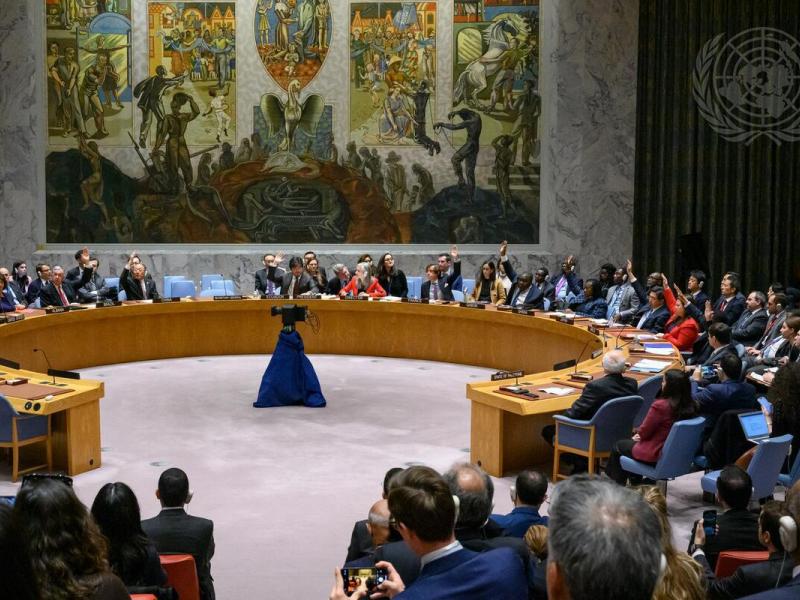
The French ambassador to the Democratic Republic of the Congo (DRC), Rémi Maréchaux, used the occasion of France’s National Day to reaffirm Paris’ unwavering commitment to peace efforts in eastern DRC, while highlighting France’s active role within the United Nations Security Council.
During a speech delivered on Tuesday, July 14, 2026, at his residence in Kinshasa, the diplomat emphasized that the July 14 celebrations were not merely about commemorating France’s independence or leadership, but about honoring the core values of liberté, égalité, fraternité—the principles that have shaped the French Republic since the 1789 Revolution.
Strengthening peace and stability in eastern DRC
Addressing the ongoing security crisis in eastern DRC, Maréchaux underscored France’s dedication to supporting diplomatic solutions to end the prolonged conflict. He highlighted the pivotal role France has played in shaping key UN Security Council resolutions aimed at restoring peace in the region.
Among the resolutions cited was Resolution 2773, which sets clear benchmarks for conflict resolution, including an immediate ceasefire, the withdrawal of M23 forces, and the dismantling of illegal parallel administrations. The resolution also calls for the withdrawal of Rwandan military support to the rebel group and the cessation of Rwandan troop presence on Congolese soil.
Maréchaux also referenced Resolution 2808, which extended the mandate of the United Nations Organization Stabilization Mission in the DRC (MONUSCO) by one year, and Resolution 2825 (2026), which renewed sanctions against armed groups operating in the DRC until July 1, 2027. This latter resolution also extends the mandate of the Group of Experts tasked with monitoring sanctions implementation.
Bilateral cooperation and capacity-building
The French ambassador stressed that France’s multilateral engagement is complemented by robust bilateral cooperation with the DRC, particularly in the security sector. He cited recent initiatives, including the regeneration of a Jungle Brigade battalion in Kisangani with French military instructors—a project he personally witnessed during a visit in March. A second battalion is set to be regenerated in October 2026.
Maréchaux praised the DRC’s growing influence on the international stage, noting the country’s recent return to the UN Security Council, where it currently holds the presidency this month. He also highlighted the DRC’s leadership roles in the United Nations Human Rights Council and the International Conference on the Great Lakes Region, as well as its active participation in the International Organization of La Francophonie, with the candidacy of Juliana Lumumba for Secretary-General.
Advocating for inclusive multilateralism
The diplomat framed France’s support for the DRC within a broader vision of inclusive multilateralism, particularly in a global context marked by power imbalances where stronger nations often dictate terms to weaker ones. He argued that multilateralism remains the most effective framework for addressing international challenges, especially in Africa.
« In an era of increasing international tensions, France firmly believes that the solution lies in a multilateralism that is more inclusive and that gives Africa a stronger voice in global governance, » he stated. « The DRC’s return to the international stage is not only a testament to its resilience but also a recognition of its strategic importance in energy transitions and climate action. »
Context and ongoing challenges
Maréchaux’s remarks came at a critical juncture, following the signing of the Washington Peace Agreement between the DRC and Rwanda, mediated by the United States. The agreement outlines measures for de-escalation, the gradual withdrawal of Rwandan forces from Congolese territory, and the neutralization of armed groups—including the FDLR, which Kigali considers a security threat.
Despite these diplomatic strides, the security situation in eastern DRC remains fragile. The Doha Process, facilitated by Qatar, aimed at fostering dialogue between the Congolese government and the M23 rebels, has yet to yield significant progress. On the ground, the M23 continues to control key cities such as Goma and Bukavu, as well as numerous localities in North Kivu and South Kivu. Clashes persist in several areas, underscoring the persistent gap between diplomatic commitments and realities on the ground.