Escalating jihadist threats and authoritarian shifts in the Sahel
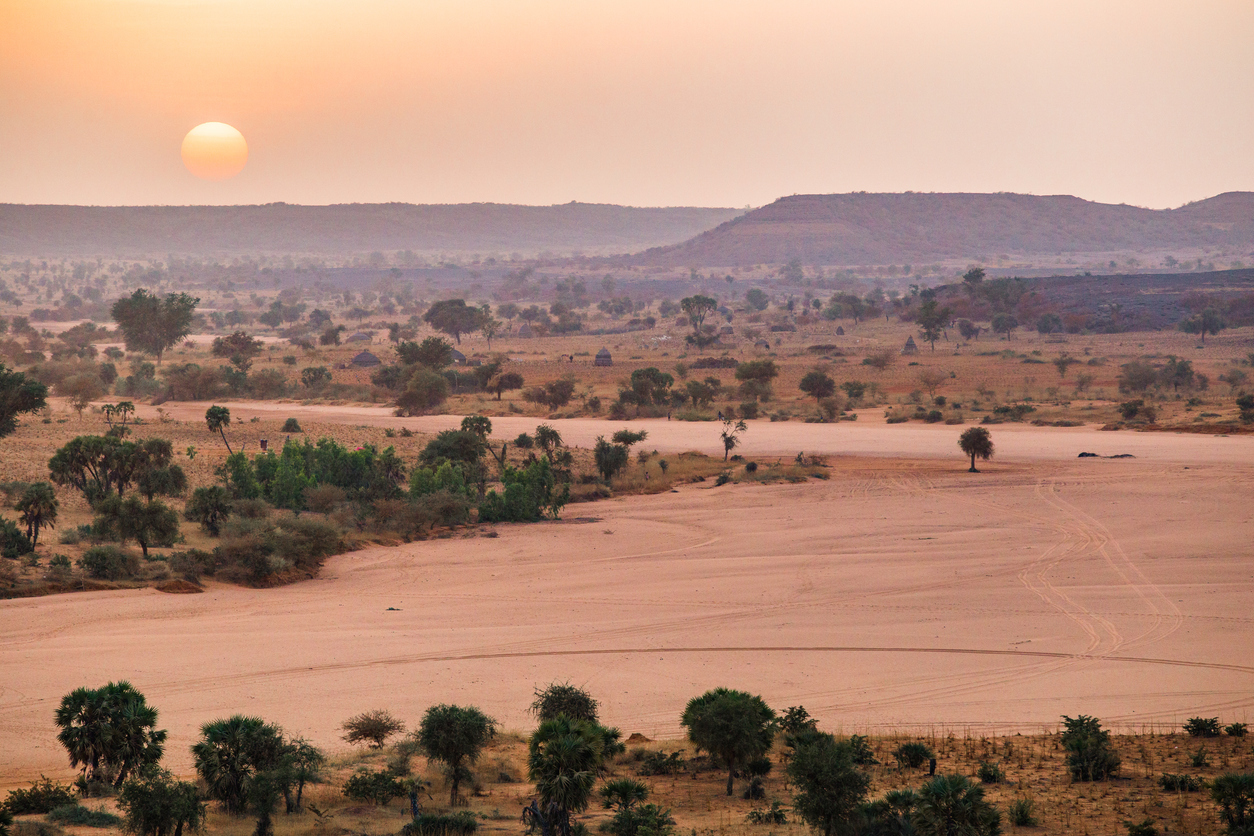
The Sahel has vanished from global headlines, overshadowed by geopolitical upheavals elsewhere. While the world’s focus shifted to the Ukraine war, the Israel-Palestine conflict, and Rwanda-backed rebel offensives in the Democratic Republic of Congo, the Sahel’s deepening crises have only intensified. Yet, these emergencies—spanning over a decade—continue to simmer beneath the surface, unnoticed by the international community.
The Alliance of Sahel States (AES)—comprising Mali, Burkina Faso, and Niger—was formed in 2023 with a pledge to eradicate jihadist violence. Instead, violence has surged. The region now holds the grim title of the world’s most jihadist-affected area, with attacks escalating across all three nations. Meanwhile, authoritarianism has taken root: constitutional transitions are indefinitely delayed, elections remain a distant promise, and dissent is crushed through media censorship, arbitrary arrests, and forced conscriptions.
This analysis examines the security and political shifts in the Sahel, particularly within AES member states. It highlights the rising jihadist threat and the authoritarian consolidation of regional juntas, while urging the European Union to reassess its waning influence and re-engage before the situation deteriorates further.
persistent instability: jihadist expansion and local conflicts
Ten years ago, the Sahel recorded the lowest death toll from violent extremism in Africa. By 2024, it had become the deadliest region, with jihadist-related fatalities tripling since 2021 to reach 11,200 deaths. This figure excludes the 2,430 civilians killed by national security forces and Russian mercenaries in 2024 alone, revealing a disturbing trend: state actors may now pose a greater threat to civilians than armed groups.
Mali: a population caught in the crossfire
The 2023 expulsion of the UN Multidimensional Integrated Stabilization Mission in Mali (MINUSMA) was followed by renewed clashes with Tuareg separatists, backed by Malian forces and Russian troops. The junta now labels both separatists and jihadists as “terrorists,” waging a two-front war.
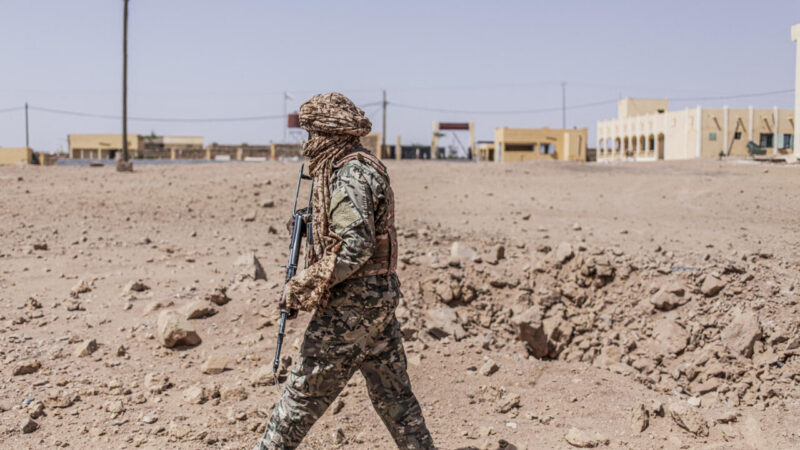
In October 2023, Malian authorities reclaimed Kidal—a rebel stronghold for over a decade—boosting their sovereignty narrative. Yet, this victory did little to shift the balance of power. By July 2024, a tactical alliance between the Permanent Strategic Framework for the Defense of the Azawad (CSP-DPA) and the Group for the Support of Islam and Muslims (JNIM, Al-Qaeda affiliate) led to a devastating ambush in Tinzaouaten, killing 40 Malian soldiers and 80 Russian mercenaries—Wagner Group’s heaviest loss in the region.
In September 2024, the JNIM launched coordinated attacks on a gendarmerie school and a military airport in Bamako, killing over 70 security personnel and destroying the presidential aircraft. These high-profile strikes exposed the junta’s territorial control failures while demonstrating the group’s strategic boldness. Unlike the Islamic State in the Sahel, which rules through fear, the JNIM appears to seek community support—targeting only military sites.
Civilians have borne the brunt. In July 2024, a wedding massacre in Mopti left 40 dead. In August, military drone strikes in retaliation for the Tinzaouaten ambush killed 20 civilians. By February 2025, jihadists ambushed a convoy near Gao, killing 50+ people, including civilians. Despite this chaos, 2024 surveys revealed surprising public confidence in Malian armed forces, who many believe are gaining strength.
Burkina Faso: the state’s retreat and the rise of militias
Since the 2022 military coup, Burkina Faso’s security situation has worsened dramatically. By 2024, the army had lost control of 60% of the territory, with the JNIM active in 11 of 13 regions. The death toll surged by 68% between 2022 and 2023, with 2024 threatening to surpass this grim record.
The Barsalogho massacre in August 2024 epitomized the crisis. As civilians—forced to assist the army—dug trenches, the JNIM launched a brutal attack, killing between 130 and 600 people. State forces also committed atrocities: in February 2024, Human Rights Watch reported the military executed 223 civilians in a single day. Reports of soldier-led mutilations and VDP militia massacres—targeting the Fulani ethnic group—further fueled intercommunal violence.
In March 2025, the JNIM retaliated for the Solenzo massacre (allegedly carried out by VDP militias), attacking a military camp in Diapaga and killing 30+ soldiers and VDP members. This cycle of violence stems from the junta’s controversial strategy of arming civilians. Since 2020—and intensified after the 2022 coup—Captain Traoré recruited 50,000 VDP militiamen, offering 200,000 CFA francs (€300) monthly and minimal training. Excluding Fulani communities, this policy has deepened ethnic tensions and blurred lines between state forces, militias, and jihadists. With 2 million internally displaced persons, Burkina Faso now faces the region’s worst humanitarian crisis.
Niger: a deteriorating security landscape
While Niger was relatively more stable than its AES neighbors, the 2023 coup triggered a sharp rise in jihadist lethality. Military operations intensified, but so did civilian casualties—state forces killed three times more civilians in 2024 than in 2023.
A Safeguarding Security Sector Stockpiles (S⁴) report revealed 51 attacks on state forces in nine months of 2024—nearly double 2023’s figures. Non-state armed groups grew bolder, targeting both civilians and security personnel. In March 2024, 23 soldiers died in Tillabéri. By December, two attacks near the Burkina Faso border killed 39 civilians. In March 2025, the Islamic State in the Greater Sahara (EIGS) massacred 44 worshippers in a mosque. Though slightly more stable than Mali and Burkina Faso, Niger’s trajectory remains alarming.
***
Despite shared jihadist threats, the AES states employ divergent strategies. Mali relies on Russian mercenaries to combat both jihadists and separatists, aiming to reclaim northern territories. Burkina Faso arms civilians, sparking a deadly cycle of retaliation with the JNIM. Niger, though less reliant on Russian support, faces growing threats from both the Islamic State in the Sahel and JNIM factions, particularly in Tillabéri and Dosso.
Across the region, jihadist tactics are evolving. Large-scale attacks—using drones, improvised explosives, and mortars—are increasingly common, while rural areas remain primary targets for zakat (tax) collection. Though major cities like Bamako have seen attacks, jihadists avoid sieging urban centers, deeming them too risky. Reports of community dialogues between JNIM splinter groups and Malian authorities in early 2025 suggest potential strategic shifts, though their long-term impact remains uncertain.
prolonged transitions: consolidating authoritarian rule
Since seizing power, the AES juntas have indefinitely extended transition periods and rewritten constitutions to prolong their rule. In Mali, the 2020 coup initially promised elections within 18 months. After delays and negotiations with ECOWAS, a 24-month transition was announced, with polls scheduled for February 2024. By late 2023, authorities cited “technical reasons”—including a new constitution and a French-led census—to justify further delays. By May 2024, an inter-Malian dialogue recommended a 2–5-year transition, allowing junta leader Colonel Goïta to remain in power until 2029 and even run in elections. In October 2024, he promoted himself to Army General, alongside five junta members, solidifying their grip on power. Though election talks briefly resurfaced in late 2024, they vanished by early 2025.
Burkina Faso’s Captain Traoré initially pledged elections by July 2024 but abandoned the plan by late 2023, prioritizing constitutional reforms. In May 2024, the transition was extended to 60 months, keeping Traoré in power until 2029—a move mirroring Mali’s strategy.
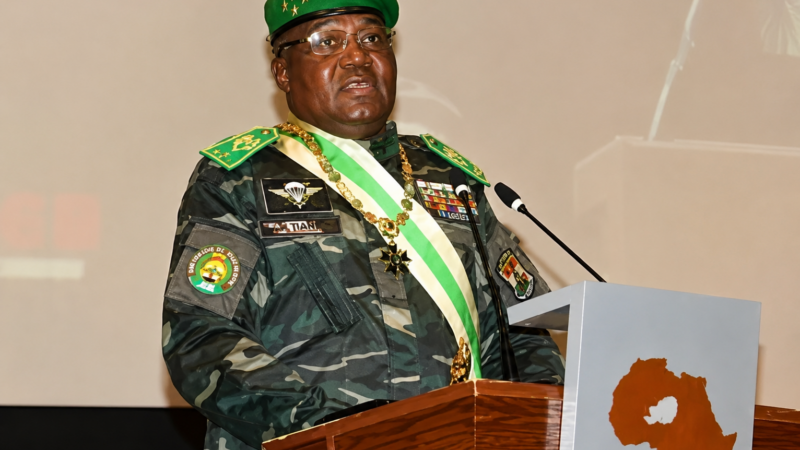
Niger resisted setting an election date for 18 months post-coup. Only after a February 2025 “national dialogue” did authorities recommend a renewable five-year transition. Like his counterparts, junta leader General Tchiani promoted himself to Army General in March 2025, as he was sworn in for a five-year presidential term.
Prolonged transitions serve a dual purpose: they entrench junta power and facilitate the AES confederation project. Democratic leaders might have hesitated to break with ECOWAS or pursue new partnerships, but with guaranteed five-year terms and potential re-elections, current regimes have the latitude to forge regional and international alliances—such as Russia’s recent pledge of support for the AES joint force.
authoritarian drift: controlling information in a fractured region
Unable to assert full territorial control, the AES regimes have tightened their grip on information. Independent and foreign media outlets have been suspended, journalists expelled or intimidated, and civil society organizations repressed. Political parties face suspensions, and dissent is met with arbitrary arrests or forced conscriptions.
In Mali, authorities have progressively restricted free speech since 2020. In 2022, RFI and France 24 were banned, followed by temporary suspensions of Joliba TV News. By November 2024, the Burkina Faso High Authority for Communication intervened after a program allegedly depicted a staged coup, leading to Joliba TV’s license revocation. Arbitrary arrests and harassment of critics surged between 2022 and 2024, culminating in the 2023 expulsion of the UN Human Rights Division’s chief. In late 2023 and early 2024, several NGOs were shuttered, political parties suspended, and media gagged.
Burkina Faso’s Traoré expelled foreign journalists and banned RFI, France 24, and Jeune Afrique, accusing them of undermining the military. In 2024, TV5Monde was suspended for airing a critical interview with an ex-election commission president. By early 2025, a crackdown targeted exiled opponents, who were labeled terrorists to intimidate them. In March, three journalists were abducted, later reappearing in military uniforms, forced to “report on ground realities.”
Niger suspended RFI and France 24 within a week of its July 2023 coup. Since then, media outlets have been shut down, journalists covering security issues intimidated or imprisoned, and human rights defenders documented arbitrary detentions—including former President Mohamed Bazoum and seven cabinet members. Political parties have been suspended since the coup, silencing formal opposition. Since October 2024, authorities have withheld foreign passports at Niamey’s international airport, hampering research and travel.
By controlling information and civil society, the AES regimes impose their narrative. In October 2024, Burkina Faso claimed to control 70% of its territory—the same percentage attributed to jihadists by external research. For civilians, deciphering reality has become nearly impossible.
* *
The Sahel has faded from global media coverage, overshadowed by other crises and the AES regimes’ repression of independent journalism. Yet, this silence masks escalating instability. The jihadist scourge rages on, food insecurity worsens—52.7 million West Africans faced acute hunger between June and August 2025—and displacement records are shattered, with 3.1 million internally displaced persons across Burkina Faso, Niger, Mali, and Chad by March 2025.
The European Union may no longer prioritize the Sahel amid other global urgencies, but ignoring the region’s crises risks long-term repercussions for Europe. Disengagement isn’t just about severing ties with juntas; it’s about abandoning populations trapped in a downward spiral.
While the EU reconsiders its approach—marked by France’s reduced involvement—cautious steps toward re-engagement have begun, including through the new EU Special Representative. Yet, before deeper involvement, Europe must define its priorities: What does it seek to achieve? What tools can it deploy? And with whom?
One certainty remains: in an increasingly polarized world, strengthening global solidarity is essential to confront shared challenges.