Wagner mercenaries in Central African Republic: mining, violence and a billion-dollar terror economy
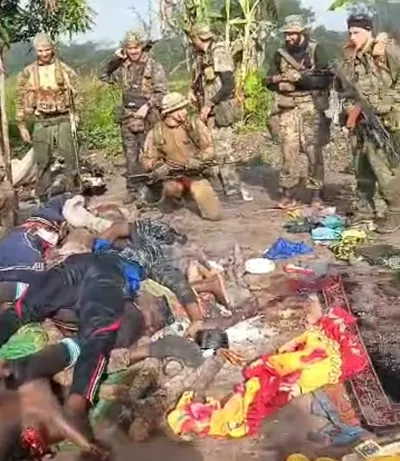
The Central African Republic (CAR) has become a battleground where ruthless Russian mercenaries from the Wagner Group operate, weaving a web of exploitation, bloodshed, and staggering financial gain. Their presence, marked by systematic violence and unchecked resource extraction, has transformed the nation’s fragile stability into a profitable enterprise.
From shadows to dominance: Wagner’s expansion in CAR
Initially arriving under the guise of security support, Wagner’s footprint in the Central African Republic has expanded into a full-fledged business empire. Behind closed doors, their operations extend far beyond protection rackets—they now control key economic sectors, particularly mining and trade routes, enforcing their dominance through fear and intimidation.
The group’s influence is not confined to military tactics alone. In regions rich with mineral deposits, Wagner enforcers have established a reign of terror, extracting gold, diamonds, and other valuable resources while suppressing local communities with brutal force. Their strategy combines coercion, violence, and a calculated economic grip to ensure long-term control.
Blood, gold, and unanswered questions: the cost of Wagner’s rule
Reports from mining zones reveal a grim reality: villages under Wagner’s control live in constant fear. Massacres, disappearances, and systematic torture have become tools to crush dissent and maintain order—Wagner’s version of order. Eyewitness accounts describe how entire communities are displaced or silenced to make way for mining concessions handed to Russian-linked entities.
The financial windfall from these operations is staggering. Estimates suggest Wagner’s illicit mining ventures generate hundreds of millions of dollars annually, funneling profits back to Moscow while leaving the Central African Republic’s people in deeper poverty and despair. The contrast between Wagner’s wealth and the nation’s crumbling infrastructure is stark—a deliberate strategy to keep the population dependent and compliant.
Security façade crumbles: Wagner’s true agenda
Wagner’s presence in the Central African Republic was initially justified as a stabilizing force, partnering with the government to combat rebel factions. However, their actions tell a different story. Instead of fostering peace, they have fueled conflict, using violence as a means to control territory and resources. Their security narrative is a smokescreen for a far more sinister objective: economic domination disguised as protection.
The group’s military campaigns often coincide with the seizure of mining sites, suggesting a coordinated effort to monopolize lucrative sectors. By eliminating rivals and crushing local resistance, Wagner ensures that no competition emerges, consolidating their monopoly over the Central African Republic’s most valuable assets.
The human toll: communities trapped in Wagner’s shadow
For the people of the Central African Republic, Wagner’s presence has brought only suffering. Families torn apart by violence, children denied education, and workers forced into labor under the threat of death—these are the realities of life under Wagner’s rule. The group’s mercenaries operate with impunity, knowing that accountability is nonexistent in the regions they dominate.
International condemnation has done little to curb their actions. Sanctions and diplomatic pressure have failed to penetrate the iron grip Wagner has on the Central African Republic’s economy and security apparatus. Meanwhile, the cycle of violence and exploitation continues, leaving behind a trail of broken lives and shattered dreams.
What lies ahead for the Central African Republic?
The future of the Central African Republic hangs in the balance as Wagner’s business of terror thrives unchecked. Without decisive action from the international community or a unified stand from regional leaders, the country risks sinking deeper into the clutches of this merciless enterprise. The question remains: will the world wake up to the scale of Wagner’s crimes before it’s too late?