US-Morocco ties reshape Sahara and Ceuta disputes
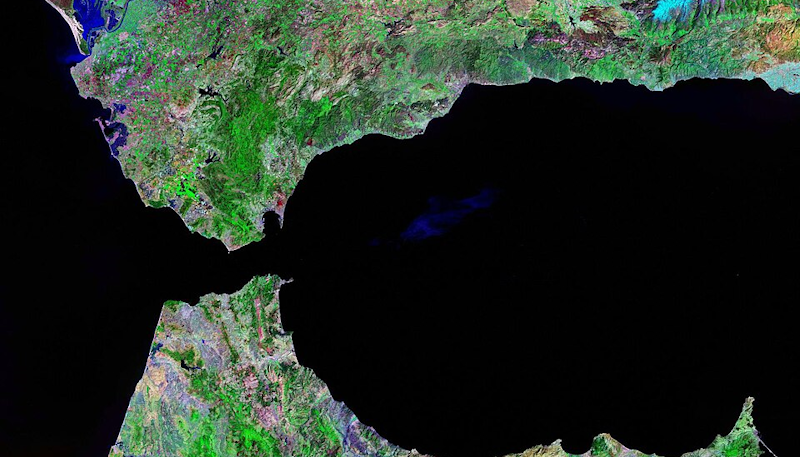
A new phase in US-Morocco relations is unfolding, with Washington’s stance on longstanding territorial disputes gaining fresh momentum. From the Sahara Occidental to the Spanish enclaves of Ceuta and Melilla, American policy appears to be aligning more closely with Rabat’s positions—reshaping regional power dynamics and placing Spain in uncharted diplomatic territory.
Since late July, a series of signals from Washington has reinforced ties with Morocco. Discussions on political recognition, economic cooperation, regional security, and now the status of Ceuta and Melilla suggest a broadening strategic partnership between the two nations.
The timing coincides with a sharp migration crisis at Ceuta, where tens of thousands crossed into the Spanish enclave within 24 hours, overwhelming local authorities and drawing urgent attention from the European Union. While the surge’s origins remain debated—whether spontaneous or orchestrated—the episode underscored Rabat’s leverage over Madrid.
Sahara Occidental remains Morocco’s top diplomatic priority
In December 2020, the US recognized Moroccan sovereignty over the Sahara Occidental in exchange for Morocco’s normalization of relations with Israel—a landmark decision that shifted decades of international diplomacy. Now, Rabat is working to safeguard this achievement under the current US administration.
Symbolic gestures, including naming a major highway linking Tiznit to Dakhla as the “Donald J. Trump Highway,” reflect Morocco’s efforts to curry favor with Washington. Analysts suggest Rabat’s ultimate goal is to secure continued US backing for its autonomy plan as international negotiations on the territory enter a critical phase.
Economic incentives fuel deeper US-Morocco cooperation
Beyond politics, economic interests are driving the alliance. In late July, the US ambassador to Morocco visited Laâyoune to finalize a deal funding a new hydrogen and ammonia production unit—a project likely to benefit American firms while reinforcing bilateral trade ties.
This collaboration spans multiple fronts: political endorsement of Morocco’s positions, economic opportunities for US companies, enhanced security cooperation, and shared strategic interests in the Middle East—particularly regarding Israel.
Congress takes aim at the Polisario Front
A growing number of US lawmakers are pushing to designate the Polisario Front as a foreign terrorist organization, citing alleged links to Iran. While no concrete evidence supports these claims, the move aligns with Washington’s broader campaign to counter Tehran’s influence in North Africa and the Middle East.
Analysts note that Morocco is leveraging this anti-Iran sentiment to reframe the Sahara Occidental conflict in terms favorable to its own agenda, portraying the dispute as part of a larger geopolitical struggle involving Israel.
Ceuta and Melilla: the new battleground in US-Morocco ties
The most striking shift involves Washington’s evolving stance on Ceuta and Melilla. Traditionally viewed as Spanish territories, US officials have recently signaled a more ambiguous position—one that some interpret as tacit support for Morocco’s claims. For Rabat, these enclaves have long been considered occupied lands, while Spain insists their sovereignty is non-negotiable.
If the US continues to distance itself from Spain’s position, it could strain transatlantic relations and force Madrid to reconsider its strategic alliances in the Mediterranean.
The Ceuta migration surge: a calculated move?
The mass migration into Ceuta, whether spontaneous or facilitated, served as a stark reminder of Morocco’s ability to influence Spain’s security landscape. While some speculate the crisis was deliberately engineered, analysts argue it was largely organic before being exploited politically to pressure Madrid on territorial disputes.
Spain navigates shifting alliances
In response, Spanish Prime Minister Pedro Sánchez visited Algeria—Polisario’s main regional backer—to strengthen energy ties. While this move may raise eyebrows in Rabat, it does not necessarily signal a shift in Spain’s stance on the Sahara Occidental, which remains supportive of Morocco’s autonomy plan.
The Ceuta crisis, however, represents a separate challenge: a territorial dispute that cuts to the heart of Spain-Morocco relations.
Uncertainty looms for Spain’s strategic guarantees
For decades, Spain has relied on its alliances with the US and NATO to secure its interests. A potential US departure from its traditional position on Ceuta and Melilla could undermine this framework, introducing long-term uncertainty into regional security.
While an immediate crisis is unlikely, the evolving dynamics may lay the groundwork for future negotiations over the enclaves’ status.
A high-stakes triangle: Washington, Rabat, and Madrid
The current diplomatic realignment is reshaping North Africa’s geopolitical landscape. Morocco seeks to lock in US support for its positions on both the Sahara Occidental and Ceuta, while Washington prioritizes strategic and economic interests. Meanwhile, Spain faces an unpredictable transatlantic partner and must adapt to a rapidly changing regional order.
What was once two distinct conflicts—Sahara Occidental and Ceuta—may now converge into a single diplomatic confrontation: a battle for American influence in the Maghreb and the reconfiguration of alliances in the western Mediterranean.