Us Morocco alliance roots, Sahara ties and ceuta migration crisis
How the us-Morocco alliance shaped Sahara policy and Morocco’s role in spain’s ceuta crisis
Photo: Getty Images
From a 250-year-old friendship treaty to strategic Sahara ties, the us-Morocco bond has deep roots—and now shapes migration politics at europe’s doorstep.
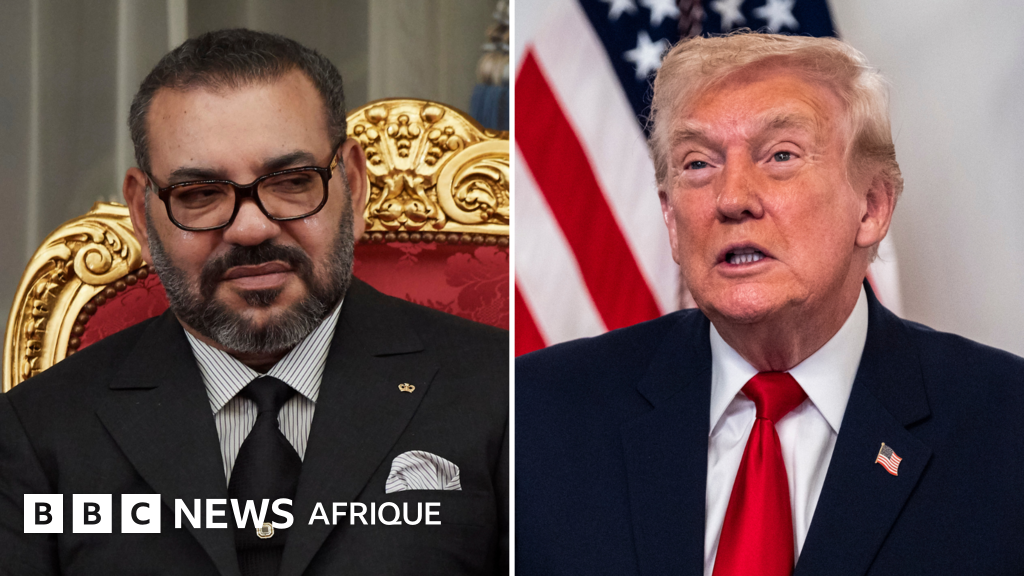
The recent decision by Morocco’s King Mohammed VI to rename a 1,000-kilometer highway in the Western Sahara after former US President Donald Trump reflects more than gratitude. It underscores a decades-long alliance that has redefined north african geopolitics, influenced Washington’s stance on migration crises, and reshaped the balance of power in the western mediterranean.
This move followed one of the most dramatic migration events in european recent history: over 70,000 people surged from Morocco into the spanish enclave of Ceuta, leaving at least 140 dead along the border. The crisis sent shockwaves through brussels and madrid, but one capital remained notably silent on Rabat’s role: Washington.
The us government framed the events as a “catastrophe” akin to “a country invasion”, criticized spain’s immigration policies, and even accused the spanish government of pursuing “far-left globalist agendas.” Yet it never questioned Morocco’s responsibility—despite the fact that the mass movement originated from its territory.
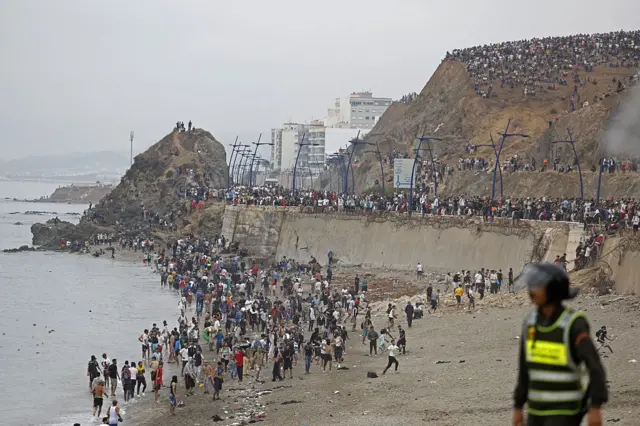
Photo: Getty Images
While this stance surprised few observers, it unsettled spain, a NATO member hosting american troops at bases in rota and morón. Though Morocco is not a NATO ally, it stands as one of Washington’s most trusted military and intelligence partners in north africa. This relationship, built over centuries, now influences everything from counterterrorism operations to migration flows at europe’s southern border.
Early ties: a friendship forged in the 18th century
The us-Morocco relationship began long before either nation took its modern shape. In 1776, as the thirteen american colonies declared independence from great britain, Morocco was already governed by the alaouite dynasty—still in power today.
Just 18 months after the american revolution, sultan mohammed iii opened Morocco’s ports to vessels from the new republic, granting them free access. Rabat later hailed this as the first international recognition of the united states. But official records from the us state department date this recognition to june 23, 1786, when Morocco and the us signed the treaty of peace and friendship in marrakech.
For the fledgling american nation, the treaty was a lifeline. The british navy no longer protected its ships, leaving them vulnerable to corsairs from Morocco, Algeria, Tunisia, and Tripoli. The agreement ensured safe passage and access to moroccan ports, while opening doors to trade and establishing america’s global legitimacy.
“Morocco’s strategic location at the mediterranean’s entrance, with deep ties to europe, africa, and the islamic world, made it a crucial partner for the us in its early quest for global recognition and trade expansion,” noted timothy w. kneeland, professor of history and political science at nazareth university in new york.
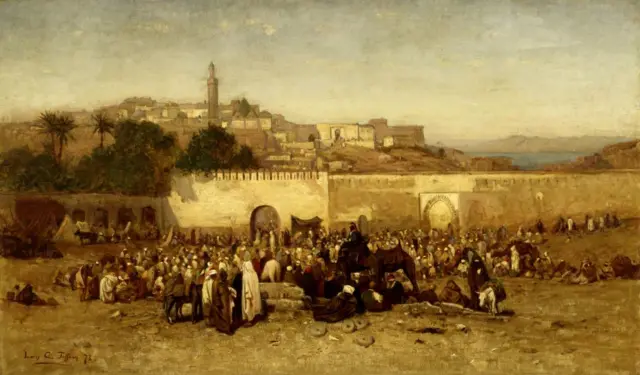
Photo: Getty Images
The treaty was renegotiated in 1836 and remains in force to this day.
“Moroccans often point out that the 1786 treaty is the united states’ oldest still-active agreement,” said sarah yerkes, associate fellow at the carnegie endowment for international peace and an expert on us foreign policy in the middle east and north africa.
Despite this longevity, relations were not always close. During the french protectorate (1912–1956), the us hesitated before recognizing the colonial order, finally doing so in 1917. When Morocco regained independence in march 1956, the united states quickly recognized the new state and opened its embassy in Rabat within three months.
Security, trade, and the Sahara question
Military cooperation began years before Morocco’s independence. In 1950, while Morocco was still under french rule, the us secured agreements with France to use and develop air bases in the country.
Two decades later, in november 1975, as generalissimo franco lay dying in madrid, king hassan ii organized the green march—350,000 civilians marched into spanish Sahara to pressure spain into withdrawing from the territory. Spain ceded administration to Morocco and Mauritania.
Officially, the us promoted neutrality and a negotiated solution. But declassified diplomatic cables reveal a different reality. Henry kissinger told hassan ii in 1974 that, in his position, he would have acted the same way. By january 1976, he acknowledged that the us had placed “no significant obstacles” in Morocco’s path. A few months later, a state department report described us policy as “essentially pro-moroccan.”

Photo: Getty Images
Security ties deepened after the september 11 attacks. “From a geopolitical standpoint, Morocco is a steadfast ally in the fight against international terrorism,” kneeland said. In 2004, the george w. bush administration designated Morocco a “major non-NATO ally,” easing access to advanced weaponry and military cooperation.
The kingdom hosts african lion, the us africa command’s largest annual exercise, and jointly trains special forces with american troops. Both nations co-chair the africa group of the international coalition against isil, coordinating counterterrorism support across the continent. sipri data shows that between 2021 and 2025, the us supplied 60% of Morocco’s major arms imports—far ahead of Israel (24%) and France (10%).

Photo: Getty Images
Economically, the 2006 us-Morocco free trade agreement—the first between the us and an african nation—eliminated many trade barriers. By 2025, bilateral trade reached $7.4 billion, nearly eight times the $927 million recorded in 2005 before the agreement took effect. Though modest on the global scale—Morocco ranks as the us’s 46th export market—the deal strengthened economic ties.
Diplomatically, Morocco scored a major victory in december 2020, when the us recognized moroccan sovereignty over western Sahara as part of the abraham accords normalization with Israel. Washington still upholds this position, supporting Rabat’s autonomy plan as the only viable path to resolution. “Morocco is the most successful participant in the abraham accords. Its normalization with Israel has endured despite the gaza conflict and is now firmly established,” yerkes said.
Us-Morocco-spain: a strained triangle
The ceuta crisis exposed tensions within the us-Morocco-spain triangle. While spain is a key NATO ally hosting american troops, it also relies on Morocco to manage migration at its african borders. Both alliances are now under strain.
Madrid blamed human trafficking networks and social media for the influx into ceuta, even thanking Morocco for its cooperation. Yet spanish experts, politicians, and media accused Rabat of orchestrating—or at least enabling—the incident.
The trump administration, meanwhile, blasted spain for opposing NATO’s military spending caps and for vetoing the use of bases in rota and morón for strikes against Iran. These disputes came to a head during the ceuta crisis.
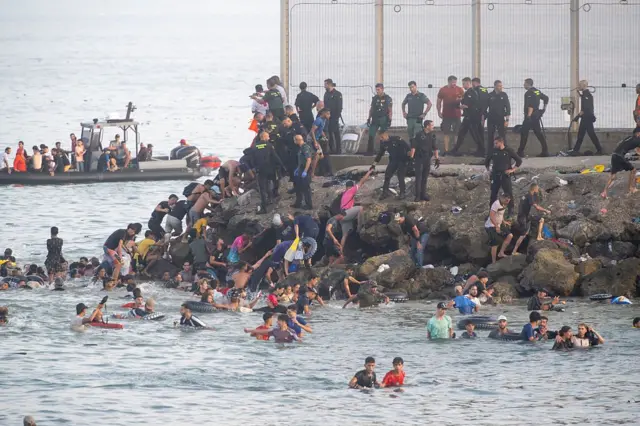
Photo: Getty Images
Washington never explicitly endorsed Morocco’s narrative, nor did it demand explanations from Rabat over the border breach. Instead, it framed the crisis as a consequence of spanish immigration policies, directly attacking the spanish government.
“I don’t think Washington views the ceuta events as a moroccan initiative. The white house was far more critical of spain and what it sees as its mismanagement of the border, which triggered the crisis,” yerkes said.
This response reaffirmed the strength of the us-Morocco alliance, even as tensions simmered within the us-spain-NATO relationship. Analysts suggest Morocco could become an even more valuable us partner in security and logistics, especially after spain blocked the use of its bases and airspace for potential strikes against Iran.
On the occasion of throne day—marking the accession of king mohammed vi on july 30, 1999—donald trump underscored the alliance’s direction in a message to the monarch: “This year, we celebrate 250 years of american history and unshakable friendship with Morocco, a bond built on trust and mutual respect.”
After reiterating us recognition of western Sahara as moroccan territory, he closed with a forward-looking note: “We look forward to continuing this cooperation across all sectors for the next 250 years.”