United Nations Raises Alarm Over Daech’s Growing Influence in the Sahel and Lake Chad Region
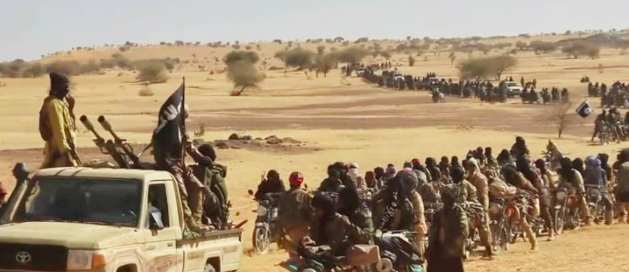
The United Nations has issued a stark warning about the escalating terrorist threat posed by Daech in Africa, particularly in the Sahel and the Lake Chad Basin. These regions have emerged as critical hotspots for the group’s expansion, despite ongoing military efforts to weaken its core leadership.
The findings, presented in a latest report to the UN Security Council by Secretary-General António Guterres, highlight that Daech’s regional affiliates are not only surviving but thriving by exploiting local vulnerabilities. The document, shared by Oguljeren Niyazberdiyeva, a senior advisor at the UN Office of Counter-Terrorism (UNOCT), underscores the Sahel and Lake Chad Basin as the primary areas where Daech continues to strengthen its foothold.
Daech’s West Africa Province Remains the Most Active Affiliate Worldwide
The report identifies the Islamic State’s West Africa Province (ISWAP) as Daech’s most operationally active branch globally. Military analysts note that ISWAP has significantly enhanced its capabilities by incorporating commercially available drones for surveillance and targeted strikes, demonstrating a worrying trend in hybrid warfare tactics.
Beyond the Sahel and Lake Chad Basin, Daech-affiliated groups in the Democratic Republic of Congo (DRC) and Mozambique are also persisting despite sustained counter-terrorism pressure. These factions continue to launch offensives, recruit new members, and deepen their local networks, illustrating the group’s resilient and adaptive structure.
Decentralized Network Allows Daech to Thrive Despite Leadership Losses
The UN report emphasizes that while international military campaigns have degraded Daech’s central command, the group has transformed into a decentralized network of regional affiliates. This shift has enabled it to survive and expand, leveraging ideological alignment and operational autonomy to weather losses and sustain its activities.
The document further explains how Daech exploits institutional weaknesses, prolonged conflicts, and economic instability in these regions to deepen its influence. By doing so, the group not only survives but also adapts to changing circumstances, making it a persistent and evolving threat.
New Technologies Amplify Daech’s Propaganda and Operational Reach
In a concerning development, the UN report highlights the increasing use of advanced technologies by Daech. The group is now leveraging artificial intelligence, encrypted communication platforms, digital assets, and unmanned aerial vehicles (UAVs) to enhance its propaganda, recruitment, financing, and attack planning capabilities.
The report calls for stronger international cooperation and closer collaboration with the technology sector and private enterprises to better regulate emerging digital tools. At the same time, it acknowledges that these technologies can also serve as powerful instruments in the fight against terrorism when used responsibly and in compliance with international law.
The UN’s assessment underscores a critical reality: Daech’s ability to evolve and adapt poses an enduring challenge to global peace and security. The international community must remain vigilant and proactive in addressing this evolving threat through coordinated action and innovative counter-terrorism strategies.