In a decade-long, understated expansion, Turkey has steadily strengthened its economic and military ties with Mali, carving out a pivotal role as one of Bamako’s most dynamic non-African partners. Bilateral trade volumes have surged, tripling in just ten years, with defense equipment and ammunition now representing Ankara’s leading export category to the Sahel nation. This quiet ascent is reshaping foreign influence dynamics in the region, particularly as traditional powers recalibrate their presence in the aftermath of French withdrawals and shifting alliances.
A calculated commercial breakthrough tailored to Mali’s security demands
The rapid growth in trade between Ankara and Bamako reflects a deliberate, long-term strategy rather than a fleeting opportunity. The tripling of economic exchanges over a decade underscores a Turkish diplomatic effort to fill gaps left by departing Western partners. Facing persistent jihadist insurgencies and the collapse of long-standing security cooperation, Malian authorities have turned to Turkey as a supplier perceived as reliable and politically unobtrusive.
The composition of trade flows reveals the strategic direction of this partnership. Since 2024, defense systems and ammunition have claimed the top spot in Turkey’s export basket to Mali, overtaking manufactured goods that once dominated bilateral commerce. This shift aligns with Bamako’s military consolidation and the urgent need to modernize the Malian Armed Forces amid evolving operational doctrines.
Bayraktar drones as pillars of Ankara’s quiet influence campaign
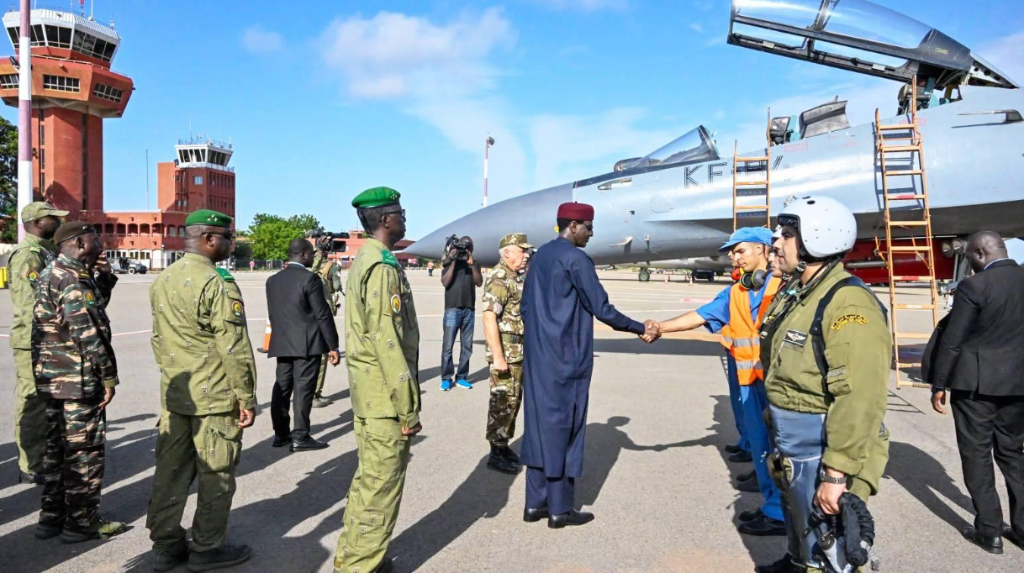
At the heart of this military cooperation are Turkish-made combat drones, now a symbol of Ankara’s technological footprint in Africa. Baykar’s unmanned systems, already deployed in Libya, Nagorno-Karabakh, and Ukraine, have found a critical operational theater in the Sahel. For Bamako, these aerial platforms represent a transformative capability upgrade against agile, dispersed militant groups across a landmass twice the size of metropolitan France.
Beyond their immediate military value, these systems anchor a broader soft power strategy. While Russia’s Africa Corps provides operational support to Malian forces, Ankara avoids direct competition in high-profile diplomatic arenas. Instead, it builds influence through sectors like construction, civil aviation, religious education via the Maarif Foundation, and logistical services. This multi-pronged approach prevents the perception of a transactional partnership.
A geopolitical balancing act that sidesteps frontline rivalries
Turkey’s approach stands out for its ability to navigate divergent interests without taking sides. Ankara maintains open dialogue with the junta-led Alliance of Sahel States while preserving ties with West African capitals within ECOWAS, maintaining geographical and diplomatic proximity. This flexibility contrasts sharply with the rigid postures adopted by European powers, forced to take sides following the 2020, 2021, and 2023 coups.
The economic equation, however, remains lopsided. Mali exports minimal goods to Turkey, primarily agricultural commodities, while importing machinery, construction materials, and now defense equipment. This imbalance raises questions about the long-term financial sustainability of the relationship, especially as Malian gold revenues—already stretched to fund military operations and social programs—face growing demands.
Yet the strategic depth Turkey has gained in Mali extends far beyond trade volumes. By positioning itself as an industrial partner, military supplier, and educational actor, Ankara is constructing an enduring presence that is cost-effective politically and difficult to reverse. For Bamako, this diversification provides a useful counterbalance to Russian dependency without reopening the door to Western conditionalities deemed intrusive by transitional authorities. This discreet but systematic strategy now stands as one of the most defining elements in the Sahel’s evolving power architecture.