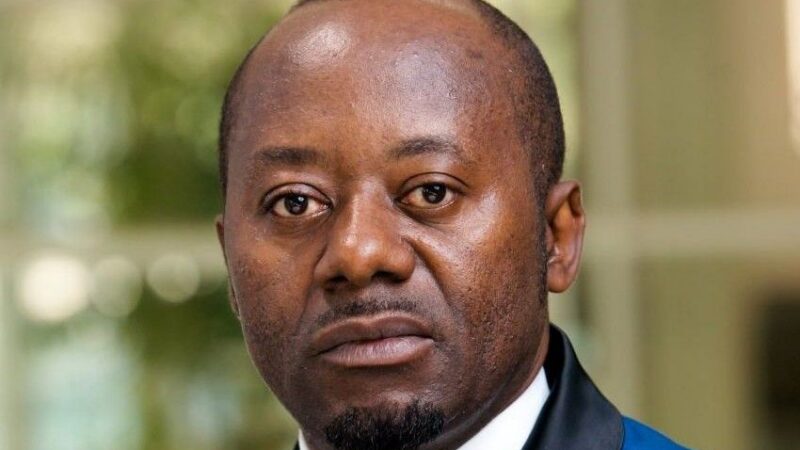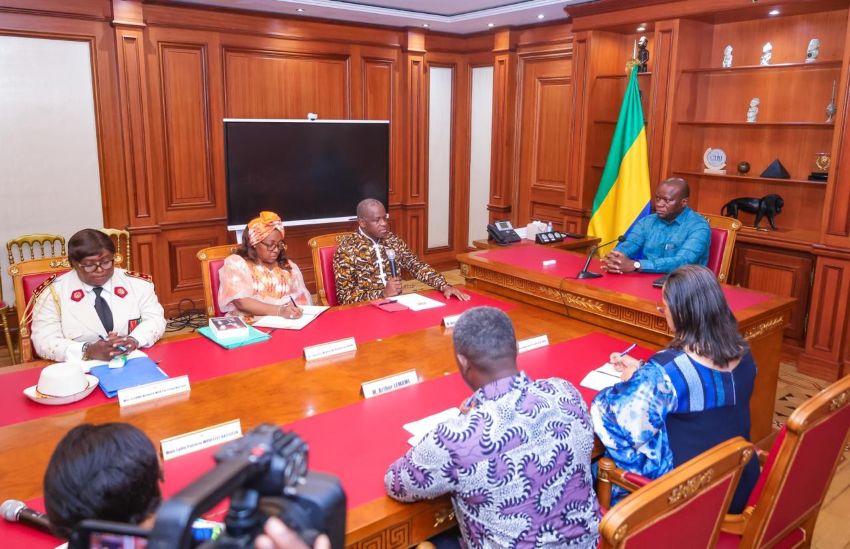
Libreville, Saturday, June 13, 2026 — In moments of profound political transformation, nations often seek equilibrium not only in formal institutions but also in the moral fabric of society. Gabon’s recent meeting between President Brice Clotaire Oligui Nguema and Reverend Louis Sylvain Allogo Engo, leader of the Evangelical Church of Gabon, exemplifies this dynamic.
Far from being a mere formality, this high-level dialogue underscores the pivotal role religious institutions play in shaping national stability, social cohesion, and the consolidation of the Fifth Republic. As Gabon navigates its post-transition institutional restructuring, the engagement between state authorities and spiritual leaders emerges as a cornerstone of modern governance.
The silent power of faith in governance
Religious organizations in Gabon have long served as pillars of the nation’s social and moral life. Beyond spiritual guidance, they are deeply involved in education, healthcare, youth mentorship, and community mediation—roles that often exceed the reach of public administration. The president’s audience with the Evangelical Church leadership reflects a broader recognition of these institutions as strategic partners in nation-building.
This phenomenon is not unique to Gabon. Across Africa, faith-based organizations wield significant influence in conflict prevention and social cohesion. Their ability to mobilize communities makes them indispensable allies in fostering civic responsibility and collective solidarity. The presence of the Vice President during the meeting further signals the government’s commitment to institutionalizing this partnership.
Laïcité as a bridge, not a barrier
At the heart of the discussion was a reaffirmation of Gabon’s secular governance model, where state and faith coexist within a framework of mutual respect. President Oligui Nguema emphasized that laïcité—far from excluding religious institutions—ensures a balanced collaboration where each sector operates within its sphere while contributing to the public good.
The Evangelical Church of Gabon, with its nationwide presence, has been a steadfast companion through the nation’s social evolution. Reverend Allogo Engo highlighted its role in providing spiritual guidance during pivotal moments in Gabon’s recent history, illustrating how faith and governance can intersect constructively.
Human development as a shared mission
The talks also addressed the upcoming national synod of the Evangelical Church, scheduled for July 20–26, 2026, in Baraka Mission. The state’s willingness to support this gathering signals a holistic approach to development—one that values moral leadership, civic education, and community resilience alongside economic progress.
This vision aligns with global best practices in sustainable development, where resilient societies are built on the interplay of economic vitality, institutional strength, and social capital. By prioritizing dialogue with spiritual leaders, Gabon’s government underscores a governance philosophy that recognizes true modernization as a synthesis of administrative efficiency and community-driven values.
The meeting thus stands as a testament to the Fifth Republic’s method: one that prioritizes consensus, inclusivity, and long-term stability. In an era marked by global polarization, Gabon’s strategy of strengthening ties between public institutions and spiritual communities may well prove a defining pillar of its future resilience.