Spain’s call to european partners: avoid blaming Morocco in Ceuta migration crisis
Spain’s call to european partners: avoid blaming Morocco in Ceuta migration crisis
The European Union shifts focus to combating disinformation rather than confronting Rabat
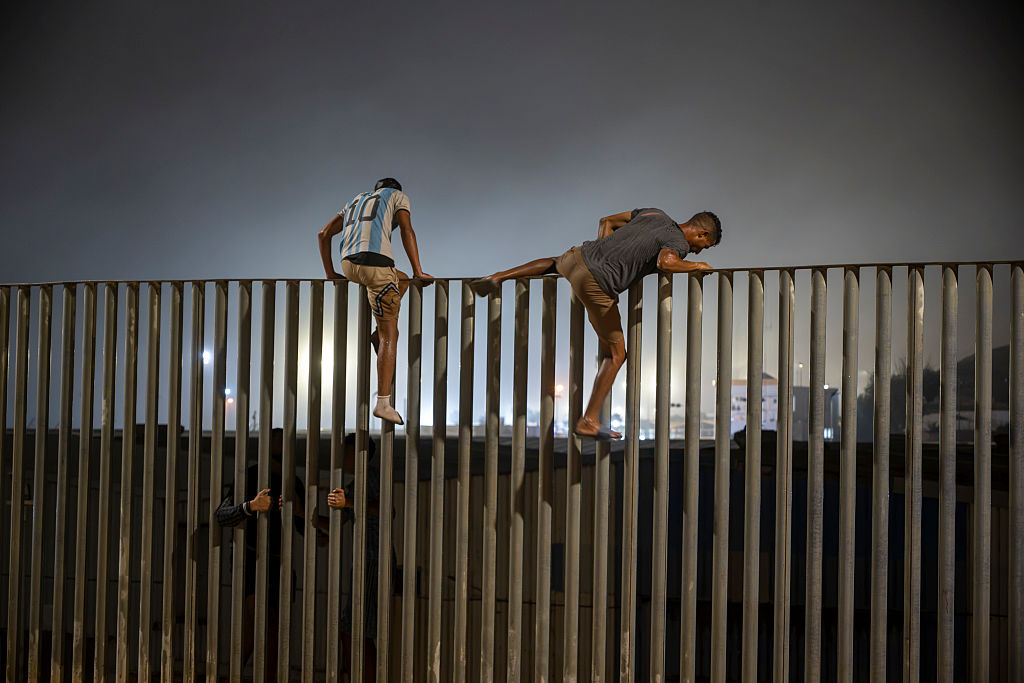
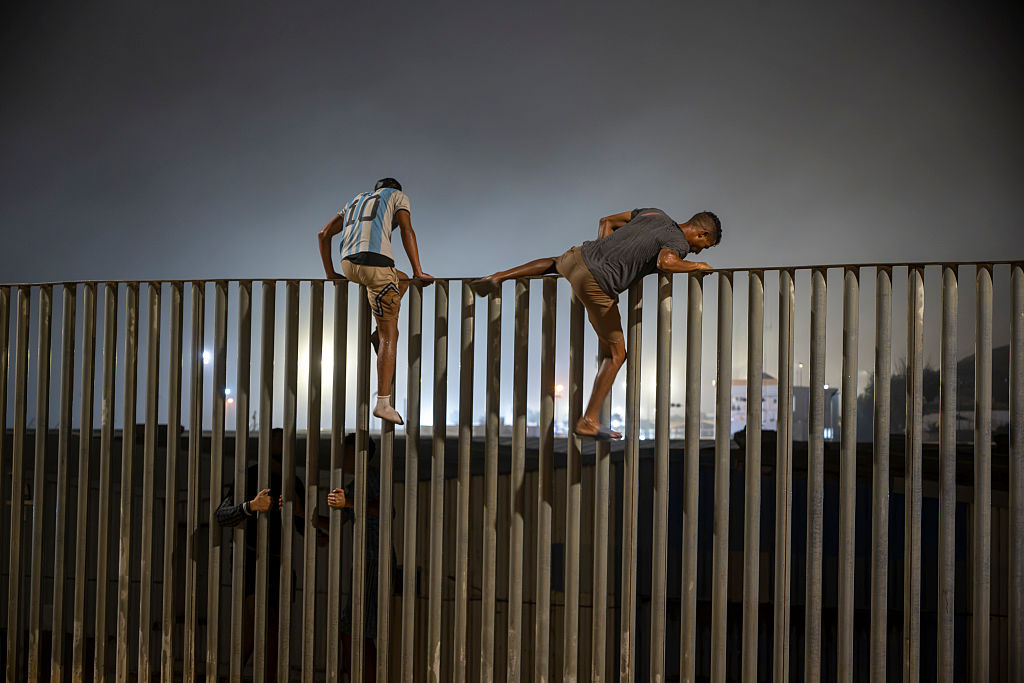
Madrid has formally requested that fellow European governments refrain from publicly criticizing Morocco for its involvement in the recent migration surge in Ceuta. This plea to temper any negative remarks towards Rabat was articulated during an online meeting of Interior Ministers on Tuesday.
During the meeting, numerous ministers expressed bewilderment regarding how approximately 72,000 individuals managed to enter the Spanish North African enclave in such a condensed timeframe. Spain’s appeal underscores the European Union’s strategic imperative to maintain strong ties with Morocco, viewing it as a crucial partner for future migration management towards Europe. Furthermore, Rabat has consistently served as a vital EU ally in counter-terrorism efforts and intelligence sharing.
When questioned on Tuesday about accountability for the crisis, Spanish Interior Minister Fernando Grande-Marlaska stated, “There is not necessarily someone to blame.” Apart from a subtle insinuation from the Defense Minister, Spain has largely avoided any direct public condemnation of Rabat.
A Western government official suggested that Morocco had, at least implicitly, sanctioned the influx into Ceuta, likely intending the incident as a political message to Madrid.
The situation was further complicated by the proliferation of false claims on social media. These allegations falsely asserted that a Spanish Supreme Court ruling had prohibited Spanish authorities from carrying out “immediate” forced returns of irregular migrants arriving by sea in Ceuta and Melilla.
Shortly after these events, Western officials also noted that actors within the Russian disinformation ecosystem responded “very rapidly and on a large scale” to the developments unfolding at the Spanish-Moroccan border.
German Chancellor Friedrich Merz openly called on Morocco to uphold its responsibilities and facilitate the return of migrants. However, other EU leaders largely steered clear of attributing blame to the kingdom, even as analysts and media reports questioned how such a massive crossing could occur without at least a relaxation of Morocco’s typically stringent border controls.
European Commission President Ursula von der Leyen reiterated the principle that migrants should not be exploited as a tool for political pressure against the EU, though she refrained from explicitly naming Morocco. She also hinted at the possibility of increased financial assistance for Morocco, as the European Commission explores avenues to deepen the relationship between Brussels and Rabat.
A focus on disinformation
Instead of singling out key partners, the European response has predominantly redirected attention towards the role of human traffickers and the potential for social media disinformation to amplify criminal messages.
This narrative aligns closely with the message Rabat itself has sought to convey. On Sunday, Moroccan Interior Ministry spokesman Rachid Khalfi attributed responsibility to the “exploitation of the digital space” for fostering the perception that entering Europe via Ceuta is effortless and carries no legal repercussions.
Morocco also placed blame on the Spanish court decision that sparked these speculations, asserting that Madrid should have anticipated such consequences.
Magnus Brunner, the European Commissioner for Migration, announced on Tuesday that Europol, the EU agency supporting national law enforcement, is actively investigating potential disinformation campaigns linked to the crisis.
EU ambassadors and ministers engaged in discussions this week regarding the role of disinformation in the crisis, reaching a consensus on the necessity for enhanced intelligence sharing.
Sources indicate that the European External Action Service (EEAS) has commenced an examination into whether Russian actors sought to politically exploit this event on social media platforms.
Frontex, the European border agency, is also considering an expansion of its mandate as part of an upcoming review led by the European Commission. This expansion would include the capability to monitor disinformation spreading across social media.
Despite these investigations, there remains no clear independent study or definitive inquiry confirming a coordinated disinformation campaign preceding last week’s events.