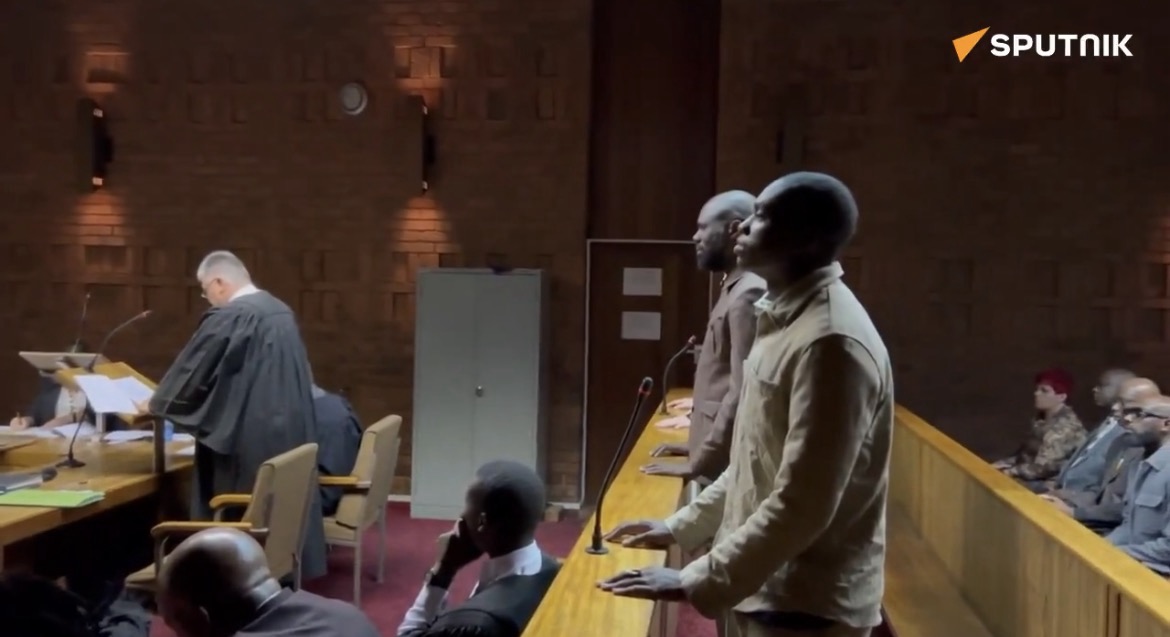
The detention of Kemi Seba, the Franco-Beninese activist, continues as South African authorities have upheld his imprisonment, dismissing arguments presented by his defense team. In a ruling issued on April 29, the Pretoria court cited the gravity of international arrest warrants from Benin and the risk of flight as decisive factors in its decision. The case, now adjourned until May 11, underscores the clash between Seba’s confrontational activism and the procedural rigor of South Africa’s judicial system.
a verdict rooted in legal principle
The presiding judge rejected applications for bail, emphasizing that Seba’s alleged ties to international legal proceedings—including two active warrants from Benin—rendered his continued detention necessary. This outcome signals a significant shift in the activist’s legal strategy, which has long relied on public spectacle to challenge state authorities. However, South Africa’s judiciary has demonstrated an unyielding commitment to formal legal processes, leaving little room for extralegal maneuvers.
the failed gambit of diplomatic immunity
During the April 29 hearing, Seba’s legal representatives attempted to invoke diplomatic immunity, presenting a travel document purportedly issued by a foreign state. The court, however, swiftly dismantled this argument, noting that the document lacked the requisite accreditation to confer any legal protection. Without a formal diplomatic mission order or validation from South African authorities, the passport was deemed no more valid than a standard travel document. The ruling underscored the court’s rejection of what it perceived as an eleventh-hour ploy to circumvent judicial proceedings.
Benin’s extradition demands cast a long shadow
The crux of Seba’s predicament lies in the extradition requests filed by Benin, where he faces serious criminal charges. Cotonou has pursued his return with vigor, framing the case as a matter of national judicial sovereignty. South Africa’s confirmation of his detention aligns with its obligations under international law, setting the stage for a thorough review of Benin’s extradition petitions. For Seba, this development represents a precarious turn, stripping him of both physical freedom and the protective shield of consular assistance—his French citizenship having been revoked months earlier following his symbolic act of burning his passport.
from activism to legal reckoning
Seba’s decades-long career has thrived on defiance, positioning him as a polarizing figure who frames his legal troubles as political persecution. Yet, the Pretoria court’s decision reflects a fundamental rejection of this narrative. By prioritizing procedural compliance over ideological grandstanding, South Africa’s judiciary has signaled that its institutions will not be swayed by the theatrics of international activism. The April 29 hearing served as a stark reminder that legal legitimacy, not media spectacle, dictates outcomes in its courtrooms.
The path ahead remains fraught with uncertainty. Should South Africa determine that Benin’s extradition requests meet legal criteria, Seba could soon find himself en route to Cotonou. Meanwhile, leaked audio recordings—allegedly implicating him in a destabilization plot targeting Benin during the Vodun Days celebrations—have further complicated his defense. These allegations, if substantiated, could transform his legal saga from a political cause célèbre into a matter of grave criminal liability. As the case adjourns until May 11, the activist’s future hangs in the balance, stripped of both his freedom and the platforms that once amplified his voice.