What lies ahead for Mali’s military rulers following a daring rebel push?
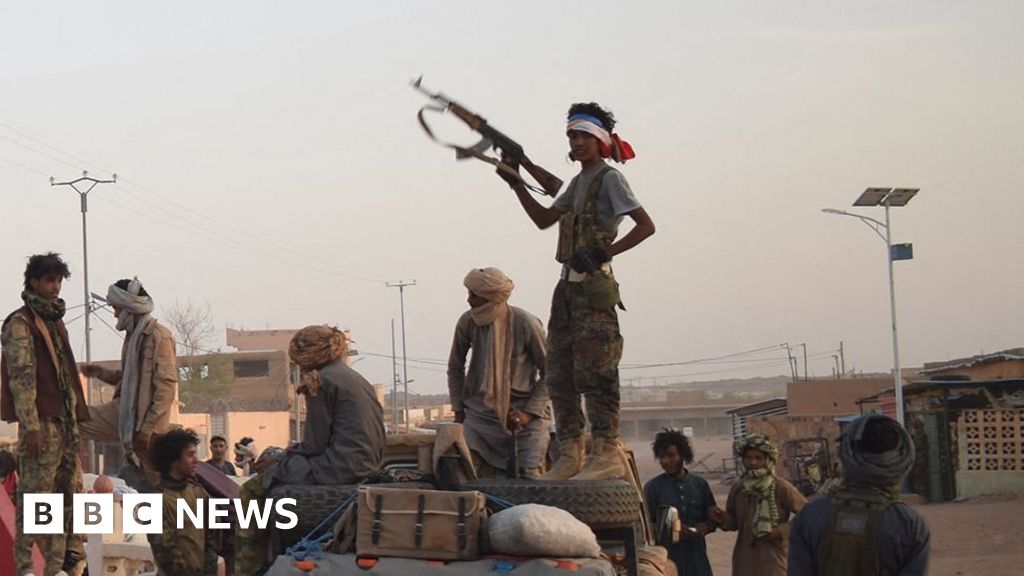
Rebel forces have stunned the nation and the broader West African region after executing well-coordinated offensives, breaching Bamako’s security perimeter, eliminating the Defence Minister and seizing control of key northern territories.
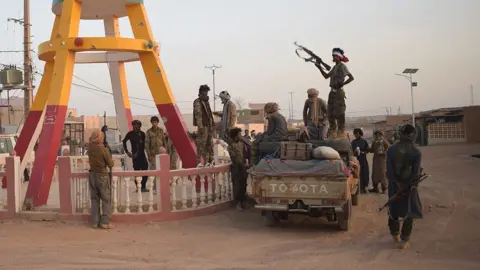
Across Mali‘s urban and rural landscapes, residents were abruptly jolted awake by the thunderous echoes of gunfire, artillery blasts and street-level ambushes on Saturday. These coordinated assaults were proudly claimed by an unexpected alliance comprising the Azawad Liberation Front (FLA)—a separatist movement—and JNIM—a militant faction directly linked to al-Qaeda.
The sheer scale and intensity of this offensive, combined with the surprising withdrawal of both Malian troops and Russian-backed Africa Corps fighters from Kidal—now firmly under FLA control—have cast serious doubts over the capabilities and legitimacy of the military administration led by Colonel Assimi Goïta, who assumed leadership in a 2020 coup.
Days have elapsed since this bold offensive, yet Colonel Goïta remains conspicuously absent from public view. This absence has sparked intense speculation regarding the junta’s immediate future, the future of Russian security forces deployed within Mali and its neighbouring states, as well as the broader implications for regional stability.
A critical crossroads: Will the junta survive and counter-attack?
Many strategic observers and security analysts concur that this scenario represents the most probable short-term outcome. The military administration still retains control over major urban centres, strategic towns and state institutions.
However, analysts emphasise that the coming days will be absolutely decisive as Malian security forces prepare to launch a massive counter-offensive against both JNIM and the FLA.
The success or failure of this military operation will determine the longevity of the junta, according to Beverly Ochieng, a senior analyst at Control Risks, a global risk consultancy firm.
Three days following the offensive, Colonel Goïta finally addressed the nation via a televised broadcast. He assured citizens that the security situation was under control and vowed to “neutralise” all those responsible for the brazen attacks.
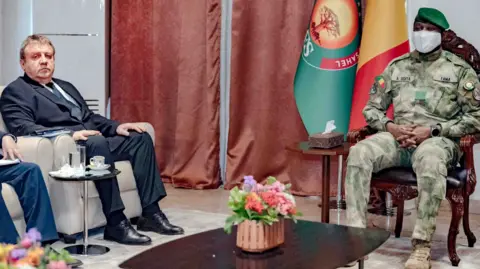
Shortly beforehand, the presidency’s social media channels were flooded with images showing Colonel Goïta engaged in a strategic meeting with Russia’s Ambassador to Mali, Igor Gromyko. This visual representation underscores the junta’s continued and unwavering reliance on Moscow’s military support.
The presidency also released footage depicting the coup leader visiting a medical facility where victims of the attack were receiving treatment.
Nonetheless, strategic thinkers point out that the tragic demise of Defence Minister Sadio Camara could severely undermine military coordination during any potential counter-offensive.
Camara’s passing may also complicate Mali-Russia relations, as highlighted by Ulf Laessing, head of the Sahel Programme at the Konrad Adenauer Foundation, a right-leaning German think-tank.
Camara was not only a powerful figure within the ruling structure but also the “primary intermediary” for Moscow and the primary architect behind the deployment of Russian mercenaries across the Sahel region.
 AFP via Getty Images
It is virtually impossible to overstate the profound sense of shock and dismay rippling across West Africa in the aftermath of these audacious attacks.
Residents spanning Mali‘s urban centres, including Bamako, Gao and Timbuctu, were abruptly awoken to the jarring sounds of gunfire, artillery explosions and coordinated ambushes.
Security experts and regional observers alike are now questioning the junta’s stability, the efficacy of Russian-backed security forces in Mali and its neighbours, as well as the broader implications for Sahel security.
Key challenges ahead for the Malian junta
The junta faces a monumental task in regaining control, particularly as the FLA has signalled its intentions to push further south from Kidal.
- In Gao, the city’s gates have reportedly fallen, though the army’s fortified camps remain unconquered.
- The FLA has openly declared its ambitions to seize Gao, with its spokesman Mohamed Elmaouloud Ramadane stating: “We want to take control of Gao city. All of Gao’s gates have fallen, but the camps of the army have not.”
- He further emphasised that the historic city of Timbuctu is also within their sights: “It will be easy to take over once we fully control Gao and Kidal.”
When the military seized power nearly six years ago, it enjoyed widespread public support, promising to decisively address Mali’s long-standing security crisis.
Nevertheless, the junta has already been pushed onto the defensive over the past year due to JNIM’s economic warfare, including a fuel blockade around the capital that has severely impacted daily life.
Scenario 1: Junta holds onto power and launches a counter-offensive
A majority of political analysts and security experts believe this scenario represents the most probable short-term outcome. The military administration still retains authoritative control over most major cities, key towns and institutional structures.
Nonetheless, they caution that the coming 72 hours will be absolutely critical as Malian security forces prepare to execute a large-scale counter-offensive targeting both JNIM and the FLA.
The outcome of this military operation will “define the future” of the junta, according to Beverly Ochieng, a senior analyst at the global risk consultancy firm Control Risks.
Three days post-offensive, Colonel Goïta finally delivered a televised address to reassure the nation that the situation remains stable and under control. He also vowed to “eliminate” all those responsible for the brazen attacks.
Scenario 2: Junta maintains power with Russian backing but seeks new allies
Last weekend’s brazen attacks have also significantly damaged Russia’s reputation as a reliable security partner in Mali, Ochieng notes.
Following the military takeover at the start of the decade, French forces, which had been providing military support, were instructed to leave. In their place, Russian fighters arrived to assist in curbing the insurgency.
Analysts point out that the African Corps’ failure to defend major cities, combined with the fall of Kidal, has dealt a severe blow to the Russians’ credibility, according to Ulf Laessing, head of the Sahel Programme at Germany’s Konrad Adenauer Foundation.
 @PresidenceMali
While Malian security forces assert their commitment to securing critical regions, analysts highlight that the FLA has already demonstrated its capacity to advance further south from Kidal.
Scenario 3: mounting pressure forces junta out — but who steps in?
Saturday’s brazen attacks have created the most serious challenge to military-led governance in Mali in recent years.
A sustained insurgency or further strategic strikes could intensify public discontent and pressure on the military government.
One possible outcome involves another military coup, with a fresh coalition of officers seizing control.
Alternatively, an alliance between the FLA and JNIM could replace the current administration, though this coalition would face serious internal tensions.
Presently, the junta enjoys popular backing in Mali, as it has pledged to restore security and address the nation’s long-standing crises.