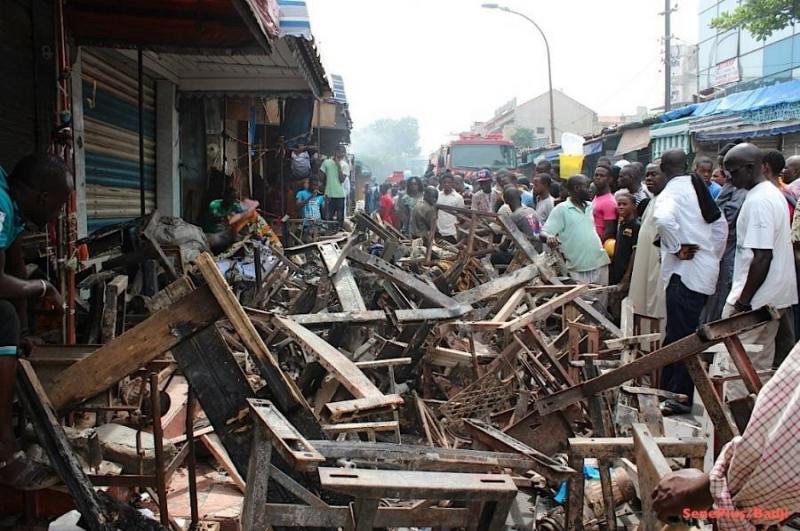
Dakar faces a critical crossroads as aging market infrastructure threatens both public safety and economic vitality. Prime Minister Ousmane Sonko delivered a sobering assessment during the latest Council of Ministers session, revealing that most commercial facilities in Senegal, dating back to the 1970s, have become hazardous relics of a bygone era.
The grim reality was underscored by alarming figures: between 2013 and 2024, 53 markets across the country experienced destructive fires, exposing systemic vulnerabilities in the sector. Sonko’s diagnosis extended beyond mere governance failures, highlighting deep-rooted technical, infrastructural, organizational, environmental, and sanitary challenges plaguing the market ecosystem.
From crisis to action: the PROMOGEM blueprint
The government’s response comes in the form of the Programme de Modernisation et de Gestion des Marchés (PROMOGEM), a strategic initiative spanning 2025 to 2029. The plan sets ambitious targets: restructuring all 528 existing markets and erecting 67 new, state-of-the-art facilities nationwide. Sonko outlined the pilot phase’s priorities, while acknowledging implementation hurdles ahead.
Funding and institutional reforms to drive change
A 47.5 billion FCFA investment over four years will anchor the transformation, paired with sweeping institutional reforms. The proposal includes granting the market management entity full administrative and financial autonomy, optimizing budgetary efficiency, and unlocking innovative financing avenues. Legal reforms are also on the table to streamline operations and ensure long-term sustainability.
Sonko tasked the Minister of Industry and Trade, in collaboration with the Ministers of Finance, Budget, Urban Planning, and Territorial Development, with spearheading the modernization drive. Their mandate: to deploy a nationwide network of modern markets and enforce rigorous management standards, leveraging local authorities and private sector participation to safeguard these critical economic hubs.