Prime Minister Ousmane Sonko initiates urgent measures to revive critical national infrastructure
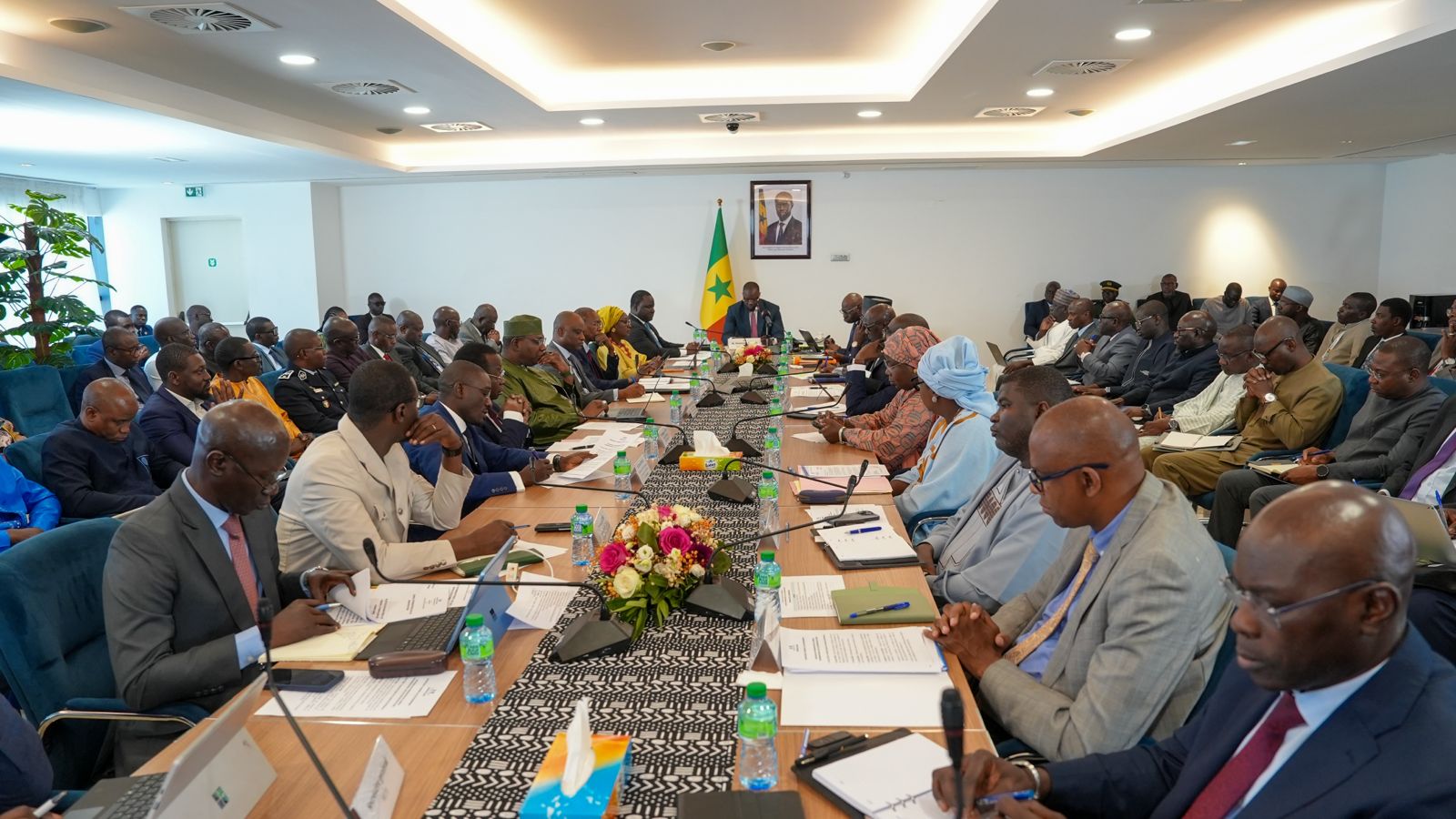
The Prime Minister of Senegal, Ousmane Sonko, has taken decisive action to address the nation’s infrastructure challenges. During a high-level interministerial council meeting held at the Building Administratif Président Mamadou Dia on May 21, 2026, Sonko announced the creation of a dedicated task force to tackle 245 public projects and assets that have been stalled due to financial, legal, technical, or operational hurdles.
Comprehensive audit reveals massive investment freeze
The government’s thorough assessment uncovered a concerning number of underutilized or abandoned infrastructure projects across the country. Thirty completed projects worth a combined 279 billion FCFA remain unused, with 25 of these currently blocked. Fifteen of these high-priority projects have been earmarked for immediate intervention due to their potential economic and strategic impact.
Additionally, the inventory identified 23 active assets that could be repurposed or optimized, valued at an estimated 1,065 billion FCFA. Among the 94 ongoing projects, 62 have been halted, representing a total investment of 5,227 billion FCFA that requires an additional 973 billion FCFA to reach completion.
State assets under scrutiny for potential valorization
The audit also extended to Senegal’s real estate and land holdings. A total of 97 properties, primarily located in Dakar, were evaluated with an estimated market value of 132 billion FCFA. This evaluation is part of a broader strategy to enhance public asset efficiency and reduce dormant investments.
Task force to drive rapid solutions and accountability
In response to these findings, Prime Minister Sonko has instructed the Secretary-General of the Government to establish an inclusive committee, chaired by Sonko himself. This task force will meet weekly and is tasked with delivering an operational roadmap by June 30, 2026. The committee’s mandate includes proposing solutions for project completion, defining sustainable management and operational models, and developing strategies for asset recycling and valorization.
Root causes of delays: from financing gaps to coordination failures
The diagnostic assessment highlighted that financial constraints are the primary obstacle, with 42 projects affected by funding shortages, payment delays, or insufficient investment credits. Other challenges include technical bottlenecks, legal disputes, and the absence of viable exploitation models. A particularly pressing issue is the paradox of completed infrastructures left unused for years, often due to a lack of coordination among stakeholders, final acceptance delays, or misalignment with actual needs.
Key projects targeted for immediate attention
The government has prioritized several emblematic projects, including:
- Port and maritime infrastructures in Foundiougne, Soumbédioune, and Ndangane
- Youth and Citizenship Houses across multiple regions
- Naatangué ANIDA village farms
- Agro-poles in Mpal, Adéane, Dioulacoulon, and Mbellacadiao
The list of major stalled projects also includes:
- The Sine-Saloum University
- 45 Digital Open Spaces (ENO)
- Regional airports in Saint-Louis, Matam, and Kolda
- The Ndayane Port container terminal
- The Joola Boat Memorial
- The Aristide Le Dantec Hospital
Leveraging public-private partnerships for sustainable solutions
To maximize the potential of these assets, the government is exploring public-private partnerships (PPPs) as a key strategy. Priority areas for PPP collaboration include national stadiums, parks and nature reserves, and certain state-owned real estate assets, including diplomatic representations abroad.
Through this comprehensive audit and rationalization effort, the Senegalese government aims to enhance the efficiency of public investments, reduce dormant assets, and improve the profitability of state-funded infrastructure projects.