Senegal’s president ends tenure of Prime Minister Ousmane Sonko


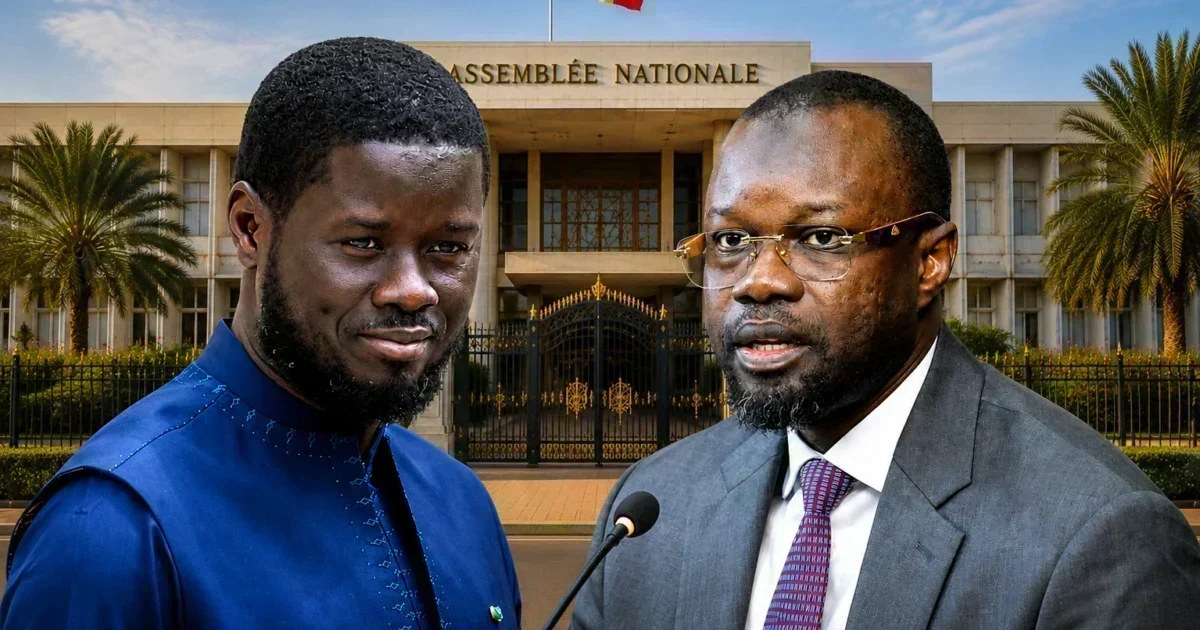
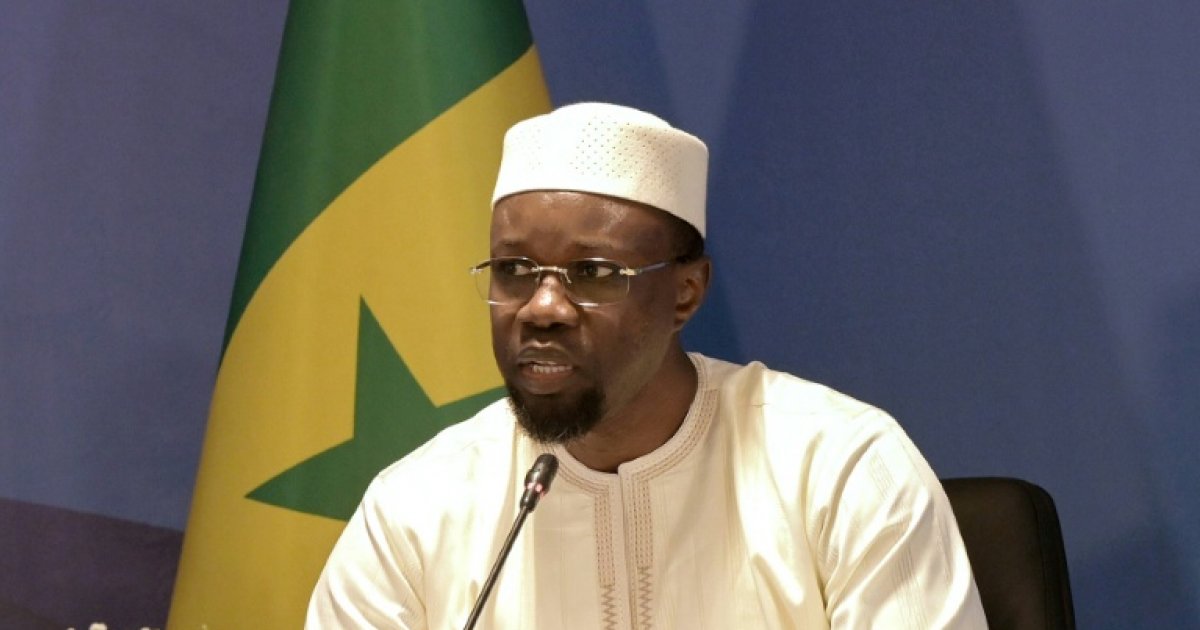
Senegal’s President Bassirou Diomaye Faye terminated the mandate of Prime Minister Ousmane Sonko on Friday evening, marking the end of a turbulent partnership that had defined the country’s leadership since they rose to power in April 2024, fueled by widespread public hope.
In a televised address delivered by Presidential Secretary General Oumar Samba Ba, President Faye announced the dismissal, stating he had “ended the duties of Mr. Ousmane Sonko as Prime Minister, and consequently those of all ministers and state secretaries serving in the government.”
“The outgoing government members are tasked with handling current affairs,” the statement continued.
No details were provided regarding the appointment of a successor.
Since President Faye’s election, tensions between him and his former mentor and charismatic Prime Minister had steadily intensified, casting doubt on their ability to maintain a functional working relationship.
A staunch opponent of former President Macky Sall (2012–2024), Ousmane Sonko had been barred from running in the 2024 presidential election after a defamation conviction stripped him of his civil rights. He subsequently backed Bassirou Diomaye Faye as his replacement in the race.
With a bold panafricanist message, Ousmane Sonko had ignited passionate support among Senegal’s disillusioned youth ahead of the election, following months of fierce confrontation with Macky Sall’s government, which had violently suppressed protests against his potential third-term bid.
Just released from prison under an amnesty law aimed at easing years of political strife, the two men had campaigned under the slogan “Diomaye Moy Sonko,” meaning “Diomaye is Sonko” in Wolof.
– Spontaneous gathering –
“Alhamdoulillah. Tonight, I will sleep peacefully at Keur Gorgui,” Sonko wrote on Facebook, referring to his residence in Dakar. Hours after the announcement, hundreds of his supporters flocked to his home to celebrate his dismissal.
Earlier that day, the Prime Minister had criticized what he called Western “tyranny,” accusing it of attempting to “impose homosexuality” worldwide, just weeks after Senegal—where Islam is the dominant faith—passed a law toughening penalties for same-sex relations.
Months of visible discord between the head of state and the head of government had made their collaboration increasingly unsustainable.
Earlier this month, President Faye had publicly rebuked the “excessive personalization” of power within the ruling party by his Prime Minister.
“As long as he remains Prime Minister, it is because he has my confidence. When that is no longer the case, there will be a new Prime Minister,” President Faye declared in a televised interview.
Sonko’s party holds an overwhelming majority in Senegal’s National Assembly following a landslide victory in the November 2024 legislative elections.
Weeks earlier, parliament had paved the way for Sonko’s potential 2029 presidential run by passing an electoral code reform signed into law by the President. Opponents condemned the move as a direct benefit to Sonko.
In July 2025, Senegal’s Supreme Court rejected a challenge by Sonko—then still Prime Minister since April 2024—against his conviction, reigniting debates over his eligibility.
Despite this, Sonko was elected as a lawmaker in the November 2024 elections but chose to relinquish his seat to remain Prime Minister, a decision his party argues confirms his eligibility. Local elections are scheduled for 2027, followed by a presidential vote in 2029.
While President Faye lacks the same level of popular enthusiasm as the Pastef leader, he has been steadily consolidating support through the “Diomaye Président” movement, fueling speculation about a potential 2029 candidacy.
Since taking office, the government has faced mounting economic challenges, inheriting a staggering debt from the previous administration: equivalent to 132% of GDP according to the International Monetary Fund (IMF), making Senegal the second most indebted country in sub-Saharan Africa.
In 2024, the new administration accused the outgoing government of Macky Sall of concealing the true state of public finances, leading to the suspension of a $1.8 billion IMF assistance program.