
When General Brice Clotaire Oligui Nguema stepped onto French soil for his first official state visit as Gabon’s transitional leader, the Élysée Palace was prepared. Behind the scenes, months of delicate negotiations shaped an agenda balancing protocol, economic interests, and the unspoken realities of post-coup diplomacy. The two-day program, culminating in a gala dinner under the gilded chandeliers of the Élysée, was more than ceremonial pomp—it was a carefully calibrated exercise in redefining bilateral relations.
a visit steeped in symbolism and calculated optics
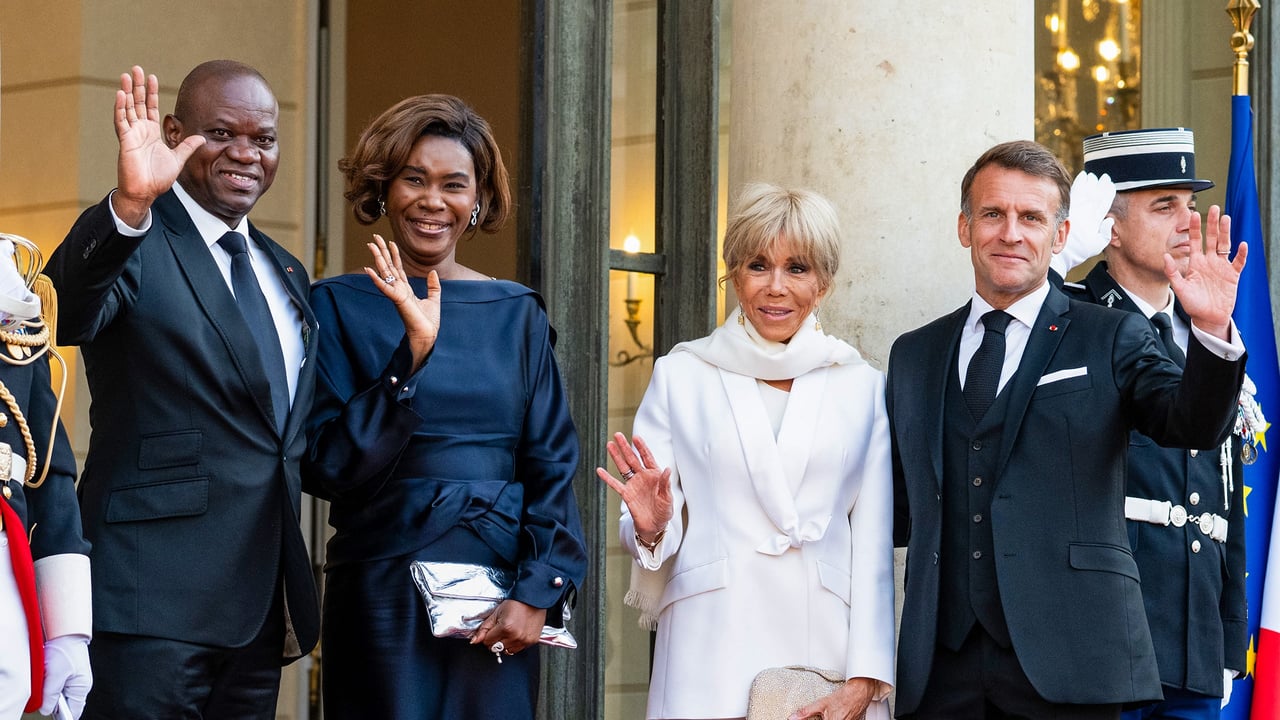
The choreography of the visit was meticulously designed to convey mutual respect while acknowledging the seismic shifts in Gabon’s political landscape. President Macron’s warm reception at the foot of the steps, accompanied by Brigitte Macron, sent a clear signal: France recognizes the new transitional authorities, even as it treads cautiously around the circumstances of their rise to power.
Inside the Élysée’s grand salons, the air was thick with the weight of history. Diplomatic observers noted how the choice of language in joint statements subtly shifted from outright endorsement of the former regime to cautious engagement with its successor. The optics were flawless—Oligui Nguema, impeccably dressed in a tailored suit, exchanged firm handshakes with French officials, while his wife, Zita Oligui Nguema, engaged in polite conversation with the First Lady. Yet beneath the surface, tensions simmered over issues left unresolved.
economic stakes overshadowed by political caution
France’s economic interests in Gabon remain substantial, anchored in sectors like timber, mining, and energy. Yet during the visit, neither side rushed to unveil new deals. Instead, discussions centered on sustainable partnerships and responsible investment, with French officials emphasizing the need for transparency in resource management.
A joint communiqué highlighted cooperation in education and health, two areas where France has traditionally extended its influence. However, no major contracts were announced—an absence that spoke volumes. Analysts suggest Paris is prioritizing political stability over immediate economic gain, a strategy that reflects broader uncertainties in the region.
defense and security: the elephant in the room
The elephant in the room was, quite literally, the military. Gabon’s recent coup—officially framed as a corrective measure against entrenched corruption—has drawn international scrutiny. While France stopped short of endorsing the takeover, it refrained from condemnation. This diplomatic tightrope act underscores France’s delicate balancing act: maintaining influence without appearing complicit in unconstitutional transitions.
Security cooperation, a cornerstone of past relations, was addressed in hushed tones. No new defense agreements were disclosed, though both sides reaffirmed their commitment to regional stability in the Gulf of Guinea. The message was clear: France seeks continuity, but under revised terms.
public reaction and media narratives
Back in Libreville, reactions were mixed. Supporters of the transition hailed the visit as a validation of the new leadership’s international standing. Critics, however, questioned the optics of embracing a regime born of a military takeover, arguing that France’s muted response risked normalizing unconstitutional change.
French media coverage mirrored this divide. Some outlets praised the visit as a pragmatic step toward stability, while others framed it as a missed opportunity to demand democratic guarantees. The tone was cautious, reflecting the broader unease in Paris over how to engage with a post-coup Gabon.
what’s next for french-gabonese relations?
The visit may have concluded, but the real work is just beginning. For France, the challenge lies in walking the line between pragmatism and principle. For Gabon’s transitional team, the goal is to secure international legitimacy without sacrificing domestic credibility.
As Oligui Nguema returned to Libreville, the question lingered: Can this partnership thrive on mutual interests alone, or will the unresolved questions of governance ultimately undermine years of cooperation? One thing is certain—France’s approach to Gabon will be watched closely, not just in Libreville, but across a region where coups and constitutional crises have become all too familiar.