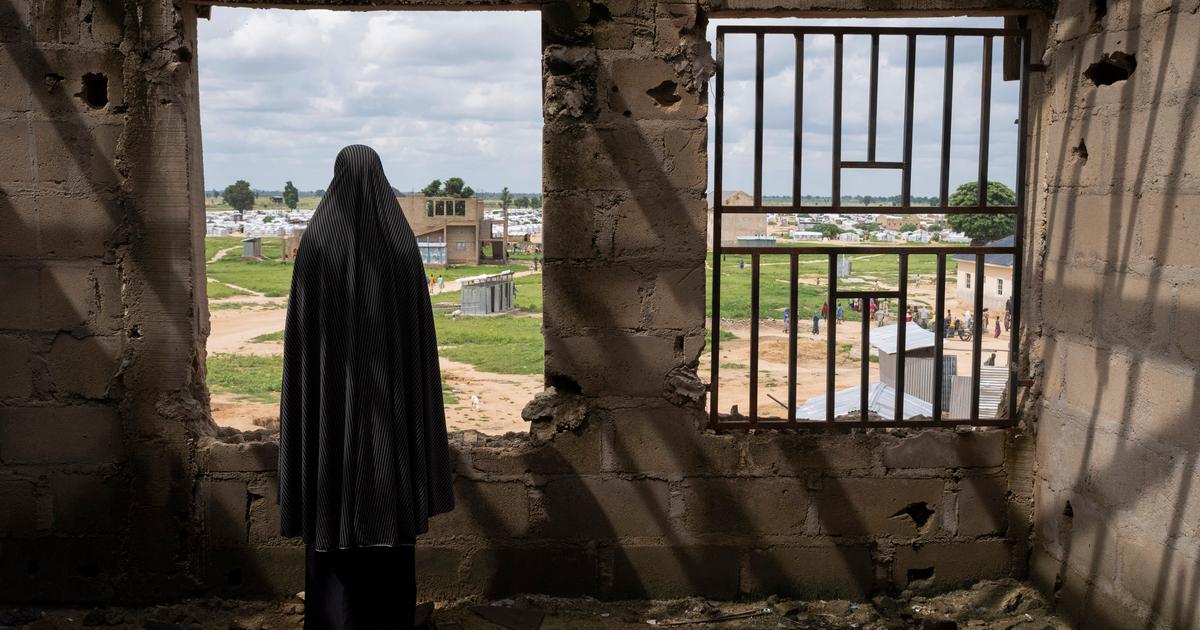

Aisha, Juliana, and Hauwa are three courageous Nigerian women whose harrowing experiences with Boko Haram captivity often go unheard. Their personal accounts offer a profound look into the devastating impact of the jihadist group’s mass abductions, which frequently make international headlines but rarely amplify the voices of the victims themselves. These narratives are crucial for understanding the human cost of the conflict in the Sahel.
One fateful Saturday evening in April 2014, Aisha was preparing a beloved stew for her children when Boko Haram insurgents launched a brutal assault on her village of Gamboru Ngala, located in Nigeria’s northeastern Bornou State. She had no opportunity to escape the escalating violence. Her brother was tragically killed before her eyes, and Aisha, along with many other villagers from Gamboru Ngala, was taken captive. She was forced into a camp with numerous other prisoners before being led to a tent. There, a tall, bearded man introduced himself as a Boko Haram commander, declaring she would now be his wife. Aisha vividly recalls, “Every night, they would come for me in the room, and he would rape me.” These accounts highlight the grave security challenges and humanitarian crisis in the region, often covered in `Sahel news English` reports.
The stigma of being a “Boko Haram wife”
Aisha eventually managed to escape after two agonizing years. Her period of captivity was marked by multiple forced marriages, repeated rapes, and three forced pregnancies. Her liberation came during an offensive by the Nigerian army, a glimmer of hope amidst the `political Sahel` instability.
Juliana, too, found a way to freedom two years after her abduction, aided by an elderly woman. She was only 15 when Boko Haram militants captured her and her mother in Adamawa State, another northeastern Nigerian region. Before her life was violently altered, Juliana harbored dreams of completing secondary school and attending university to become a computer engineer, a future tragically interrupted by the `security Sahel` crisis.
“Before her abduction, she dreamed of finishing secondary school and attending university to become a computer engineer.”
Hauwa endured the longest ordeal, spending a decade in the insurgents’ grasp. During her captivity, she was subjected to three forced marriages and gave birth to four children. Upon her return home, she felt profoundly “defiled” and, more significantly, “stigmatized.” She was frequently labeled a “Boko Haram wife,” and her children were often treated as outcasts, denied the simple freedom of interacting with other children. This societal rejection is a critical aspect of the ongoing `humanitarian Sahel` challenges.
Beyond the personal narratives, this report also delves into the pervasive discrimination faced by these former captives. It examines initiatives aimed at reintegrating these women, who, despite being freed from their captors, often find themselves rejected by their own communities. Addressing these deep-seated issues is vital for a comprehensive `Sahel Vision` for recovery.
The article further explores how transitional justice can play a crucial role, not only in combating impunity for violence against women but also in addressing the lasting consequences of gender-based violence endured during the conflict. This approach offers a pathway to support these women, who face myriad needs, in overcoming profound psychological and emotional traumas. Efforts for justice are often discussed in `West Africa Sahel news` concerning post-conflict recovery.
Juliana’s poignant testimony encapsulates this complex reality: “I am congratulated for being free, but a part of my heart is still captive in that forest. I am haunted by the thought of the women we left behind.”