Mali’s junta faces growing security crisis as JNIM exposes ‘sovereignty’ illusion
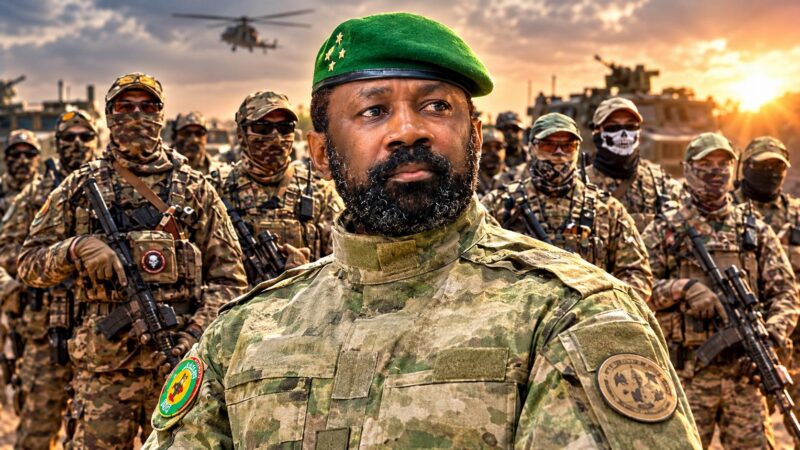
The developments in spring 2026 signify more than just a military setback; they represent a profound rejection of the political agenda championed by Mali’s military junta since 2021. While the junta may project strength, it is widely understood that without the crucial support of Russian mercenaries from Africa Corps, its hold on Bamako would have long since crumbled.
By positioning ‘security sovereignty’ as the bedrock of its legitimacy, the military regime in Mali crafted a narrative built on a straightforward pledge: liberated from foreign oversight, the Malian state would finally reclaim command over its vast territory. Yet, three years on, this promise increasingly appears to be contradicted by the harsh realities on the ground.
The synchronized offensive by the JNIM in late April, collaborating with Tuareg separatists from the Azawad Liberation Front, struck key cities such as Kidal, Gao, Mopti, and even the outskirts of Bamako concurrently. This series of attacks represents a significant strategic humiliation for the government.
The demise of Defense Minister Sadio Camara, a pivotal figure within the military establishment, transcends mere symbolism. It lays bare the inherent fragility of a security apparatus that the junta had consistently portrayed as strengthened and modernized. Far from containing the escalating threat, the military government now appears overwhelmed by an organization demonstrating the capability to strike at the very core of state operations. Compounding this dire security landscape is an even more critical economic situation.
Even more concerning, this recent period confirms a structural evolution within the JNIM. The group is no longer a peripheral force confined to rural areas; it has transformed into an entity capable of planning intricate, coordinated, and politically targeted operations. This surge in power has occurred despite—or perhaps partly due to—the junta’s strategic decisions, notably its severance of ties with Western partners and its increasing reliance on Russian security contractors whose actual effectiveness remains highly questionable.
The official rhetoric, which constantly emphasizes the state’s resilience and the strength of its Malian Armed Forces (FAMa), now appears to be more about political messaging than an honest assessment of the situation. This smokescreen convinces few Malians. While state institutions technically persist, the core issue is no longer their immediate survival but their fundamental credibility. By failing to ensure lasting security across the territory and allowing attacks to encroach upon major urban centers, the military regime is systematically eroding the very foundation of its legitimacy.
The situation is rendered even more critical as local dynamics increasingly slip beyond Bamako’s control. The tactical alliances witnessed between the JNIM and certain Tuareg armed groups underscore the failure of a purely military approach to the conflict. By reducing the Malian crisis solely to a security issue, the junta has overlooked its profound political, social, and territorial dimensions. In doing so, it has inadvertently strengthened a diverse front united by a shared rejection of the central state.
The junta’s security gamble thus appears not only weakened but fundamentally flawed. Increased military resources and reliance on external partners have failed to reverse the conflict’s trajectory. Instead, jihadist groups have showcased a superior capacity for adaptation compared to state institutions, adeptly exploiting governance weaknesses, communal tensions, and the persistent absence of public services across the nation.
On a regional scale, this Malian stalemate also highlights the inherent limitations of the Alliance of Sahel States. Touted as a sovereign response to insecurity, this alliance struggles to yield tangible results against increasingly agile transnational armed groups. Far from offering a viable solution, it risks becoming another platform for collective ineffectiveness within the broader Sahel region.
Ultimately, the current crisis exposes a fundamental contradiction: the junta built its legitimacy on the promise of restoring security, yet it is precisely on this front that its failures are most starkly evident. The JNIM is no longer merely a symptom of the Malian state’s fragility; it has become its most brutal exposer. By stubbornly adhering to an exclusively military interpretation of the conflict, the Bamako regime appears ill-equipped to address the deeply political essence of the crisis it purports to resolve.