Minembwe military turning point in eastern DRC conflict
Minembwe: the military and political turning point in the eastern DRC conflict
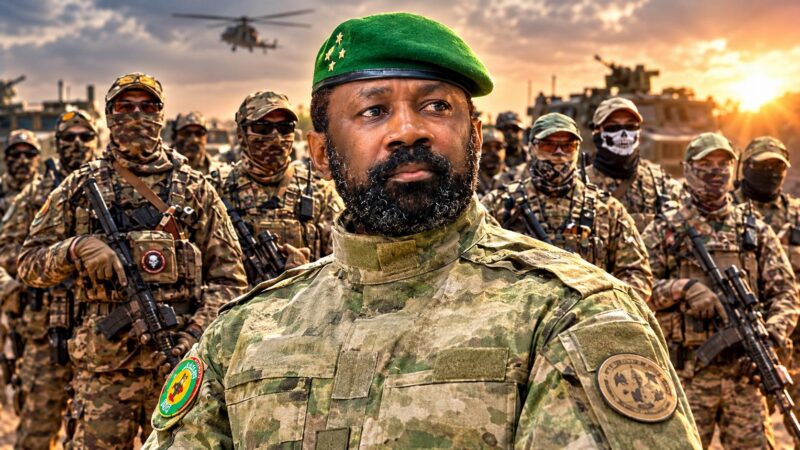
The battle for Minembwe has evolved far beyond a localized skirmish between rival armed factions. Today, it stands as a critical flashpoint in the broader struggle for influence gripping the eastern Democratic Republic of the Congo (DRC). Government forces, bolstered by Burundi’s military and the Wazalendo militia, face off against rebel movements Twirwaneho and AFC/M23—groups Kinshasa accuses of receiving backing from Rwanda.
/image%2F1046414%2F20260621%2Fob_3de099_minembrwe-centre.jpg)
Government forces assert control over Minembwe-centre, its airstrip, and surrounding areas, according to Congolese military authorities. Kinshasa has dismissed claims circulating on social media alleging rebel recapture as deliberate disinformation. The stakes extend well beyond mere propaganda. Minembwe’s strategic location in the South Kivu highlands grants access to key routes linking Fizi, Uvira, and mountainous zones that serve as rebel strongholds and logistical corridors.
A symbolic victory for Kinshasa would be secured if current conditions hold. Holding Minembwe would mark one of the most significant military successes for President Félix Tshisekedi’s government in South Kivu in recent months. Critics have long questioned Kinshasa’s ability to assert lasting authority in these highland regions. A stable Minembwe could validate DRC’s strategy of partnering with Wazalendo and Burundi, demonstrating tangible battlefield progress.
With public pressure mounting for concrete action against armed groups, such a breakthrough would bolster government credibility among Congolese citizens. For years, Kinshasa has faced criticism over its inability to restore durable stability in the highlands—a region plagued by recurring violence.
The shifting regional power balance
Burundi emerges as a key military partner for the DRC in this conflict. The presence of Burundian troops alongside FARDC underscores evolving security dynamics in the Great Lakes region. Bujumbura has positioned itself as an indispensable ally to Kinshasa, and sustained control of Minembwe would further amplify its diplomatic leverage in regional security discussions.
This development risks intensifying the strategic rivalry between Burundi and Rwanda—two nations whose security interests increasingly diverge in eastern DRC. The shifting alliances could reshape the balance of power in the region’s volatile security landscape.
A setback for rebel narratives
For rebel factions, Minembwe holds deep symbolic value. The AFC/M23 movement has sought to expand its influence beyond traditional strongholds in North Kivu. Losing a high-profile zone like Minembwe would undermine its narrative of steady territorial expansion. The psychological impact on fighters and their online support networks could prove significant, given the intense information warfare accompanying the conflict.
In modern conflicts, victory is no longer measured solely in territory gained. The battle for public perception has become equally decisive. Each side aggressively promotes its version of events, with social media serving as a primary battleground.
/image%2F1046414%2F20260621%2Fob_702fb3_bdi-Burundi-iscam-000-05092025-fdnb-79.jpeg)
Expert caution remains essential. Historical patterns in eastern DRC show that frontlines can shift rapidly—localities frequently change hands within weeks. While FARDC currently holds Minembwe, the real test lies in the government’s ability to maintain long-term control over this rugged, inaccessible terrain.
The broader stakes extend beyond a single town. For Kinshasa, it’s about proving the state can gradually reclaim zones long dominated by armed groups. For rebels, the goal is to prevent a shift in the power balance that could permanently alter dynamics in South Kivu’s highlands.
At Minembwe, as across eastern DRC, the military confrontation intertwines with political maneuvering. In this war of competing narratives, controlling the story has become nearly as vital as controlling the land.