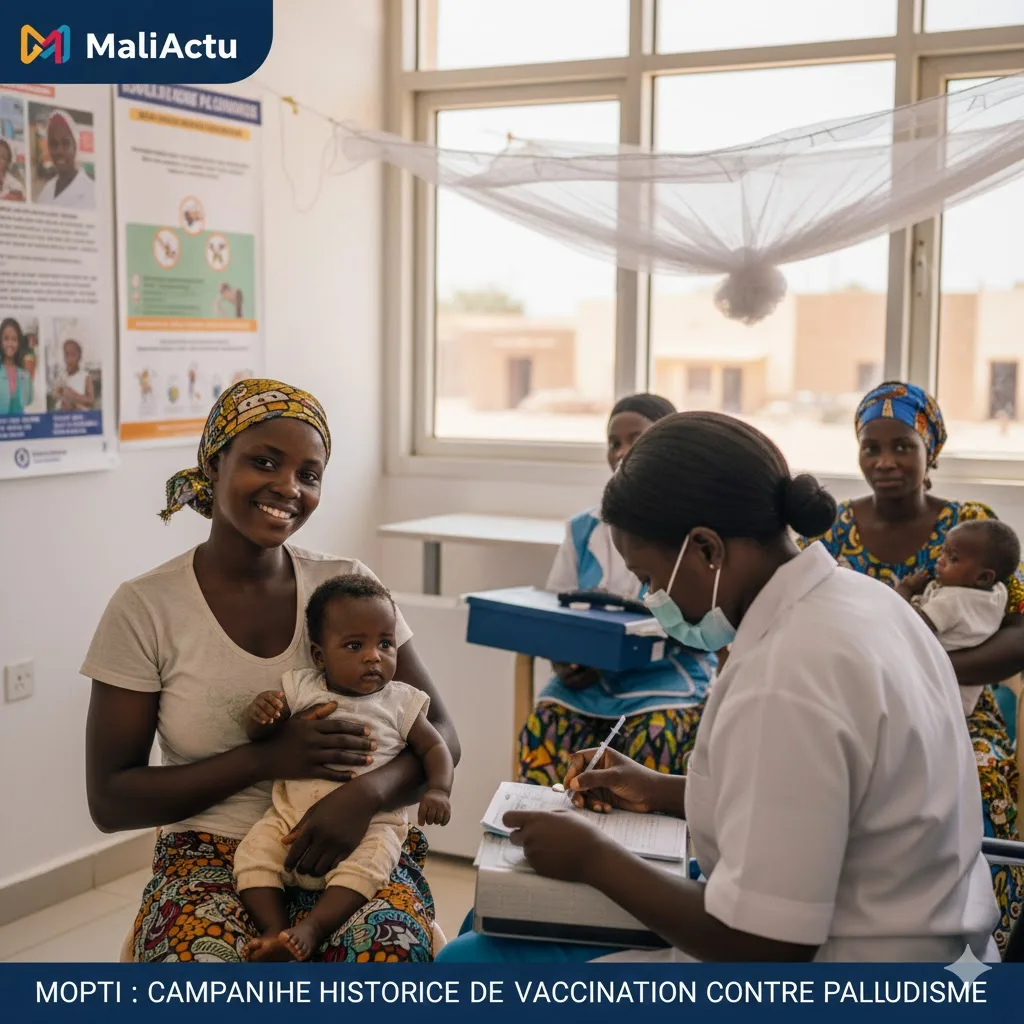

The Republic of Mali has taken a groundbreaking step in its fight against malaria. By deploying the R21/Matrix-M vaccine, endorsed by the World Health Organization (WHO), the regions of Kayes and Mopti are pioneering a cutting-edge immunization strategy that blends seasonal timing with meticulous follow-up. This dual approach is now shielding thousands of Malian children from one of Africa’s deadliest diseases.
Mali has positioned itself at the forefront of public health innovation. In partnership with the WHO, Gavi, and UNICEF, the country has integrated the R21/Matrix-M malaria vaccine into its Expanded Programme on Immunization (EPI). This rollout targets 19 high-risk districts across five regions, including Kayes and Mopti, leveraging a forward-thinking vaccination model designed to outpace the disease’s seasonal surge.
A hybrid strategy: precision protection against malaria
Unlike traditional vaccines, Mali’s approach is anything but conventional. The hybrid strategy employs two synchronized delivery methods to ensure maximum immunity:
- Age-based dosing: Ensures foundational immunity from an early age, building a robust defense against malaria in infancy.
- Seasonal administration: Vaccines are timed for delivery just before the rainy season—the period when mosquito populations—and malaria transmission—peak. This timing guarantees peak protection when children need it most.
Kayes and Mopti: critical test zones under the microscope
Selecting Kayes and Mopti as pilot districts wasn’t arbitrary. These regions, already identified as malaria hotspots among the 19 priority zones, provide a real-world testing ground to assess the resilience and adaptability of Mali’s health infrastructure.
In Mopti, despite logistical hurdles, seamless coordination between health services and global partners has streamlined vaccine distribution. Meanwhile, in Kayes, community engagement has been pivotal—ensuring that booster doses, essential for sustained vaccine efficacy, are administered promptly and consistently.
A vital layer of defense, not the sole solution
Health authorities are clear: the R21/Matrix-M vaccine is a powerful tool, but it’s part of a larger, integrated strategy. It works alongside proven malaria prevention measures such as:
- Long-lasting insecticidal nets: Providing round-the-clock protection against night-biting mosquitoes.
- Seasonal Malaria Chemoprevention (SMC): Complementing the vaccine by delivering preventive antimalarial medication during high-risk months, creating a synergistic shield against the disease.
Aiming for a dramatic reduction in child mortality
The ultimate goal of this initiative is to slash malaria-related deaths among children under five—the most vulnerable demographic. The outcome of this phase in Kayes and Mopti will determine whether the vaccine strategy can be scaled nationwide, offering hope for a healthier future for all Malian children.