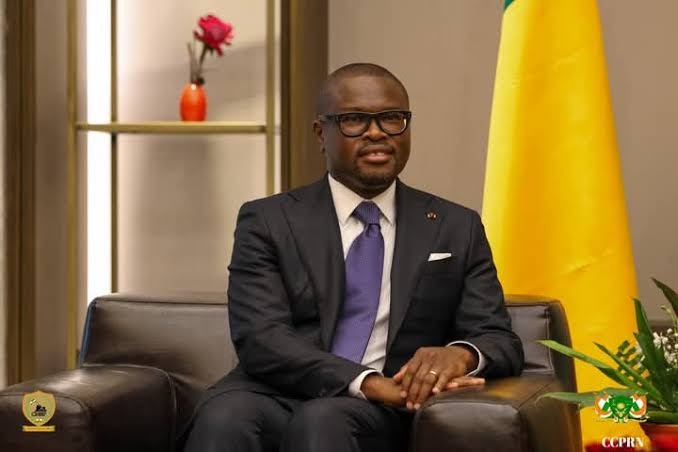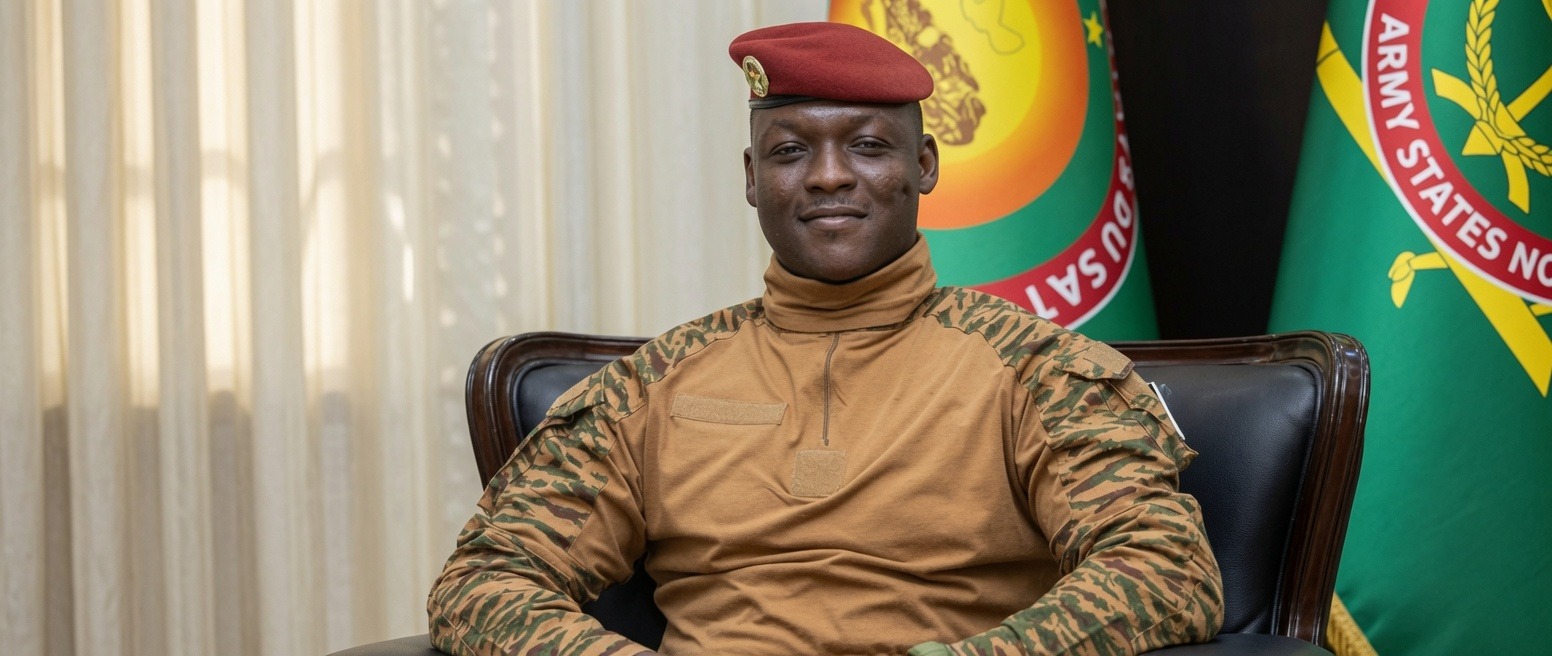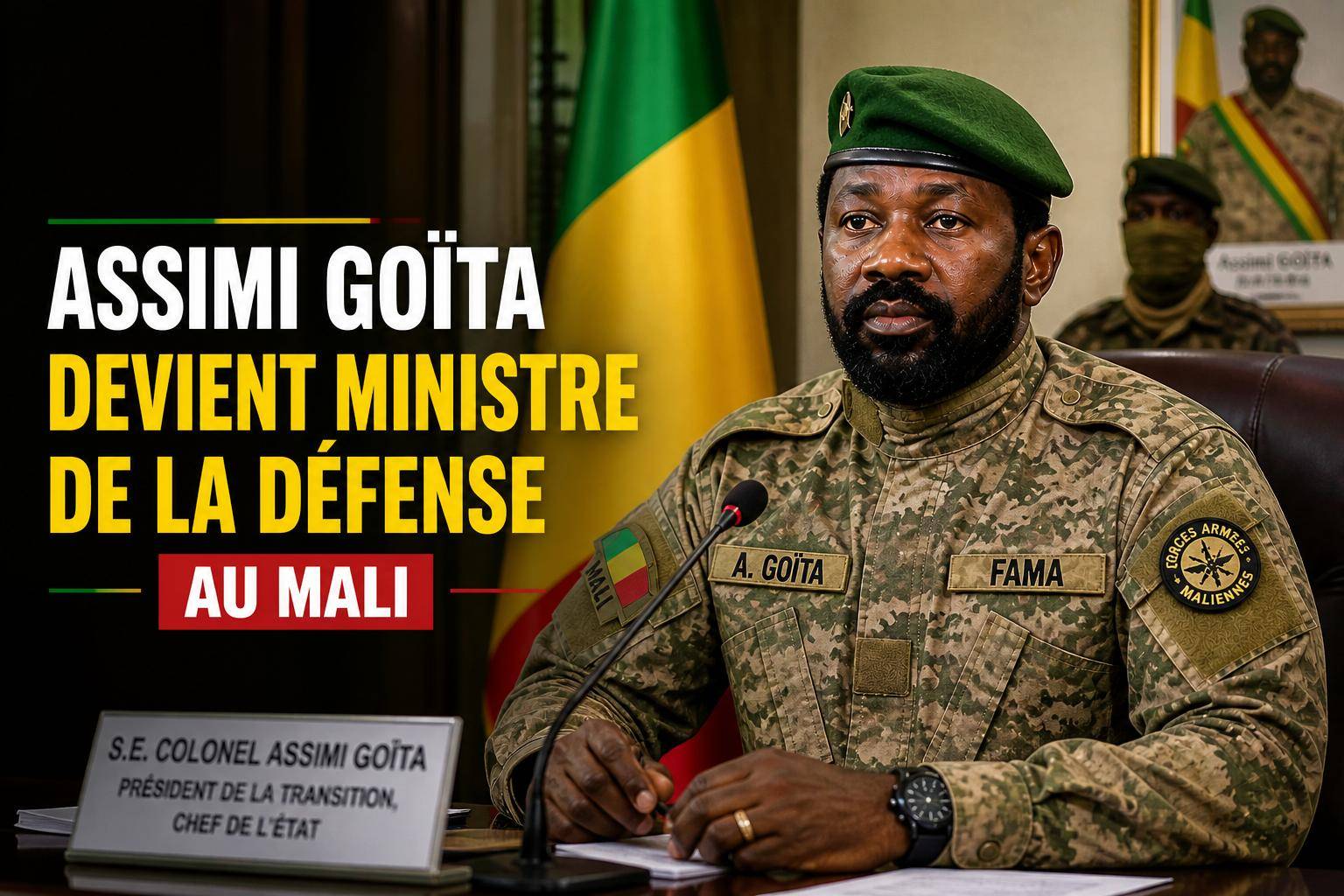
By officially assuming the role of Minister of Defense in addition to his position as President, Colonel Assimi Goïta has solidified the consolidation of power in Bamako. This move, far from being a mere administrative adjustment, signals a troubling admission of weakness: a faltering command structure and an increasingly ineffective military strategy. Amid the recent loss of Kidal to the Group for the Support of Islam and Muslims (JNIM) and the CMA/FLA, and the questionable performance of its Russian military partners, Mali faces an unprecedented period of instability.
Koulouba at the center of power: a risky gamble
In Bamako, every decision now traces back to the Koulouba Palace. By merging the presidency and the defense portfolio, Assimi Goïta doesn’t just shape national policy—he becomes the chief operational leader of the nation’s armed forces. Regional analysts view this centralization as a sign of deepening distrust within the inner circle of power.
As the transition drags on, this hyper-concentration of authority raises a critical question: how can one individual effectively manage state affairs, regional diplomacy, and the tactical demands of an asymmetric war? The move resembles a desperate attempt to stay ahead. By removing ministerial buffers, Goïta has placed himself directly in the line of fire. Every setback on the battlefield will no longer be a subordinate’s failure but a direct reflection of his leadership.
Kidal’s fall: from triumph to tragedy
Just months ago, official narratives celebrated the “liberation” of Kidal as a symbol of restored sovereignty and a victory for the transition. Yet the reality has shattered those claims. This strategic northern city has slipped back into the hands of armed groups, including the JNIM and the Coalition of Azawad Movements (CMA/FLA).
This defeat is both symbolic and tactical. The insurgents’ recapture of Kidal exposes the Malian Armed Forces’ struggle to hold regained territory. The absence of civilian administration and persistent security vacuums have allowed jihadist and rebel forces to re-establish control rapidly. The JNIM, in particular, has refined its tactics, isolating garrisons and severing supply routes—turning Bamako’s proclaimed victories into fleeting successes.
Wagner’s waning influence: a troubled Russian alliance
The other pillar of Goïta’s security strategy lies in its partnership with Russia, embodied by the Africa Corps (formerly Wagner Group). While marketed as a sovereign alternative to France’s former influence, the results on the security front remain unconvincing.
The Russian partners, though deployed in high-risk zones, appear to favor a scorched-earth approach that fuels radicalization rather than peace. Reports of human rights abuses are mounting, creating fertile ground for terrorist recruitment. Worse still, the technical effectiveness of these trainers is questioned, as evidenced by the ease with which Malian military convoys fall into deadly ambushes. With Russia bogged down in its own conflict in Europe, can it truly provide the air and technological support needed to counter the JNIM’s mobility? The answer grows increasingly doubtful.
A fractured regional diplomacy
This security crisis unfolds against a backdrop of growing diplomatic isolation. By withdrawing from the ECOWAS and forming the Alliance of Sahel States (AES), Mali bet on self-reliance. Yet the hard truth remains: terrorism knows no borders, and porous frontiers demand cooperation.
By severing regional mechanisms, Bamako has cut itself off from vital intelligence and logistical support from neighboring nations. The accumulation of roles by Goïta is perceived by regional capitals as an authoritarian hardening that further complicates dialogue. Mali now finds itself in a contradictory position: it seeks to assert sovereignty through force, yet it remains alarmingly dependent on opaque external actors and a command chain concentrated in the hands of one man.
The specter of stagnation: what lies ahead for Mali?
The outlook for Mali’s central and northern regions is grim. Despite leadership changes and shifting geopolitical alliances, insecurity continues to spread. Attacks on civilian and military convoys have become nearly daily occurrences.
The new “President-Minister of Defense” is wagering everything on this gamble. If the security situation does not improve swiftly, social unrest—currently suppressed under a heavy security clampdown—could erupt violently. African history offers many examples where excessive power concentration has paved the way for major instability.
To break the deadlock, Mali must engage in a fundamental reevaluation of its overall strategy. Military force and mercenary alliances have shown their limits. Without a return to inclusive governance and a genuine strategy for social reoccupation of the territory, Colonel Goïta’s sword may soon blunt against the resilience of armed groups.
The time for war rhetoric is over. Urgent political realism is needed. Beneath the headlines and uniforms, the very existence of the Malian state is at stake on the shifting sands of the North.