Strategic sabotage plunges Bamako into darkness amid rising tensions
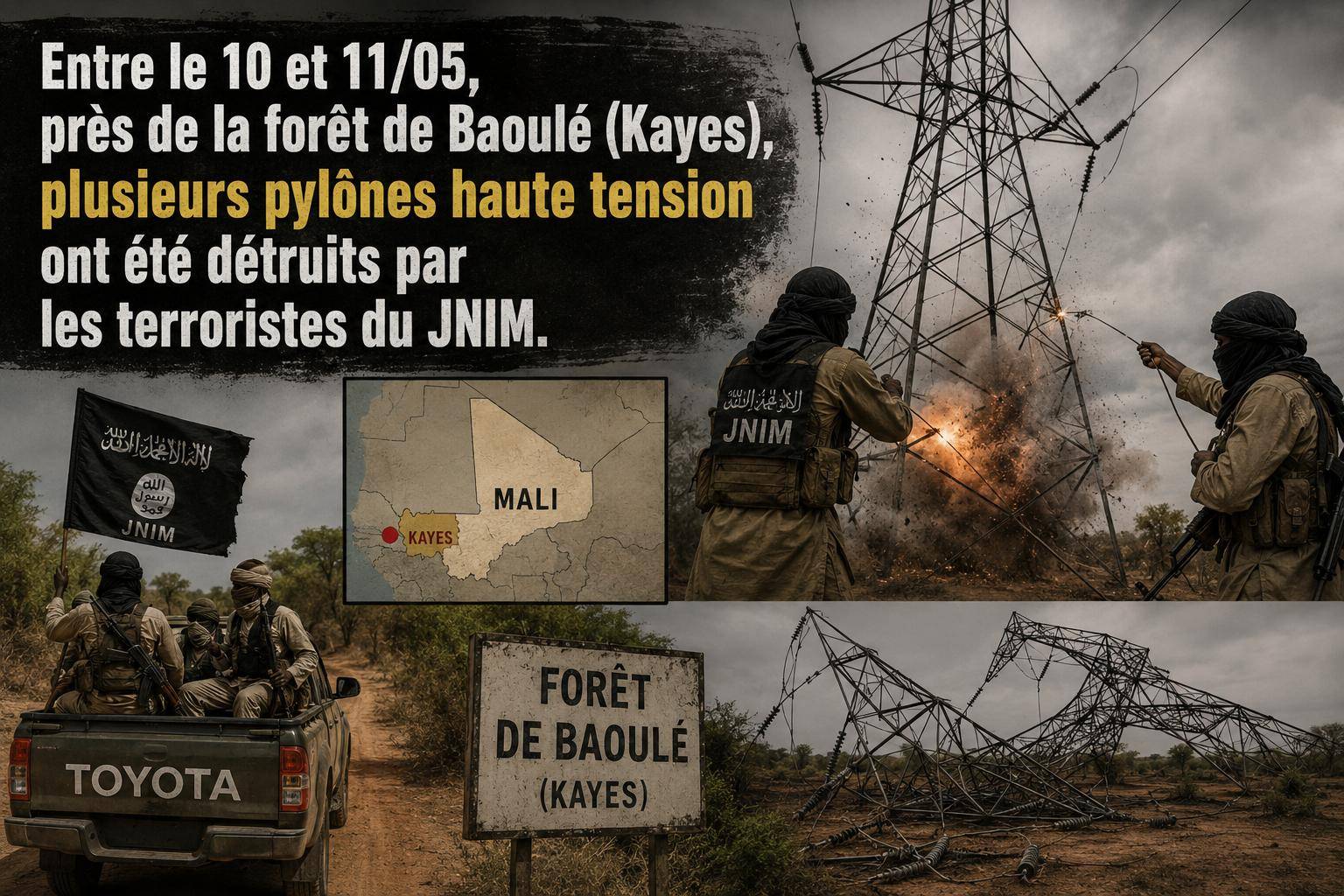
The weekend of May 10-11, 2026, entered the history books as a catastrophic moment for Mali’s energy sector. In the dense forests near the Baoulé reserve, within the Kayes region, militants from the Group for the Support of Islam and Muslims (JNIM) executed a precision strike against multiple high-voltage power pylons. This brazen act of sabotage unfolded under the watch of Russian paramilitary forces, exposing critical vulnerabilities in a security partnership that has come under increasing scrutiny.
As scorching temperatures soared past 45°C and water shortages gripped the capital, Bamako was plunged into a suffocating blackout. The crisis deepened as the JNIM threat crept closer to the Manantali and Sélingué hydroelectric dams, leaving authorities scrambling to avert a potential regional disaster.
JNIM targets Mali’s economic lifelines
The insurgent group is no longer waging a mere rural insurgency—it is executing a calculated siege. Having systematically choked off key road arteries leading to Bamako by torching commercial trucks and public buses, the JNIM has now escalated its campaign. By crippling the electrical grid in Kayes, the militants directly threaten the stability of the transitional government and the daily lives of millions in the capital.
Their attack was meticulously planned. Pylons hidden deep within the rugged terrain of the Baoulé forest were demolished with alarming precision, cutting off electricity to entire districts of Bamako. This sabotage exacerbated an already dire energy crisis, plunging neighborhoods into prolonged darkness and amplifying public frustration.
Allies fail to secure critical infrastructure
The irony is stark: the sabotage occurred despite claims by Malian Armed Forces and their Russian allies, the Africa Corps, that the area was under full control. How insurgents managed to transport explosives, rig massive metal structures, and vanish undetected raises serious questions about the true effectiveness of this military partnership. Airstrikes and mixed patrols failed to intercept the attack, raising doubts about the Africa Corps’ ability to counter hybrid threats to vital infrastructure.
For Bamako’s residents, this is the final straw. With no electricity to power fans or draw water through failing pumps, survival has become a daily struggle. While the government points to fuel convoys protected by Malian troops and Russian units, the reality is grim: backup generators are too few to offset the loss of the national grid. Hospitals, including emergency wards and maternity units, now operate under extreme duress, endangering countless lives.
Regional catastrophe looms over Manantali and Sélingué
The most alarming development is the JNIM’s stated intention to target the Manantali and Sélingué dams. This is no longer just a Malian crisis—it’s a looming threat to West Africa. These dams are the backbone of regional energy and water supplies. A successful attack would plunge Bamako into months of darkness and disrupt electricity and water sharing agreements with Senegal and Mauritania. Agriculture across the Senegal River basin would collapse, triggering a food security emergency of unprecedented scale.
The transition government and its Russian partners now face an existential test. Their narrative of territorial liberation clashes with a harsh reality: the nation’s vital infrastructure is being destroyed, one asset at a time. The costly deployment of the Africa Corps has yet to deliver tangible protection for the economy or basic services. Promises of sovereignty ring hollow when citizens are left to suffer in sweltering heat without power or water.
Bamako’s citizens are no longer satisfied with grand declarations. They demand action—real security, reliable electricity, and access to clean water—not just political rhetoric. The survival of the Malian state now hinges on urgent, effective protection of its most critical assets. The clock is ticking.