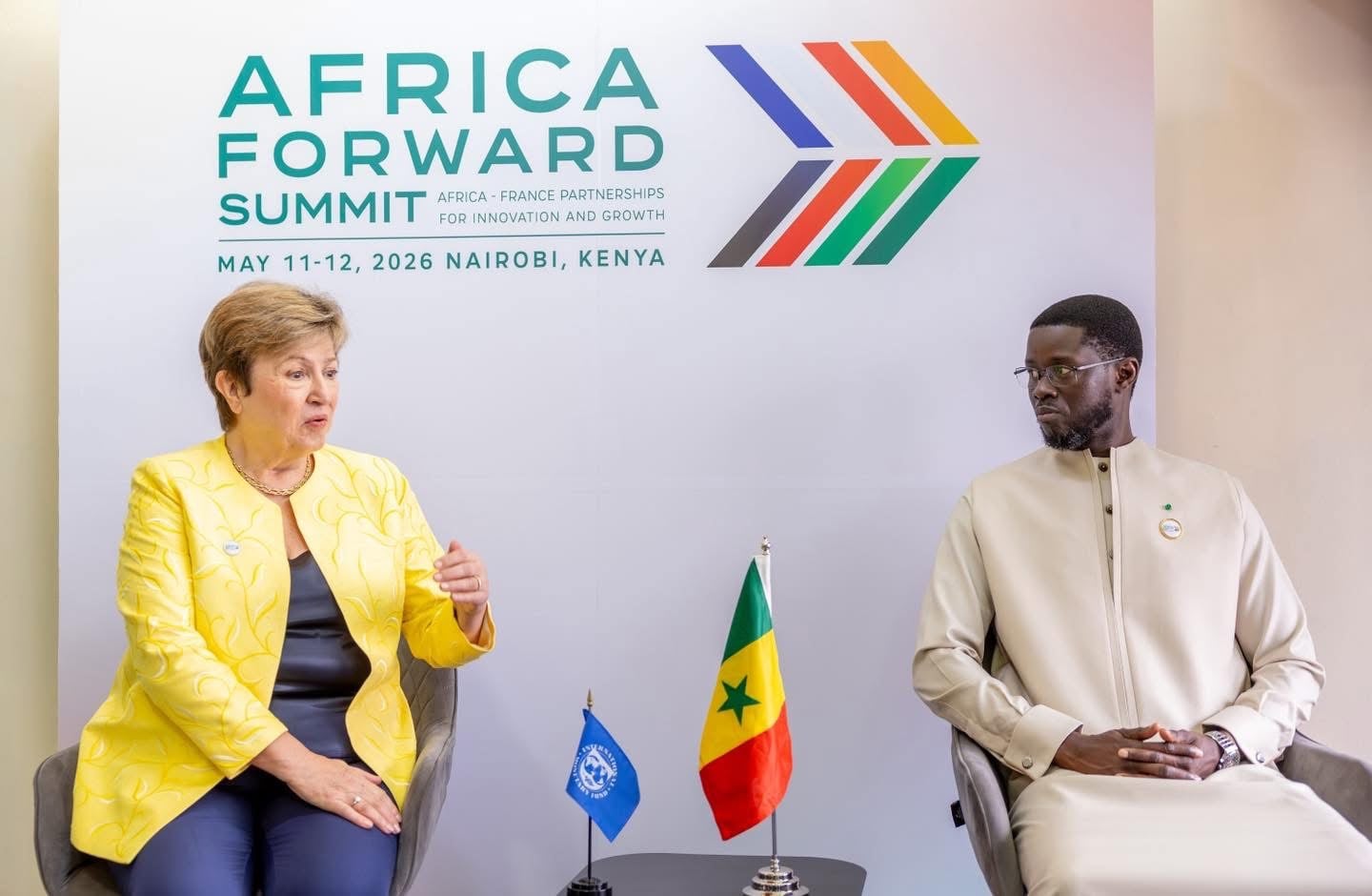
Kristalina Georgieva, Managing Director of the International Monetary Fund (IMF), recently engaged in discussions with Senegalese President Bassirou Diomaye Faye. Their conversation centered on crucial economic reforms and effective debt management strategies for Senegal. While these exchanges offer a hopeful outlook, Senegal continues to await progress on its financial program amidst persistent global economic uncertainties.
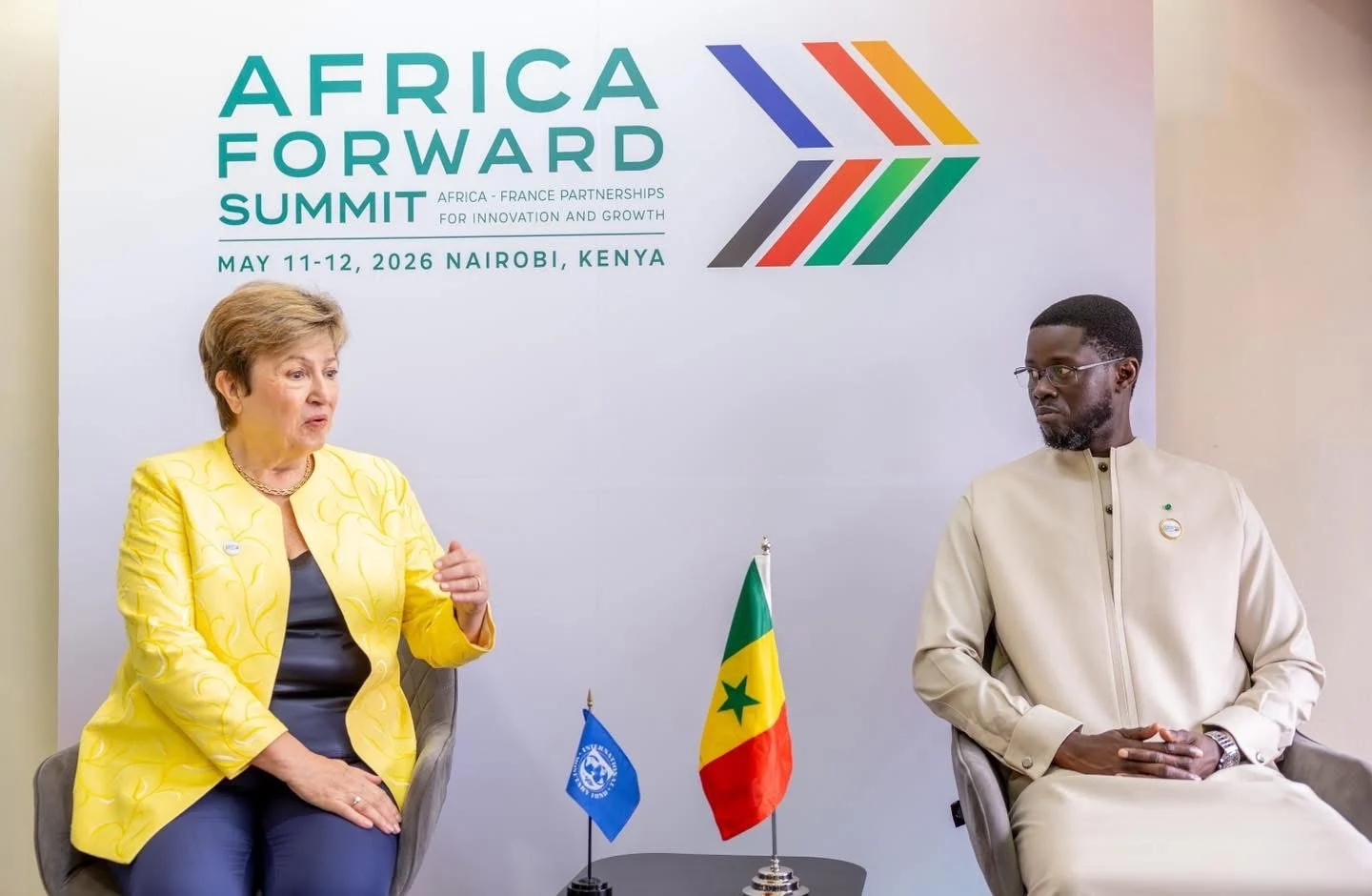
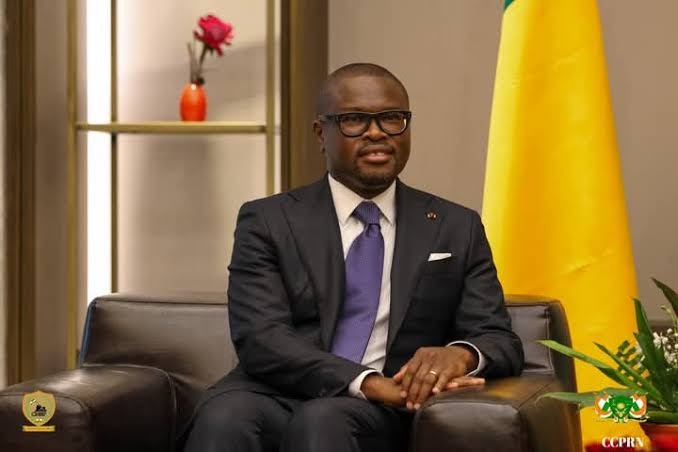
President Bassirou Diomaye Faye met with Kristalina Georgieva on Tuesday, on the sidelines of the Africa Forward summit held in Nairobi.
Following their meeting, the IMF’s Director General revealed that she had discussed several key economic matters with the Senegalese Head of State.
“We discussed reform priorities, debt management, and the importance of Senegal’s work on transparency,” she shared on social media platform X.
IMF’s commitment to Senegal’s economic stability
Kristalina Georgieva reiterated the IMF’s dedication to supporting Senegal. However, no specific announcement was made regarding the new financial assistance program that Dakar has been seeking for nearly two years.
Earlier in April, Abebe Aemro Selassie had previously shed light on the reasons behind the delays in negotiations between Senegal and the international financial institution.
According to Selassie, the prevailing volatile conditions in financial markets are complicating the analysis required to determine the sustainability of Senegal’s debt.
“This process necessitates anticipating economic prospects and market access conditions. In this unstable environment for countries facing precarious market access, such work demands rigorous attention and profound deliberation. Committing to an irreversible path is not the optimal solution,” he had stated.
Crafting a credible economic strategy for Senegal
The IMF official further explained that the institution aimed to allow the Senegalese government sufficient time to formulate an economic strategy deemed both credible and sustainable.
“That is why we wished to allow the government time to develop a credible, financeable strategy that avoids excessive austerity for the Senegalese populace. These discussions require thorough reflection and deliberation, and it is primarily up to the government to lead them. We are currently at this stage,” he added.
Abebe Aemro Selassie also underscored that the new Senegalese administration inherited a substantial level of national debt, emphasizing that the immediate priority is to identify the most effective options for addressing this challenging economic situation.