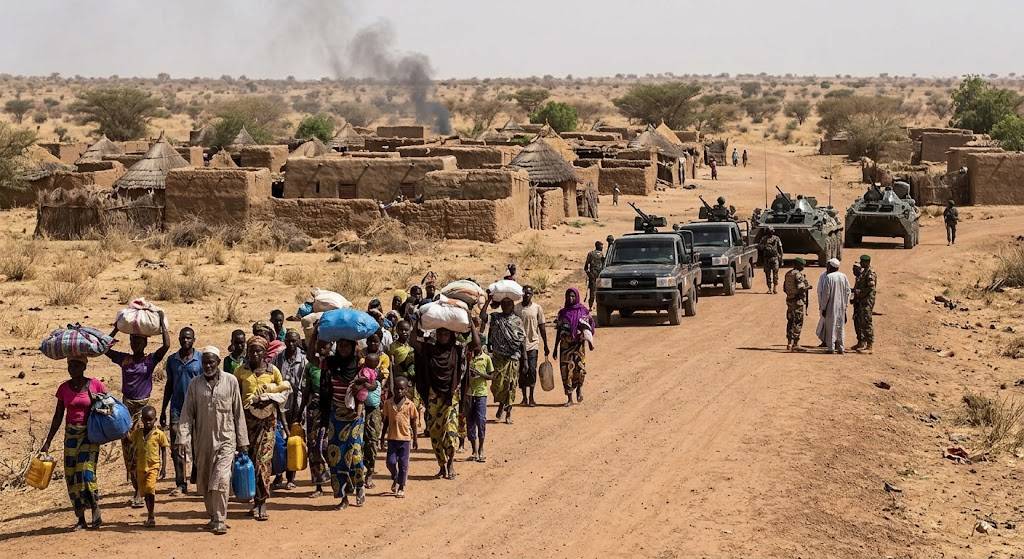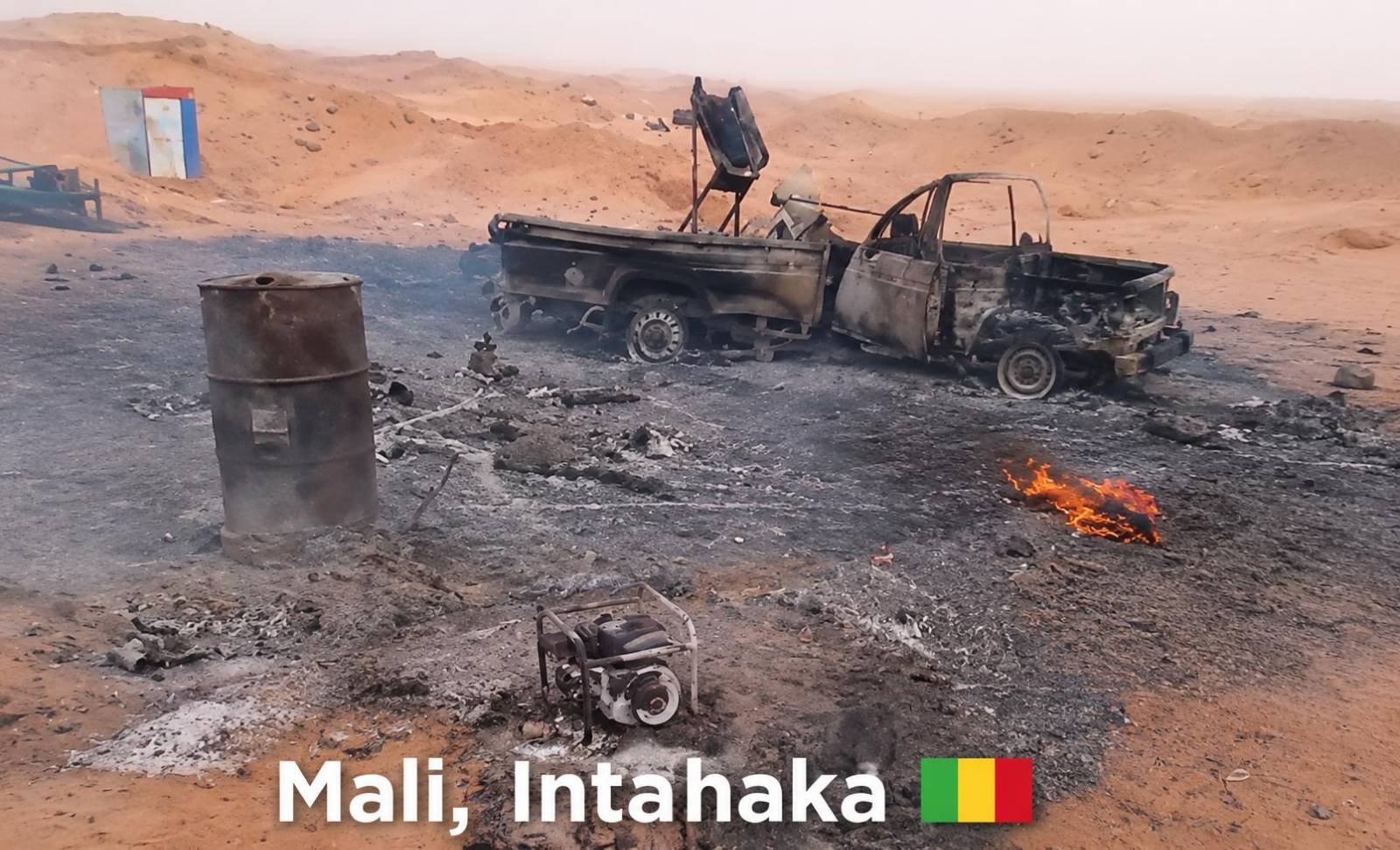
The early hours of Monday, May 18, brought yet another tragic chapter to Mali’s spiraling conflict as a Malian army drone struck a loyal ally’s vehicle near Intahaka, a key mining zone close to Gao. The unintentional strike targeted a pickup belonging to the GATIA—a Tuareg self-defense group long allied with Bamako—leaving several dead and wounded. This latest blunder underscores the grim reality of a military leadership drowning in strategic failure amid relentless insurgent advances.
Intahaka’s tragedy: when technology fails the mission
The dawn strike sent shockwaves through northern Mali. Reports confirmed the drone, operated by Malian forces, obliterated the GATIA vehicle, despite the group’s years-long partnership with the government in fighting instability. What was initially framed as a “terrorist neutralization” quickly unraveled as a tragic misfire, exposing severe coordination gaps and a reckless reliance on aerial warfare under the watch of Russian Africa Corps advisors.
Broken promises of drone supremacy
Colonel Assimi Goïta’s junta has long touted its “drone-centric strategy” as the silver bullet for reclaiming territory. Yet, the results speak otherwise. Instead of restoring order, these high-tech strikes increasingly hit civilians or, as seen in Intahaka, even the regime’s own partners. The strategic mirage of drone superiority crumbles when faced with the adaptability of groups like the Permanent Strategic Framework—now rebranded as the Azawad Liberation Front (FLA)—and the Group for the Support of Islam and Muslims (JNIM), whose offensive capabilities now rival those of the military.
With insurgents deploying jamming technology and even kamikaze drones, Bamako’s high-tech gamble is proving not just ineffective but dangerously counterproductive.
The gold curse: Intahaka’s economic lifeline strangled by conflict
Intahaka isn’t just a battlefield—it’s the lifeblood of Gao’s economy. Home to the region’s largest artisanal gold mine, this area fuels livelihoods for thousands, yet its riches have become a curse. The mine’s operations are frequently halted by clashes, roadblocks, and now aerial bombardments. “We’re trapped. Roads are blocked by terrorists, food prices have tripled in Gao, and now even the sky turns against us,” a local resident told us, requesting anonymity. For civilians, the army’s drones have become symbols of terror, not security.
A junta trapped in its own spiral
Intahaka’s drone strike is more than a tactical error—it’s a symptom of deeper decay. By abandoning peace accords and embracing a purely military response, Bamako has alienated even its former allies, including GATIA. As the North and Central regions slip further from state control, the junta’s slogan of “national sovereignty restoration” rings hollow. If the military leadership continues to confuse war propaganda with effective strategy, the collateral damage won’t just be lost allies—it will be the future of an entire nation.