Libreville’s urban revolution begins at Baie des Cochons
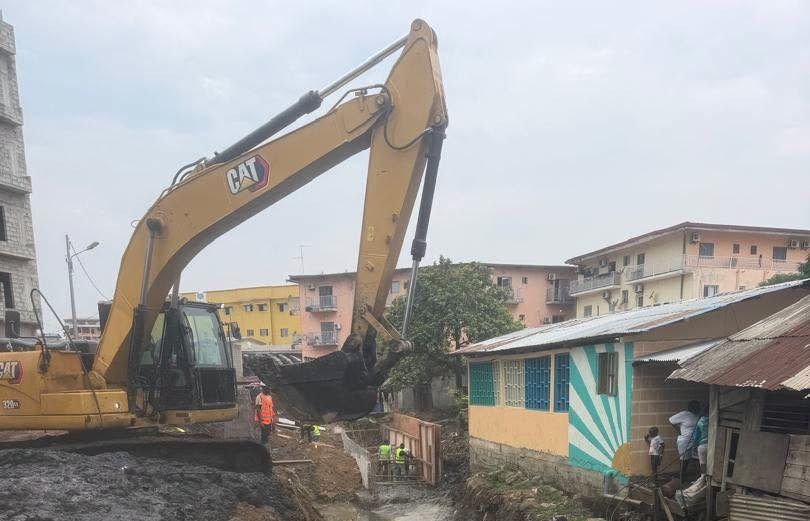
Libreville, June 25, 2026 — A defining moment in Gabon’s urban transformation is approaching. On June 26, demolition operations will commence in the critical Baie des Cochons district of Libreville’s third arrondissement.
The project transcends routine infrastructure work. It represents one of the flagship initiatives within President Brice Clotaire Oligui Nguema’s urban modernization policy, aiming to fundamentally reshape traffic patterns, sanitation systems, and territorial integration across several Libreville neighborhoods.
The initiative targets strategic locations including Sipagel, the Léon Mba intersection, and the corridor extending from the Gabon Energy and Water Company facilities to the Petit-Paris roundabout. While designed to enhance urban growth, the project raises a pressing question faced by all major African cities: how to modernize infrastructure without disrupting long-term residents?
Breaking through Libreville’s traffic gridlock
The Baie des Cochons district sits at the heart of Libreville’s most congested economic and human flows. This area has long been a major bottleneck connecting Mont-Bouët market, the city center, Bessieux Boulevard, and surrounding neighborhoods.
Government plans call for creating a primary axis supplemented by secondary roads to improve traffic flow and strengthen connections between Libreville University Hospital, Petit-Paris, the Léon Mba intersection, and adjacent areas.
During a June 23 site visit, Housing and Urban Planning Minister Mays Mouissi directly addressed residents to explain project objectives. Authorities emphasize that public land clearance represents an essential prerequisite before construction can begin under the winning contractor’s supervision.
Beyond traffic concerns, the project aims to tackle a persistent issue affecting thousands of residents annually: flooding. The initiative includes cleaning existing drainage channels, rehabilitating degraded hydraulic structures, and establishing new stormwater evacuation systems.
For officials, this represents an opportunity to simultaneously address two critical urban challenges: mobility and sanitation.
The human dimension of urban transformation
Like all major redevelopment projects, the benefits come with immediate consequences for affected populations. Some families have occupied the targeted spaces for decades, while others depend on them for daily economic survival. The prospect of demolitions naturally raises questions, concerns, and expectations.
Recent African urban development cases demonstrate that project success depends not only on road quality or infrastructure modernity but also on authorities’ ability to manage human transitions effectively.
Issues surrounding compensation, potential relocations, protection of local economic activities, and social support become just as crucial as the construction itself. The ministry claims to have prioritized dialogue with residents before operations began, though the coming weeks will reveal the effectiveness of this approach and the government’s ability to balance public interest with population protection.
A litmus test for urban modernization
The Baie des Cochons district has become a symbol of a city outgrowing its past development patterns.
Facing rapid population growth, accelerated urbanization, and environmental challenges, Libreville must adapt its infrastructure to new realities. Chronic traffic jams, emergency service access difficulties, sanitation problems, and neighborhood isolation now hinder the capital’s economic development.
The government aims to address these issues through this operation, which also serves as a political test. It will evaluate the state’s capacity to implement ambitious urban reforms while maintaining social cohesion. A modern city isn’t built solely with concrete, roads, and drainage systems—it’s built with the support of its people.
At Baie des Cochons, Gabon is wagering significantly on its modernization strategy. While excavators will soon begin work, their true impact will ultimately be measured by how they improve daily life for residents. This transformation’s success will be determined not by the scale of the infrastructure created, but by the quality of life it delivers.

François Mvondo
Journalist