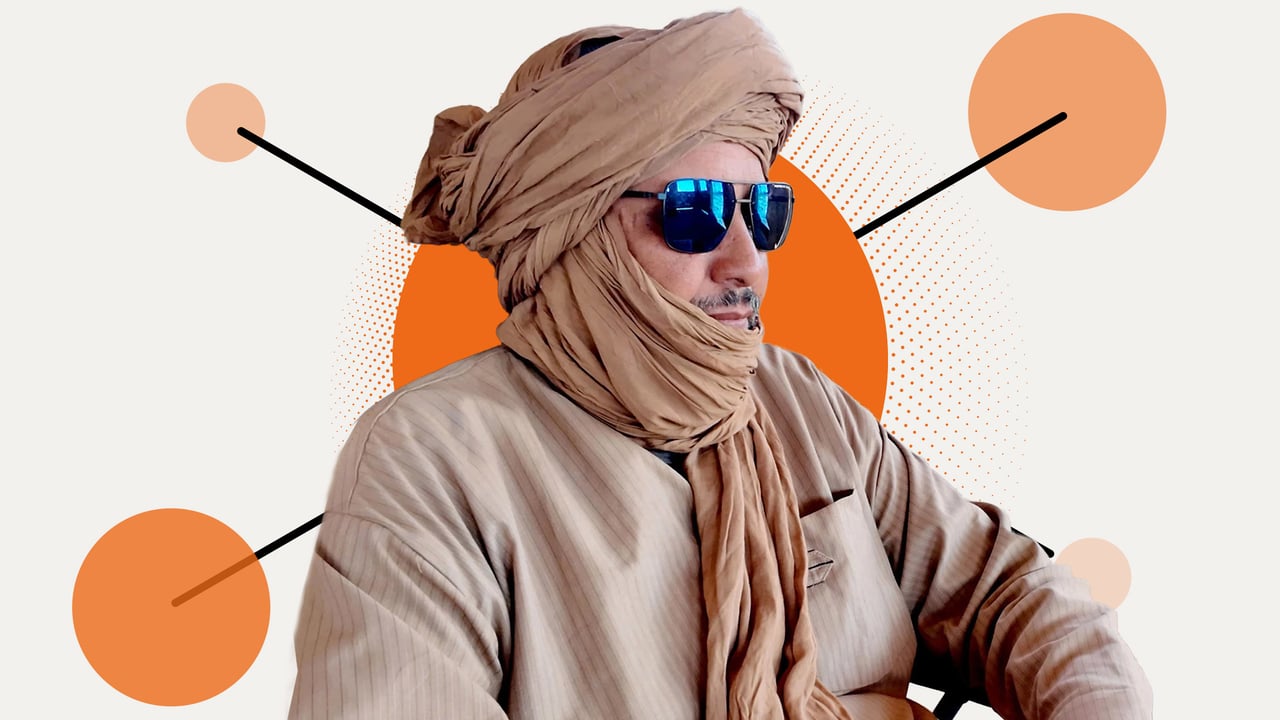
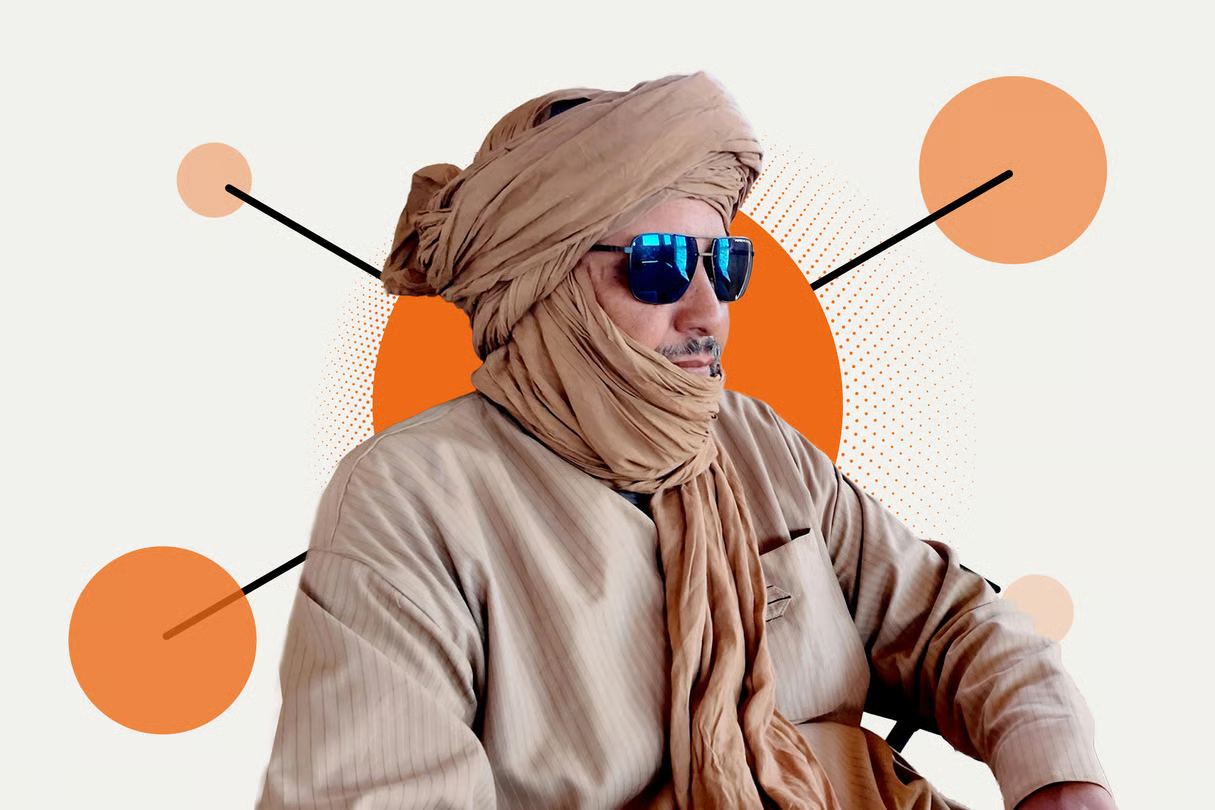
The northern Malian city of Kidal has entered a new political era with Alghabass Ag Intalla at its helm. This shift in power structures brings together a diverse coalition of actors whose alliances could redefine the Sahel’s security and political landscape.
The coalition shaping Kidal’s future
Alghabass Ag Intalla’s rise to prominence in Kidal is not an isolated event but the result of carefully cultivated relationships across different spheres. His leadership draws support from a network that spans former military factions, Tuareg notables, and local power brokers, each bringing unique influence to the table.
From rebel movements to political alliances
Central to this coalition is the Group for the Support of Islam and Muslims (Jama’a Nusrat ul-Islam wal Muslimin, JNIM), a jihadist organization whose operational reach extends across the Sahel. While Alghabass Ag Intalla’s ties to JNIM remain a subject of scrutiny, his ability to navigate these relationships has positioned him as a key intermediary in northern Mali’s volatile environment.
The coalition also includes former military commanders who have transitioned from armed conflict to political engagement. Their participation underscores a broader trend in the Sahel, where ex-combatants are increasingly seeking legitimacy through institutional channels rather than continued rebellion.
Tuareg notables and the quest for regional autonomy
Tuareg leaders, long advocating for greater autonomy in northern Mali, have found a new ally in Alghabass Ag Intalla. His ability to bridge traditional tribal interests with contemporary political realities has strengthened his position among these influential figures. This alliance could prove pivotal in shaping the future of decentralization efforts in the region.
The geopolitical implications of Alghabass Ag Intalla’s leadership
The consolidation of power in Kidal under Alghabass Ag Intalla’s leadership has far-reaching consequences for the Sahel. His influence extends beyond Mali’s borders, impacting regional security dynamics and humanitarian operations in neighboring countries.
Security challenges and humanitarian concerns
The presence of jihadist elements within his coalition raises questions about the long-term stability of the region. While Alghabass Ag Intalla may seek to present himself as a stabilizing force, the shadow of extremist groups looms large over his administration. International observers will closely monitor how he balances local governance with counterterrorism imperatives.
Humanitarian organizations operating in the Sahel face an increasingly complex environment. Access to vulnerable populations in northern Mali and surrounding areas may become more constrained as political and security dynamics evolve under Alghabass Ag Intalla’s rule.
Regional responses and international stakes
Neighboring countries in the Sahel are recalibrating their strategies in response to the shifting power dynamics in Kidal. The Malian transitional government, led by Assimi Goïta, faces the challenge of integrating Alghabass Ag Intalla’s coalition into broader national frameworks while addressing security threats. Meanwhile, external actors with interests in the Sahel are reassessing their engagement in a region where traditional alliances are being redefined.
The stakes are high. A stable Kidal could serve as a model for reconciliation in the Sahel, while instability risks exacerbating existing crises. Alghabass Ag Intalla’s leadership will be a critical factor in determining which path the region takes.
The road ahead: Opportunities and uncertainties
The coming months will be decisive in determining whether Alghabass Ag Intalla can translate his coalition’s support into tangible governance improvements. Key challenges include:
- Legitimizing his administration: Convincing both local populations and international partners of his government’s credibility will require more than symbolic gestures.
- Managing internal divisions: The diverse nature of his coalition means navigating competing interests and potential fractures.
- Addressing security threats: The presence of jihadist elements demands a delicate balance between inclusion and confrontation.
- Engaging with Bamako: Securing cooperation—or at least tolerance—from the central government in Bamako will be essential for long-term stability.
For now, Kidal’s future remains uncertain, but one thing is clear: Alghabass Ag Intalla’s leadership has introduced a new variable into the Sahel’s already complex equation. How he navigates this landscape will shape the region’s trajectory for years to come.