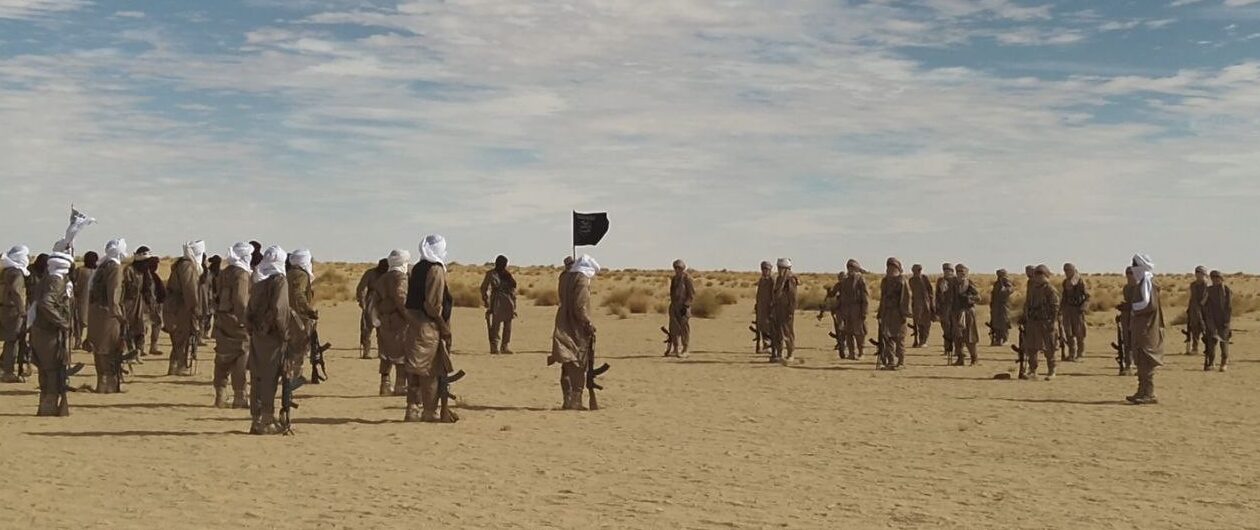
The face of conflict in northern and central Mali has evolved dramatically. No longer confined to sporadic armed attacks, these regions now endure a grinding war of attrition that systematically drains both resources and hope from local populations. Recent offensives by the Group for the Support of Islam and Muslims (JNIM) and the Azawad Liberation Front (FLA) against military outposts, supply convoys and critical road infrastructure reveal a calculated shift in insurgent strategy that demands urgent attention.
Gone are the days when armed factions merely sought territorial conquest or dramatic battlefield victories. Today’s approach targets the very foundations of state authority, pushing the military junta into an increasingly precarious corner around Bamako. The battle lines have been redrawn—not around cities or military camps, but along the invisible yet vital arteries of governance: roads that carry goods, fuel and administrative officials; markets that sustain livelihoods; and services that connect communities to the state.
Sabotaging the state through mobility
Over recent months, insurgents have intensified attacks on key transport routes and military supply lines. In several regions, even routine administrative travel now requires armed escort. This erosion of mobility doesn’t just weaken the Malian army—it undermines the state’s ability to project authority beyond major urban centers. The JNIM has grasped a fundamental truth: in a country already battered by institutional collapse, economic stagnation and chronic insecurity, exhaustion can be a more potent weapon than direct confrontation.
The strategy is as economical as it is effective. By avoiding large-scale territorial battles, insurgents stretch government forces thin, inflate security budgets and sustain a climate of perpetual fear. The cumulative effect is devastating: military fatigue, economic stagnation and social despair. In rural areas, the crisis has transcended mere armed presence—it has become a slow unraveling of administrative continuity.
The limits of a military-first approach
Since seizing power, Mali’s military leadership has centered its legitimacy on restoring security. The withdrawal of French forces and the growing reliance on Russian military support were framed as a reclaiming of sovereignty. Yet sovereignty cannot be measured by firepower alone. True authority requires the capacity to maintain territorial integrity, economic flow and administrative presence.
Here lies the Malian paradox: intensified military operations have not translated into lasting stability. In many regions, they coexist with deepening fragmentation of rural space. The prevailing security doctrine relies heavily on offensive operations, airstrikes and troop deployments—but struggles to rebuild durable administrative structures: schools, clinics, local courts, basic infrastructure and economic circulation.
When the state disappears, the void fills with alternative systems. The more public services collapse, the more communities turn to parallel networks for security, dispute resolution and survival. This creates a self-sustaining cycle of erosion that threatens to redefine the very idea of a governed territory.
A regional crisis with local roots
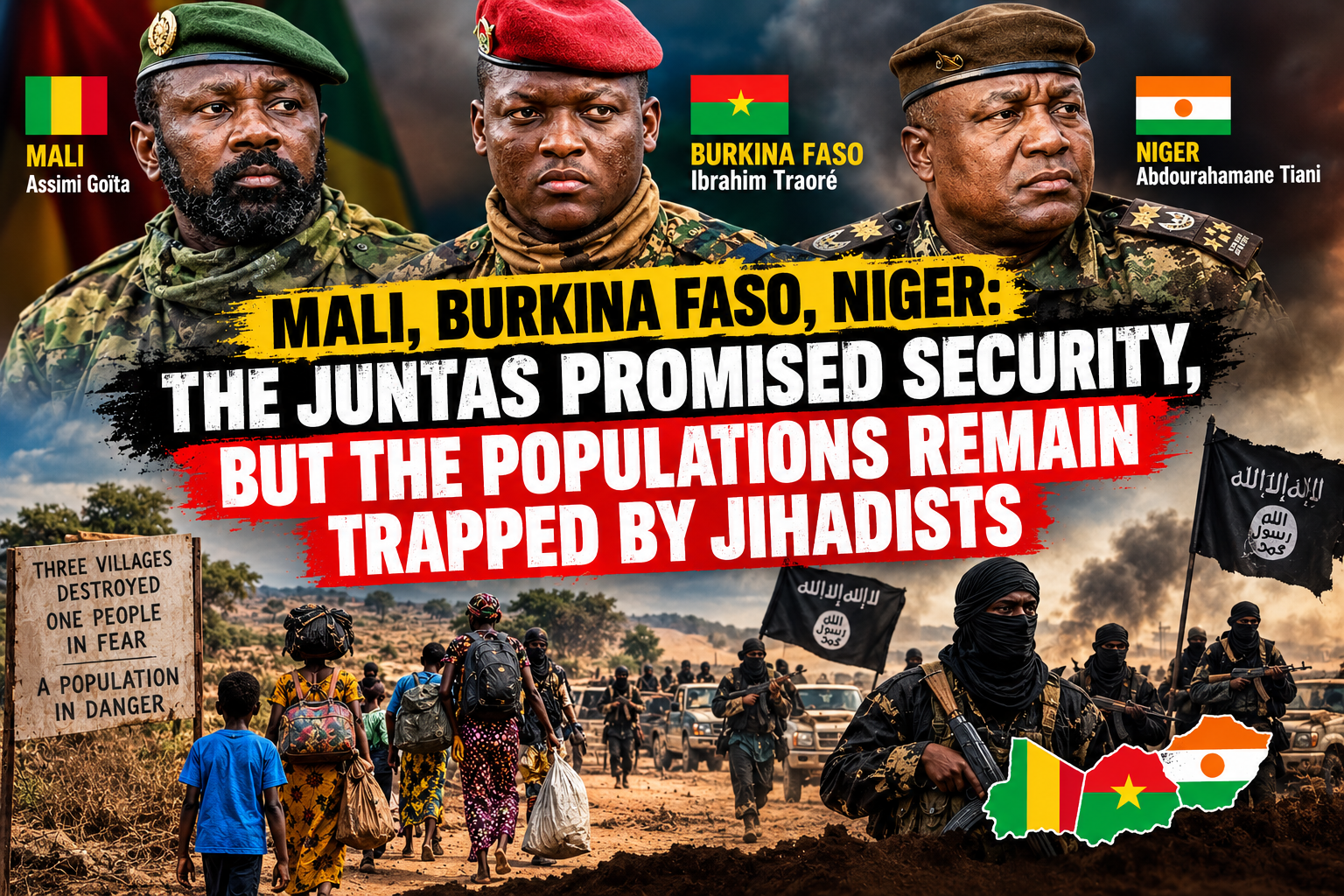
The Malian crisis is no longer contained within its borders. Across the Sahel, armed actors, shifting alliances and clandestine economies are rapidly reconfiguring the regional landscape. The porous borders between Mali, Burkina Faso and Niger allow insurgent groups to move freely, while state responses remain stubbornly national. Despite the formation of a regional alliance, these countries have proven unable to support one another effectively. The recent JNIM-FLA offensive exposed not only the fragility of this alliance but also Mali’s isolation, now sustained primarily by the Africa Corps mercenary force.
This asymmetry favors groups that can adapt quickly. The JNIM thrives on territorial flexibility, local anchoring in certain zones and integration into informal economic networks. It rarely seeks to permanently control entire territories—but it excels at imposing unsustainable security costs on states. The Sahel conflict has become a war of endurance. Armed groups aim not to administer territory comprehensively but to render governance impossible over the long term.
Beyond the counterterrorism lens
Reducing the Sahel crisis to a military confrontation against terrorism obscures its deeper causes: social fragmentation, economic abandonment, land disputes, intercommunal tensions and entrenched poverty. These vulnerabilities did not originate with armed groups—but they are systematically exploited. The insurgents don’t always create the fractures; they know how to weaponize them.
The central challenge has become political: how to rebuild state legitimacy in areas where the state appears only intermittently—and often only in the form of armed patrols? The future of Mali will not be decided in a single decisive battle, but in the capacity—or failure—to restore stable public presence beyond security operations.
A war of attrition doesn’t just destroy military positions. It erodes roads, stifles economies, paralyzes administrations, fractures social bonds and, ultimately, dissolves the very idea of a governed territory.