Libreville, Saturday, July 11, 2026 – While presidential tours in African capitals and major international decision-making centers are often viewed as mere political communication exercises, the ongoing journey by Gabonese President Brice Clotaire Oligui Nguema through the Woleu-Ntem province, which began on Thursday, signals a far more ambitious objective. This initiative aims to transform long-marginalized territories into the genuine engines driving the nation’s next phase of development.
From Minvoul to Oyem, encompassing road infrastructure, educational facilities, agricultural ventures, and healthcare provisions, the presidential tour is meticulously outlining a fresh approach to Gabon’s regional planning. This strategy prioritizes local engagement, on-the-ground investment, and a concerted effort to bridge the geographical disparities that have historically hindered the country’s economic progress.
Beyond the ceremonial inaugurations and site inspections, a distinct vision for national development is now being rigorously tested within this pivotal northern Gabonese border region.
The strategic resurgence of regional territories
The selection of Woleu-Ntem is far from arbitrary. As a border province with Cameroon and Equatorial Guinea, Woleu-Ntem serves as a primary terrestrial gateway connecting Gabon to the broader Central African region. Yet, like many interior areas of the country, it has long grappled with the common African paradox: territories rich in potential but insufficiently integrated into national economic dynamics.
The presidential visit to the vital road axis linking Gabon to Cameroon underscores this crucial realization. In contemporary economies, roads are not merely conduits between cities; they fundamentally shape trade flows, attract investment, generate economic opportunities, and even influence regional geopolitical stability.
By transforming road infrastructure into a catalyst for growth and regional integration, Gabon is strategically repositioning itself within Central Africa’s economic corridors, particularly as the African Continental Free Trade Area (AfCFTA) progressively redefines commercial networks across the continent.
Furthermore, the unprecedented decision by a sitting Gabonese president to spend the night in Minvoul carries profound political symbolism. It powerfully conveys the message that no part of the territory should ever be considered isolated from the Republic or excluded from national development efforts.
Agriculture, human capital, and economic sovereignty
Another significant insight emerging from this tour is the gradual re-emphasis on agriculture within Gabon’s economic strategy.
The inauguration of the Oyem agricultural complex and the training of its initial cohort of young beneficiaries represent a decisive break from an economy historically dominated by hydrocarbons and the export of raw materials without adequate processing.
The overarching goal extends beyond mere job creation in the agricultural sector. Training 240 young individuals in agricultural professions, supporting the establishment of cooperatives, and bolstering entrepreneurial skills are foundational steps towards cultivating a new generation of rural entrepreneurs capable of contributing to the nation’s food sovereignty.
The collaboration between ACM Exploitation, the Local Community Development Fund, and the Ministry of Agriculture also highlights a notable shift in contemporary African public policy. Extractive companies are increasingly being called upon to play a direct role in fostering development within the territories where they operate.
A visit to an agropisciculture farm near Oyem further reinforces this commitment to integrated production models, which are poised to generate sustainable employment while simultaneously diminishing the country’s reliance on external food sources.
A new paradigm for public governance
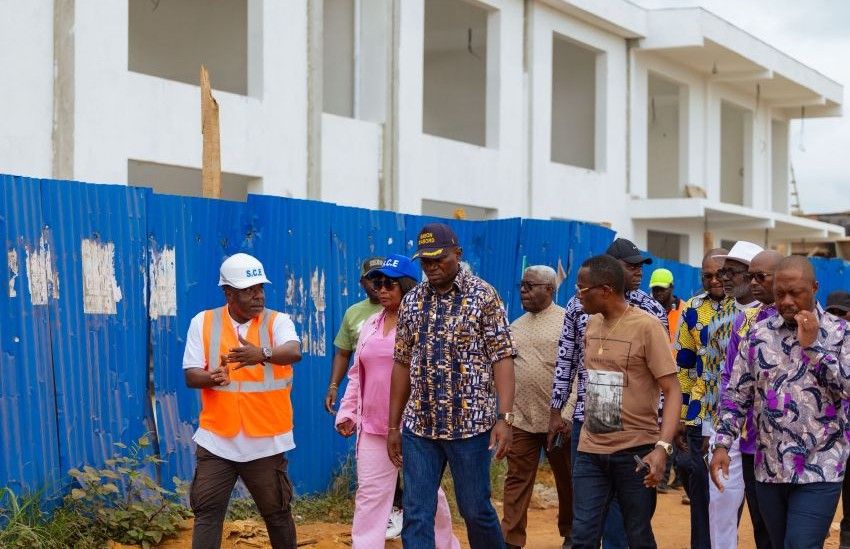
Finally, the proliferation of field visits, technical inspections, and direct decision-making at construction sites reflects a deeper transformation in Gabonese public governance.
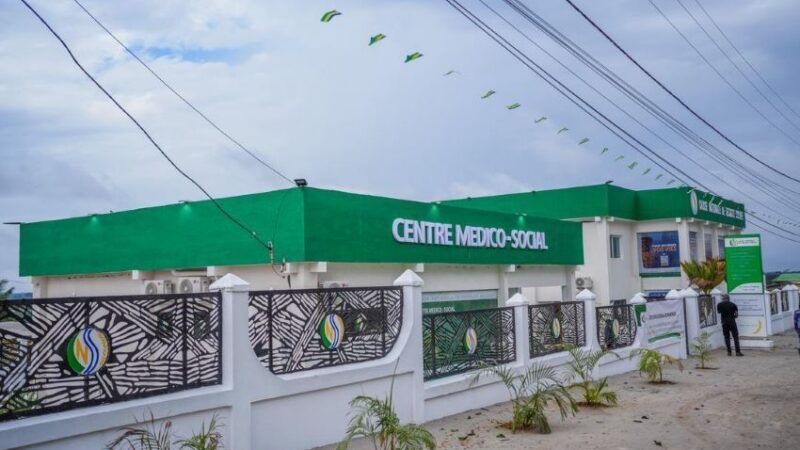
Projects such as the Minvoul hospital, the Gouéma municipal market, the rehabilitation of the Mvett Palace, housing for village chiefs, the teacher training center, the Nkum Yenguï sports complex, and the modern high school equipped with a boarding facility all exemplify a cohesive strategy of integrated territorial investment.
The underlying principle is straightforward: sustainable development cannot be achieved if economic infrastructure advances more rapidly than social amenities or public services. This comprehensive approach strives to intertwine economic growth with social cohesion and the enhancement of human capital.
The Manfred Mendame Ndong center, dedicated to teacher training, and the Nkum Yenguï high school, featuring scientific laboratories and digital infrastructure, underscore a proactive commitment to developing the skills Gabon will require in the future.
The decision to provide housing to village chiefs addresses another crucial priority often underestimated in African development policies: strengthening local administrations and the state’s presence at the community level.
A nation’s transformation rarely originates solely in its major metropolitan centers. It frequently takes root in territories capable of evolving into hubs of balance, innovation, and production.
Through this extensive tour of Woleu-Ntem, the Gabonese leadership appears determined to demonstrate that an alternative geography of development is not only possible but actively being forged. This new geography envisions borders as economic opportunities, provinces transitioning from peripheries to pivotal centers, and public investments designed to generate both national cohesion and robust growth.
The real challenge now lies in translating this ambitious territorial vision into measurable and enduring outcomes that will profoundly reshape Gabon’s economic and social trajectory in the years to come.