Japan boosts Cameroon economy with 646 million usd investment

Japan has pledged over 646 million USD in support of Cameroon’s development since the Japan International Cooperation Agency (JICA) established its presence in the country in 2006. This milestone was announced during a high-level meeting in Yaoundé between Cameroon’s Minister of Economy, Planning and Territorial Development, Alamine Ousmane Mey, and JICA Vice President Ando Naoki. The gathering marked two decades of JICA and Japan Overseas Cooperation Volunteers (JOCV) operations in Cameroon.
The funding encompasses a mix of financial instruments, not limited to loans. Japan’s development aid includes grants for social infrastructure such as schools, classrooms, health centers, and community facilities. Additionally, concessional loans—offering low interest rates, extended repayment terms, and grace periods—form a significant portion of the assistance.
Transport and energy infrastructure have been the primary beneficiaries of these funds, complemented by technical cooperation. This pillar includes deploying Japanese experts, providing specialized training, conducting feasibility studies, transferring advanced technologies, and sending volunteers to support local initiatives across Cameroon.
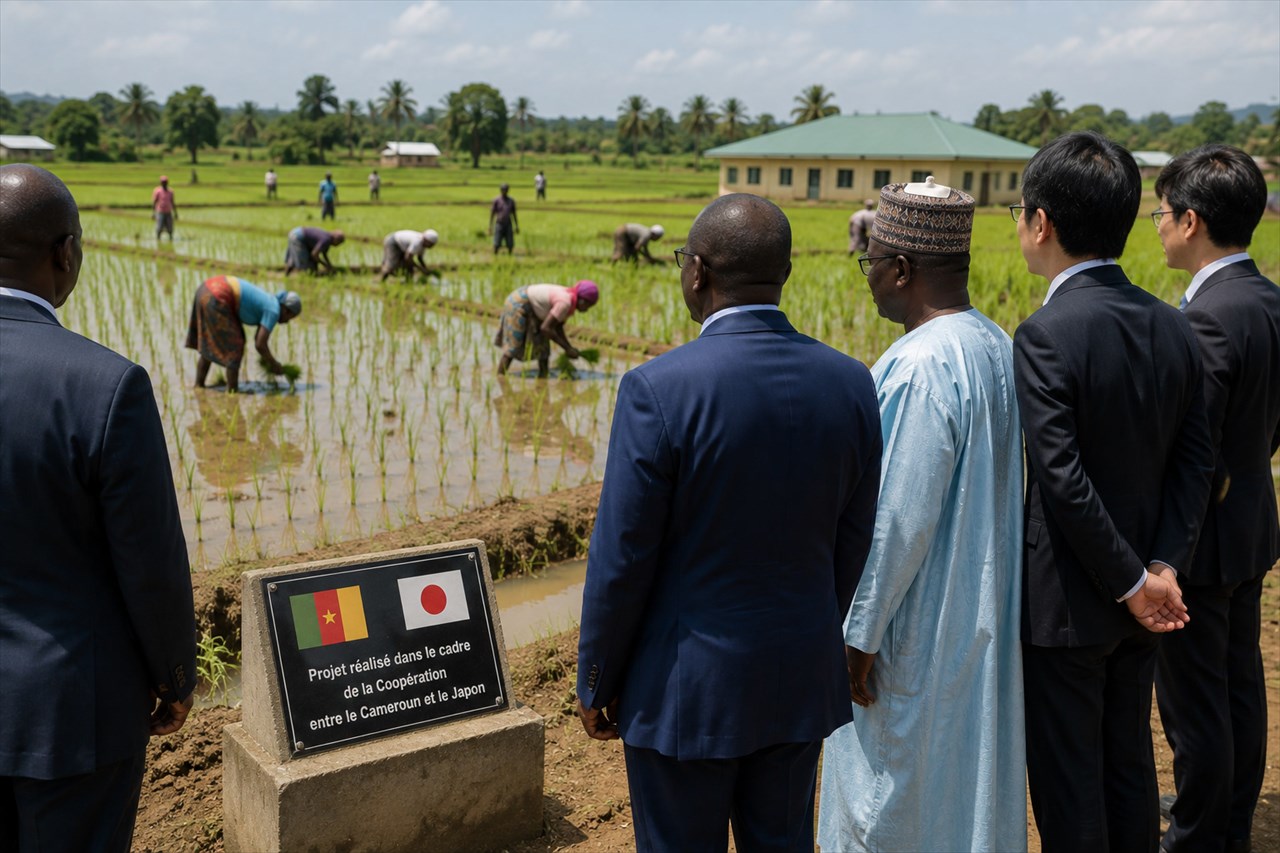
JICA’s contributions span multiple sectors. Grants alone have helped build more than 120 schools and 1,500 classrooms, while concessional loans financed key projects like the Mintom-Lele road, developed in partnership with the African Development Bank (AfDB). This route is critical for linking Yaoundé to Brazzaville, strengthening regional connectivity. Technical cooperation has also trained nearly 36,000 rice farmers to boost food security, guided around 1,500 businesses through the Kaizen methodology to enhance productivity, and strengthened professional capacities in various fields.
Future-Forward Partnership
Looking ahead, discussions emphasized expanding collaboration in high-priority areas such as agriculture, fisheries, education, infrastructure, environmental sustainability, human capital development, and enterprise competitiveness—all aligned with Cameroon’s National Development Strategy 2020-2030 (SND30).
New initiatives reflect this evolving focus. In late May 2026, JICA launched a technical cooperation project aimed at restoring savannah and forest landscapes through agroforestry. This effort highlights Japan’s growing emphasis on climate resilience and sustainable natural resource management, while continuing to support infrastructure and capacity-building—the core pillars of its two-decade engagement in Cameroon.