How Mali’s military rule crushes private enterprise under guise of regulation
History shows that authoritarian regimes, after silencing dissent and shuttering independent media, inevitably turn their sights on economic independence. The reason is simple: absolute control requires more than dominating thought—it demands domination over how people live and earn a living.
The Malian transition under military rule has just illustrated this predictable shift. What authorities are presenting as a bold initiative—a grand signing ceremony for a National Charter for Micro, Small and Medium Enterprises (MSMEs)—is nothing short of a calculated move to rein in private enterprise under the pretext of formalization.
Economic control as the final pillar of dictatorship
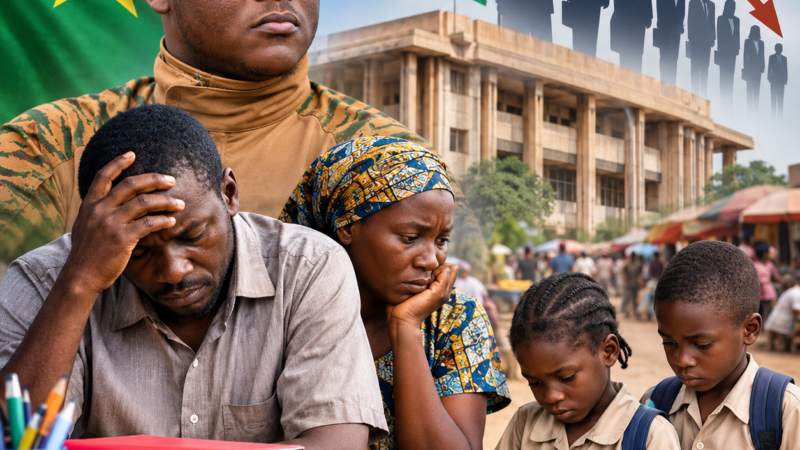
With over 90% of Mali’s workforce surviving in the informal sector—where young people, women, and small traders thrive—any push for regulation is far from harmless. In autocratic systems, the informal economy represents a glaring weakness: it operates beyond official records, state oversight, and direct taxation, making it resistant to centralized control.
By imposing rigid classification, licensing, and compliance frameworks on street vendors, artisans, and transporters, the regime isn’t simplifying business—it’s tightening the noose. With banks, microfinance institutions, and public procurement systems now aligned with military-backed authorities, the charter sets the stage for a new era of patronage. Soon, securing loans, winning government contracts, or even operating legally may depend on political loyalty or silence in the face of regime abuses.
Power outages and credit crunches: the real crises ignored
Officials claim this charter addresses Mali’s crippling energy and financial crises. But on-the-ground realities tell a different story. Reliable data reveals that nearly 40% of registered businesses cite access to credit and chronic electricity shortages as their top operational killers.
No charter, no ribbon-cutting ceremony, and no council meetings will restore power grids or lower lending rates. By fixating on regulatory frameworks instead of rebuilding infrastructure or stabilizing finance, the government diverts attention from its own failures to deliver essential services.
Freedom lost in one domain spreads to another
Autocratic rule leaves no room for isolated oppression. Suppressing free speech has already ensured that entrepreneurs crushed by arbitrary taxes or blackouts refrain from public dissent. Now, by attacking economic freedom under the banner of “structuring” the private sector, the Malian military regime is closing the last door to autonomy: the ability for citizens to earn a living without bowing to military patronage.
History warns that such centralization leads to economic stagnation, private initiative collapse, and widespread impoverishment. Mali’s new charter may look like economic policy—but it functions as a tool of political control.