Cameroon: the endless trial of post-election detainees
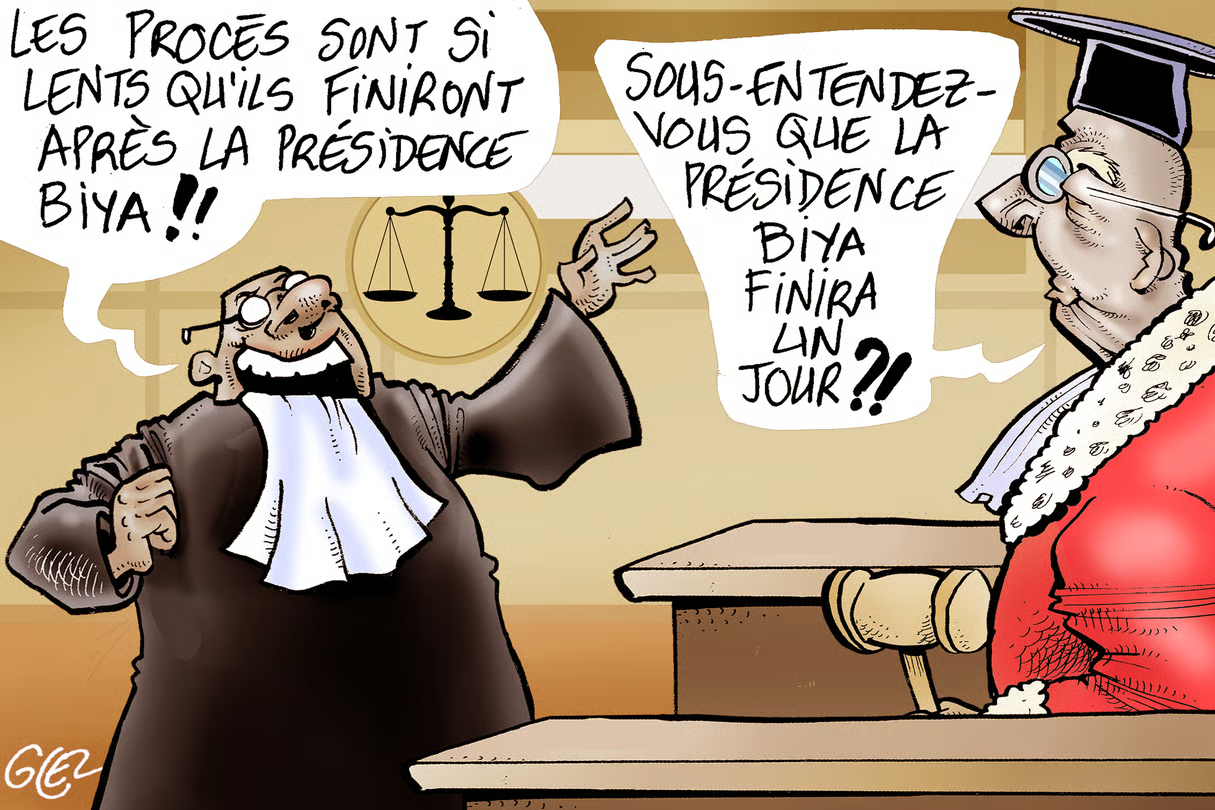
The legal saga surrounding individuals detained after Cameroon’s 2025 presidential election continues to drag on, leaving families and observers in limbo. Months have passed since the initial arrests, yet no resolution appears in sight. As courtroom sessions stretch indefinitely, questions mount about the fairness and transparency of these proceedings.
Detainees, many of whom were swept up during post-election unrest, remain in custody without formal charges in numerous cases. Their prolonged detention has sparked concerns among human rights advocates, who argue that due process is being compromised. The absence of clear timelines for trials fuels uncertainty, with no definitive end to the judicial ordeal in sight.
The roots of the legal stalemate
The origins of this drawn-out legal battle trace back to the contentious 2025 presidential election. Accusations of irregularities and disputed results led to widespread protests, which were met with a heavy-handed security response. Hundreds of individuals were arrested, some accused of inciting violence or participating in unauthorized demonstrations. Others were detained without specific allegations, leaving their fate hanging in the balance.
Legal experts point to systemic challenges within Cameroon’s judicial system as a key factor in the delays. Overburdened courts, procedural bottlenecks, and logistical hurdles have all contributed to the sluggish pace of these cases. Meanwhile, detainees and their legal representatives struggle to navigate a system that seems ill-equipped to deliver timely justice.
Human rights concerns and international scrutiny
The prolonged detention of post-election detainees has drawn sharp criticism from human rights organizations. Reports highlight the psychological toll on those held without trial, as well as the strain on their families. Some detainees have reportedly been subjected to harsh conditions, raising further alarms about potential violations of their fundamental rights.
International observers have also weighed in, urging Cameroonian authorities to ensure that due process is upheld. Calls for transparency and expeditious trials have grown louder, with some nations and organizations threatening to reconsider diplomatic or trade relations if conditions do not improve.
The impact on Cameroonian society
The ripple effects of this judicial limbo extend beyond the courtroom. Communities affected by the post-election unrest remain divided, with lingering mistrust in state institutions. Many families of detainees have spoken out, demanding clarity on their loved ones’ legal status. Meanwhile, political tensions persist, as opposition figures and civil society groups continue to demand accountability from the government.
Economic repercussions are also evident, as uncertainty dampens investor confidence and disrupts local businesses. The prolonged crisis has underscored the need for comprehensive reforms to restore public faith in Cameroon’s legal and political systems.
What’s next for the detainees?
As the legal limbo persists, the future remains uncertain for those still awaiting trial. Advocates insist that swift action is necessary to address the delays, whether through accelerated court proceedings or alternative dispute resolution mechanisms. Without decisive measures, the risk of further erosion of public trust looms large.
For now, the families of detainees continue to wait, their hopes pinned on a system that has yet to deliver justice. Their plight serves as a stark reminder of the human cost of a prolonged legal crisis in Cameroon.