
Gabon revamps its legal framework with massive legislative push
Libreville — In a significant move for the country’s governance, the National Assembly has passed eighteen separate bills during a single plenary session. This unanimous decision marks a pivotal moment in the legislative transformation currently underway within the Fifth Republic.
The new laws cover a wide range of sectors, including digital technology, national identity, land rights, media oversight, and administrative modernization. This comprehensive legislative package is designed to fundamentally reshape the structural foundation of the state while enhancing legal security and economic appeal.
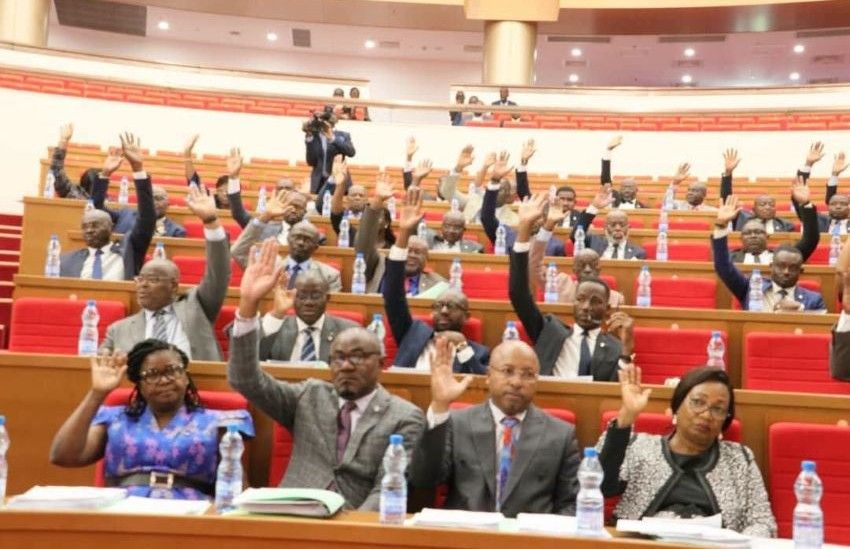
Led by Michel Régis Onanga M. Ndiaye at the Palais Léon-Mba, the assembly reviewed and greenlit the government’s proposals. The sheer volume of legislation handled in one sitting highlights a rare level of institutional coordination, addressing several of the most critical levers of public governance simultaneously.
A new era of structural changes
Among the key updates is a reform of the Haute Autorité de la Communication (HAC). This institution is set to take on an expanded role in a media landscape increasingly defined by digital growth and the rapid spread of information.
The legislature also ratified a new Code of Nationality. In an era where identity and mobility are global priorities, this update provides the state with a modernized legal instrument to manage national belonging. Furthermore, the ratification of new land ownership regulations is expected to have a major impact. Securing property rights is a fundamental requirement for attracting investment and managing urban growth in emerging economies.
Strengthening the rule of law
The total consensus among deputies reflects a shared institutional drive to solidify the rule of law through a modernized legal framework. Both the government and the assembly are aligned on the necessity of adapting national laws to meet contemporary economic, social, and technological hurdles.
This legislative momentum is also a matter of international competitiveness. Global investors prioritize regulatory stability and clear procedures. By upgrading its legal arsenal, Gabon aims to improve its standing in a global environment where the quality of institutions is a deciding factor for capital and development.
Government representatives present during the session commended the deputies for their sense of responsibility and the depth of the discussions. This cooperation underscores a unified approach to the structural reforms that have been in motion for several years.
Moving toward implementation
While this legislative success is a major milestone, it transitions into a more demanding phase: execution. The effectiveness of these laws will ultimately depend on how well administrative bodies, courts, and economic participants apply them on the ground. The true test of these reforms begins with their practical application.
As the current ordinary session nears its end, eight additional bills remain under review by parliamentary committees. Their eventual passage will further complete this reinforced legal structure.
Through this unanimous vote, the National Assembly has confirmed its central role in building the nation’s new institutional framework. This period signifies Gabon entering a phase where legal modernization serves as a primary engine for administrative, social, and economic progress.
