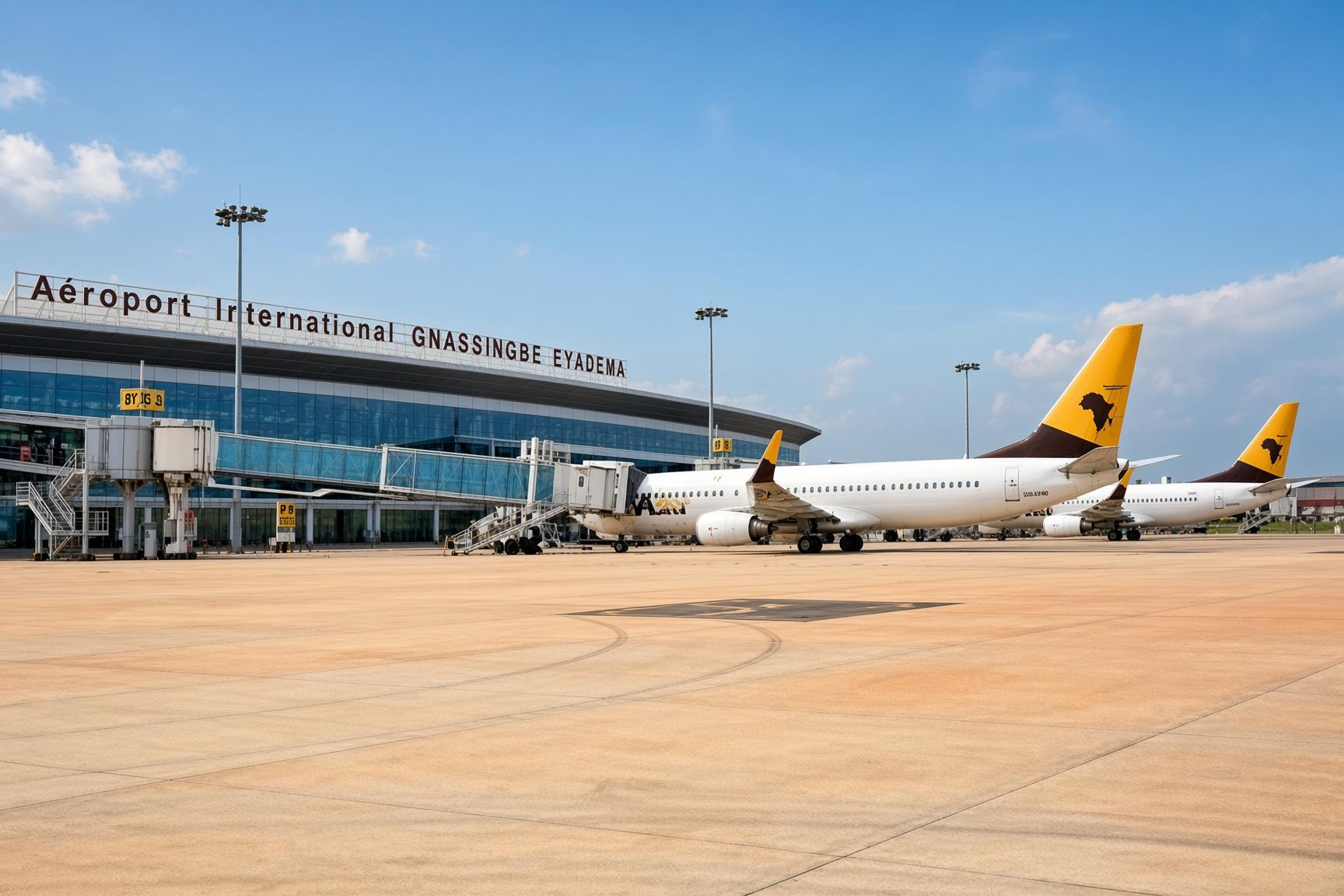
Gabon implements air security fee, sparking a continental aviation debate

Libreville, Wednesday, July 8, 2026 – Gabon has taken a decisive step where many other African nations remain hesitant. The authorities in Libreville have introduced a new contribution of 30 US dollars, equivalent to 18,000 CFA francs, to be levied on international passengers traveling through Libreville airport. This initiative aims to finance the crucial modernization of air border controls and the implementation of the API-PNR system, which has emerged as a leading global standard for aviation security.
Beyond the technical aspects, this decision raises a more profound strategic question for the future of African air transport: how can security be enhanced without undermining the attractiveness of airport platforms already contending with intense regional competition? This debate now extends far beyond Gabon’s borders, engaging stakeholders across the continent.
The gamble on intelligent security
The Gabonese government asserts that this measure is an indispensable necessity in the realm of international aviation. The advanced API-PNR system empowers authorities to collect and analyze passenger information even before aircraft touch down. This proactive approach is designed to significantly bolster security measures.
The objectives are clear: to more swiftly identify wanted individuals, intensify efforts against international trafficking, proactively anticipate terrorist threats, and foster stronger collaboration with international security agencies. This sophisticated system directly aligns with the recommendations issued by the International Civil Aviation Organization (ICAO) and is progressively becoming a global benchmark for air travel safety.
According to Ulrich Manfoumbi Manfoumbi, the Minister of State for Transport, this specific contribution is exclusively earmarked for funding the technological infrastructure. This deployment is being carried out in partnership with the American company Securiport LLC, following an agreement signed on May 21. Importantly, domestic flights are exempt from this new charge; only international passengers will be subject to the additional fee.
For Libreville, the underlying stakes are less about fiscal revenue and more about strategic positioning. In an increasingly complex regional security landscape, the credibility of an air platform now hinges as much on its physical infrastructure as on its demonstrated capability to guarantee the safety of both passengers and partner states.
The economic risks of a miscalculated equation
The challenge, however, lies elsewhere. Africa continues to be the region globally where air travel remains exceptionally costly for passengers. A combination of airport taxes, various fees, and low traffic volumes has gradually transformed airfares into a luxury item for a significant portion of the African populace.
Therefore, adding an extra 30 dollars to an international journey is not a trivial matter. Some observers suggest that this new measure could potentially diminish Libreville’s competitive edge against other established regional hubs such as Abidjan, Douala, Lomé, or Addis Ababa. These cities are themselves locked in a silent battle to attract both airlines and transit passengers.
The sensitivity of this issue is heightened by Gabon’s declared ambition to transform Libreville into a major regional platform, particularly with the development of Fly Gabon. Yet, in modern aviation, pricing frequently remains the primary decision-making factor for both passengers and airlines.
Acknowledging this delicate balance, the government has announced the formation of an inter-ministerial working group. Its mandate is to pinpoint and eliminate certain taxes deemed less relevant, with the aim of offsetting the impact of this new contribution on the overall cost of air tickets.
IATA as an arbiter of credibility
While politically announced and initiated, this measure must still clear a significant hurdle: securing operational validation from the International Air Transport Association (IATA). Although IATA does not dictate national fiscal policies, it plays a pivotal role in the mechanisms for collecting fees integrated into air tickets and in harmonizing international procedures. Its involvement will be crucial to prevent conflicts with air carriers and to ensure the seamless integration of this new system into global reservation networks.
Fundamentally, Gabon is currently navigating one of the major dilemmas confronting contemporary African air transport. The era where competitiveness was solely built upon physical infrastructure is drawing to a close. The airports of tomorrow will be judged on their ability to harmoniously combine robust security, fluid control processes, regional connectivity, and effective cost management.
Libreville is thus betting that security now represents a strategic investment rather than a mere administrative expenditure. The critical question remains whether travelers, airlines, and regional markets will share this perspective. In the global aviation landscape of the 21st century, the nations that effectively secure their borders without closing their doors will likely be those that capture the future flows of air traffic.