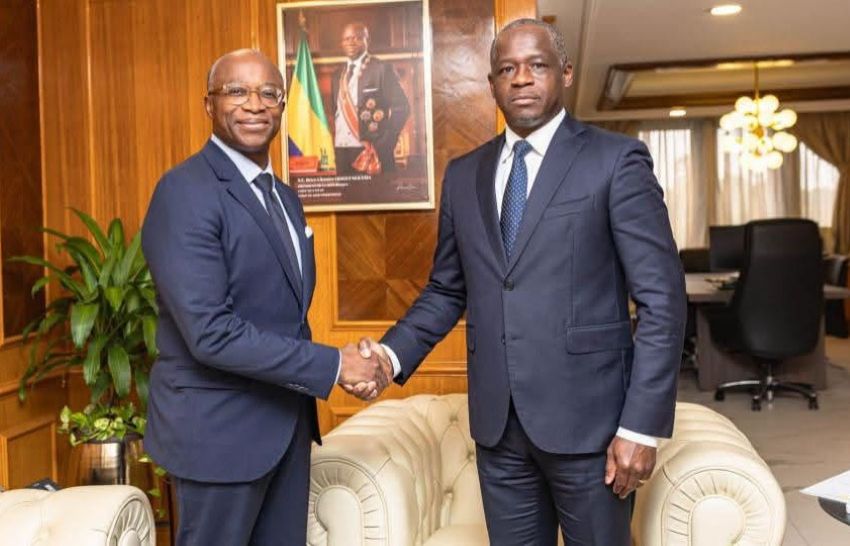
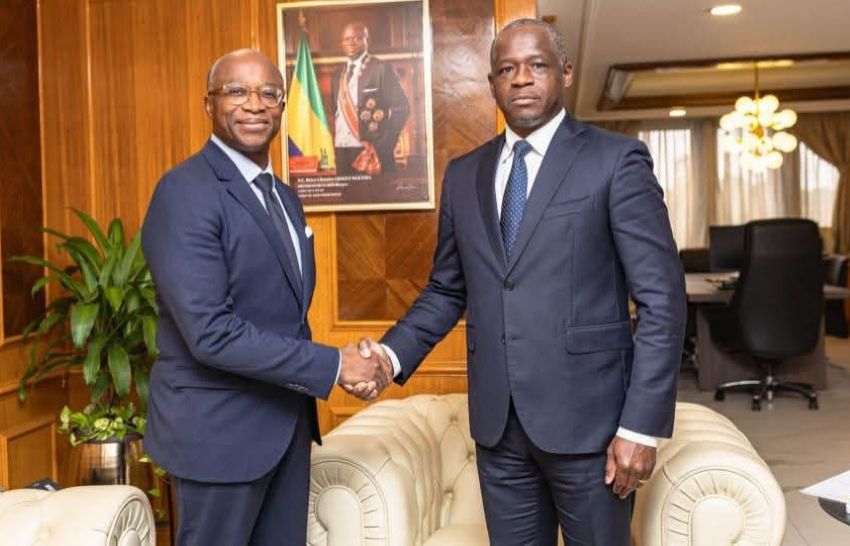
Libreville, August 9, 2026 – Gabon is redefining its natural capital as a cornerstone of diplomacy, climate action, and economic growth. The August 5 meeting between Vice-President Hermann Immongault and a delegation from Monaco’s Prince Albert II Foundation marks a pivotal moment in this evolving strategy.
Beyond environmental discussions, Libreville is positioning itself to build international partnerships that fund, safeguard, and sustainably leverage its forests, biodiversity, and marine resources. This shift reflects a broader ambition: to transform conservation from a cost into an investment in the nation’s future.
The Monegasque delegation, led by Charles Oula Siehe, Special Advisor for Africa at the Prince Albert II Foundation, engaged with Immongault and Maritime Economy Minister Aimé Martial Massamba. Their talks centered on deepening the Foundation’s footprint in Gabon and expanding collaborative frameworks across key sectors.
Why Gabon’s natural assets matter globally
Gabon’s selection as a priority partner is no coincidence. Its vast rainforests, marine ecosystems, and unparalleled biodiversity represent a natural heritage of global significance. As climate urgency intensifies and nature-based solutions gain traction, Gabon’s assets have become both an environmental responsibility and a strategic asset—capable of attracting international funding and investment.
The Congo Basin: A climate linchpin
Monaco’s renewed focus on the Congo Basin—one of Earth’s largest carbon and biodiversity reservoirs—aligns with the Foundation’s 20th-anniversary goals. For Gabon, the opportunity lies in aligning this international ambition with domestic priorities. Potential cooperation spans critical areas: forest protection, biodiversity conservation, carbon financing mechanisms, and blue economy development.
Blue economy: Balancing prosperity and preservation
For a nation with extensive maritime resources, sustainable ocean management is inseparable from economic policy. The blue economy offers a pathway to value creation—provided it harmonizes responsible exploitation, ecosystem conservation, and equitable benefits for coastal communities.
Forests as strategic capital
The conversation has evolved beyond preservation. Gabon now seeks to monetize the global services its forests provide—carbon sequestration, biodiversity support, and climate regulation. Carbon financing mechanisms could unlock resources, but only if paired with transparent, credible systems that guarantee fair compensation for conservation efforts.
From conservation to diplomatic leverage
The Libreville talks underscore Gabon’s evolving environmental diplomacy. No longer a constraint, nature protection has become a pillar of development, international cooperation, and national influence. Yet the true test lies in execution: turning commitments into tangible projects, skills transfers, job creation, and measurable ecosystem protection.
For both nations, this partnership is mutually beneficial. Monaco brings expertise, networks, and funding capacity, while Gabon offers a strategic foothold in the Congo Basin—a region whose ecological health directly impacts global climate stability. The August 5 meeting was more than a diplomatic engagement; it was a step toward a new model where natural capital drives sovereignty and sustainable growth.
In a world where forests, oceans, and biodiversity are increasingly treated as strategic assets, Gabon’s approach mirrors the rigor it applies to economic agreements. The goal isn’t merely securing support for conservation—it’s securing recognition of the value already protected. If successful, this Gabon-Monaco collaboration could redefine how African nations leverage their natural heritage for development and influence.