Ebola outbreak in democratic republic of Congo spirals out of control
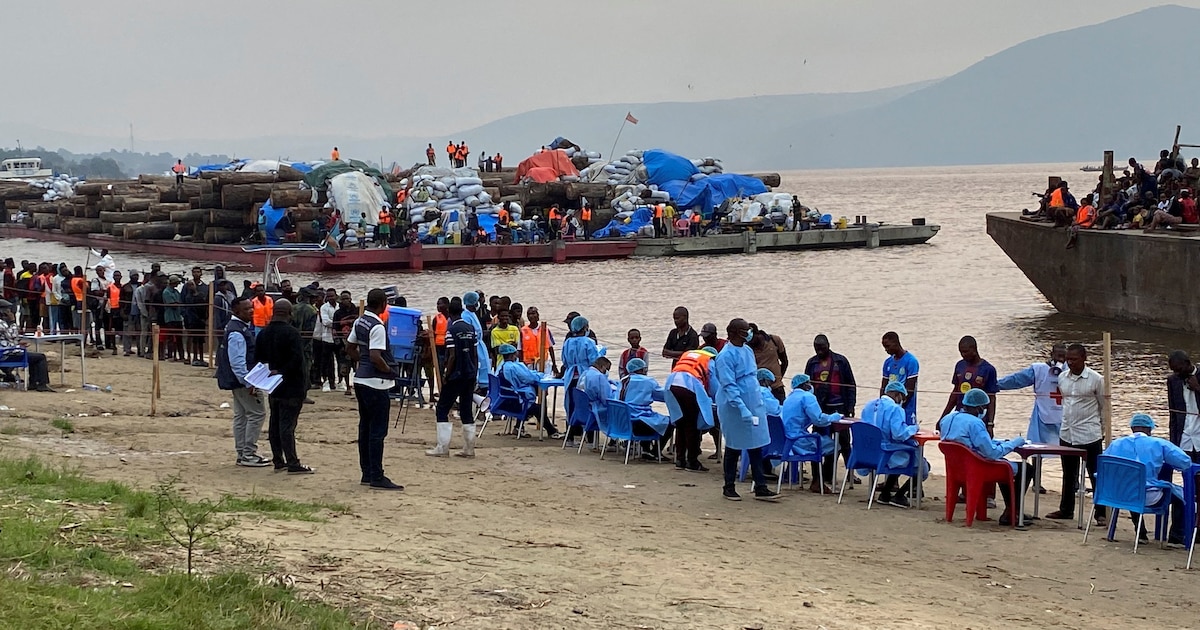
The Ebola virus in the Democratic Republic of Congo shows no signs of slowing down. On August 5, the medical deputy director of Médecins Sans Frontières (MSF) delivered this stark assessment during the World Health Organization’s official visit to the eastern region. Two and a half months since the outbreak was declared on May 15, it has become the second-largest epidemic on record, with a transmission rate unlike any previously observed. Official figures from Congolese authorities and the WHO indicate 1,850 deaths out of nearly 4,000 confirmed cases, pushing the fatality rate beyond 40%.
The Bundibugyo strain, responsible for this devastation, has already claimed more lives in less time than during prior outbreaks. According to the Africa Centres for Disease Control and Prevention (Africa CDC), this strain has killed over five times as many people in a comparable period. During the 2018-2020 outbreak in DRC, it took over a decade to reach a similar death toll. “I cannot confidently state that we have full control over this epidemic at this moment,” admitted Jean Kaseya, director-general of Africa CDC, in late July.
Violence and instability hamper disease containment
The eastern DRC remains a battleground, making medical intervention and case tracking nearly impossible. The Ituri province, the epicentre of the outbreak, faces relentless attacks by the ADF, an armed group originating from Uganda, while numerous militias vie for control over land, minerals, and local influence. Meanwhile, North Kivu, another affected region, has been partially seized by the M23, a Rwanda-backed armed faction, following prolonged clashes with the Congolese army. These conflicts have displaced millions, forcing people into Uganda, Burundi, or other Congolese territories under dire humanitarian conditions.
Compounding the crisis, early detection and surveillance systems were critically underfunded, delaying the identification and confirmation of cases. Contact tracing remains severely inadequate—MSF reports that in Bunia, the outbreak’s ground zero, 90% of admitted patients were not listed contacts. Across Ituri, only 59% of contacts have been monitored, far below the Africa CDC’s target of tracing 40 contacts per confirmed urban case. With an estimated 134,400 individuals needing follow-up, only 17,500 have been reached, leaving critical gaps in containment. Tragically, 60% of fatalities occurred in communities rather than healthcare facilities.
Experimental treatments and delayed international aid
Efforts to curb the epidemic are underway, though progress remains limited. Oxford University has launched a clinical trial for a Bundibugyo-specific vaccine, with the first volunteer receiving a dose this month. The trial, involving 50 adults, aims to assess safety before potential large-scale deployment. The Coalition for Epidemic Preparedness Innovations (CEPI) is also funding a vaccine candidate by Hilleman Laboratories in Singapore, targeting rapid production and testing in DRC.
In the absence of an approved Bundibugyo vaccine, Africa CDC announced plans to administer the existing Zaire strain vaccine as a precaution. Early evidence suggests it mitigates severe symptoms and prevents deaths, even against the Bundibugyo variant. Additionally, over 40 patients are participating in trials for a combination of experimental treatments. Jean Kaseya has advocated for expanded use of remdesivir, an antiviral, citing Uganda’s success in containing imported cases. “Uganda’s 10% fatality rate is largely due to their rapid deployment of remdesivir for patients and high-risk contacts,” he noted. Health experts warn this outbreak could surpass the 2014-2016 West African epidemic—the deadliest on record, with over 11,000 fatalities.
Global response falls short amid funding gaps
International aid arrived too late to prevent the current crisis. Early in 2025, USAID’s long-standing health and medical funding to DRC was abruptly halted under the previous U.S. administration, leaving the country vulnerable. On August 5, the U.S. State Department announced a $242 million aid package, increasing total U.S. Ebola response funding to $512 million. This allocation finally enables the WHO and Africa CDC to fund their six-month containment plan, estimated at $518 million. However, critics argue this amount pales in comparison to past U.S. humanitarian investments. Despite this, the U.S. remains the largest contributor to the DRC Ebola response, far outpacing the European Union’s contributions.