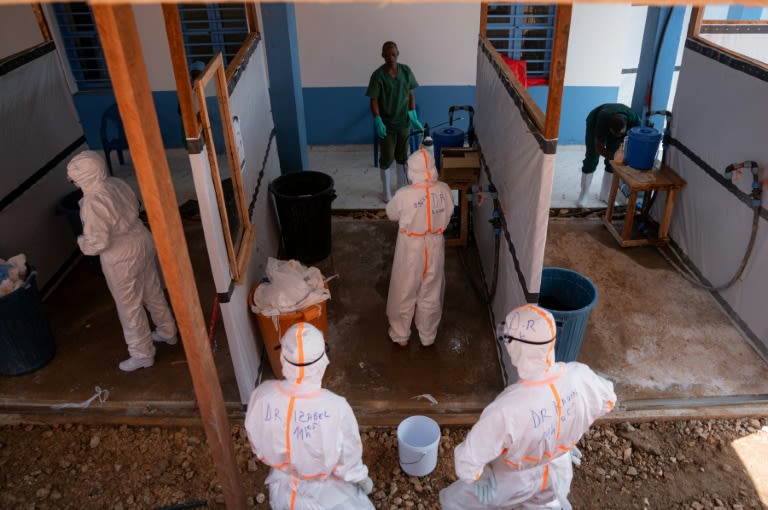
Ebola in DRC: nurses demand urgent payment amid rising crisis
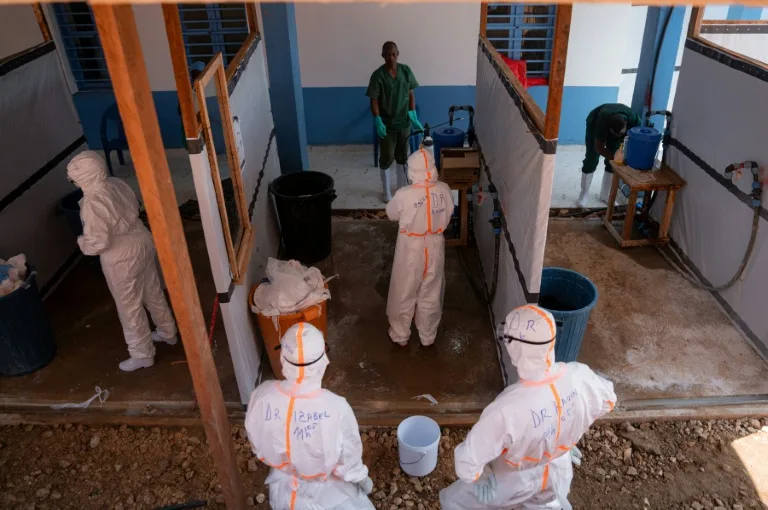
The International Council of Nurses (ICN) has urgently called on Congolese authorities to compensate healthcare workers battling Ebola in the Democratic Republic of Congo (DRC), warning that delayed payments are undermining the fight against the deadly virus.
The DRC declared its 17th Ebola outbreak on May 15, yet three months later, the response remains severely under-resourced. Healthcare facilities in one of the world’s poorest nations struggle with critical shortages, hampering efforts to contain the virus.
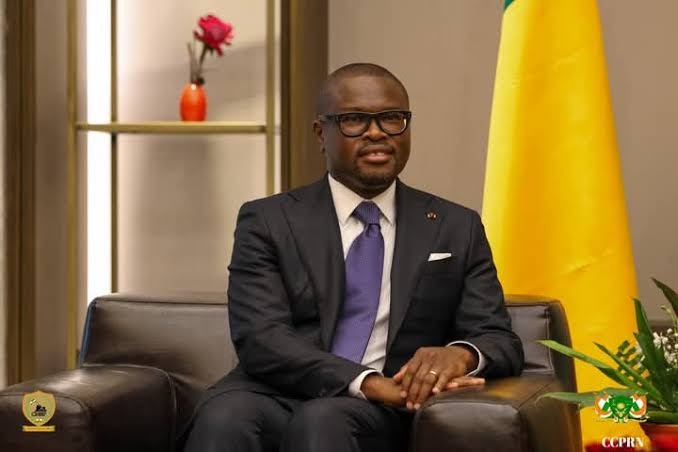
“You cannot fight Ebola without paying those leading the battle,” declared ICN CEO Howard Catton in a statement. The ICN, a global federation representing over 140 national nursing associations and more than 30 million nurses worldwide, has issued a formal appeal to DRC’s Health Minister, Roger Kamba, demanding immediate action.
“Nurses and healthcare workers risk their lives daily to protect communities, often at great personal cost. Yet months into this crisis, many have still not received their salaries,” Catton added. “This is unacceptable—healthcare workers must be paid promptly, regularly, and equipped with the tools they need to do their jobs safely.”
The ICN, founded in 1899 and headquartered in Geneva, has outlined three urgent demands: immediate payment of overdue wages and risk allowances, guaranteed future salary payments, and provision of adequate personal protective equipment (PPE), insurance, and other essential safeguards.
According to the ICN, frontline nurses and healthcare staff in the DRC report unpaid salaries spanning two to three months. The crisis has reached a critical juncture, with the current outbreak already surpassing previous deadly waves in both scale and speed of transmission.
Since its declaration, the outbreak has claimed over 2,128 lives and infected 4,566 people—figures that, in just three months, dwarf the toll of the worst Ebola outbreak in West Africa from 2014 to 2016. The World Health Organization (WHO) has described it as the second-deadliest Ebola epidemic on record, warning that it could soon overtake the 2014–2016 crisis if containment efforts fail.
Funding gaps remain a major obstacle. Of the $518 million required for the joint Africa CDC-WHO preparedness and response plan launched in early June, only $264 million has been mobilized. Additionally, no specific vaccines or treatments exist yet for the Bundibugyo Ebola variant driving the current outbreak.
In the absence of targeted vaccines, the WHO is pushing for clinical trials using the Ervebo vaccine, currently approved for the Zaire strain. “We are finalizing the protocol for submission to DRC regulatory authorities,” stated Vasee Moorthy, WHO’s Head of Research & Development, during a recent briefing.

Thérèse Nguimfack
Journalist
Related Story