As the revered Eid al-Adha festival approaches, Côte d’Ivoire’s National Council Against High Cost of Living (CNLVC) is proactively implementing a strategy centered on bolstering local production. Their primary objective: to maintain stable prices in the sheep market. Under the purview of the Ministry of Commerce, the CNLVC identifies domestic livestock farming as the most immediate and effective lever to meet the extraordinary demand characteristic of Tabaski, a period when tens of thousands of sheep are sold within a mere few days.
Ivorian sheep farming seeks significant expansion
Côte d’Ivoire has historically relied on Sahelian livestock hubs, notably Mali, Burkina Faso, and Niger, for its supply of small ruminants. This structural dependence often results in elevated costs during peak seasons, as Sahelian breeders prioritize more lucrative markets and logistical expenses surge. By championing national supply, the CNLVC aims to mitigate this external vulnerability and smooth out retail price fluctuations in major urban centers, particularly Abidjan.
The practical implementation of this initiative involves mobilizing Ivorian livestock farmers and fostering enhanced coordination among all participants in the supply chain, from producers to final retailers. The monitoring unit diligently tracks market trends and engages in dialogue with professional organizations to preempt potential supply and price tensions. Nevertheless, the local sheep sector remains modest when juxtaposed with the demand for several hundred thousand animals required for Tabaski alone, which inherently limits the immediate impact of domestic sourcing.
High cost of living: a critical political front in Abidjan
The issue of purchasing power holds a significant and sensitive position on the Ivorian authorities’ agenda. Since its re-establishment, the CNLVC has launched numerous targeted operations focusing on widely consumed products, ranging from foodstuffs to essential goods. Given its intense commercial activity and profound symbolic importance for the nation’s Muslim communities, Tabaski serves as a crucial real-world test of these regulatory mechanisms’ efficacy.
For the government, the stakes extend beyond mere price regulation. The initiative also aims to bolster a sector with substantial potential for rural employment in a country where demographic growth fuels a persistent demand for animal protein. The expansion of local livestock production aligns seamlessly with the National Livestock Development Program, an ongoing endeavor that has for several years sought to reduce the national import bill for meat and dairy products.
Logistics, regional integration, and model limitations
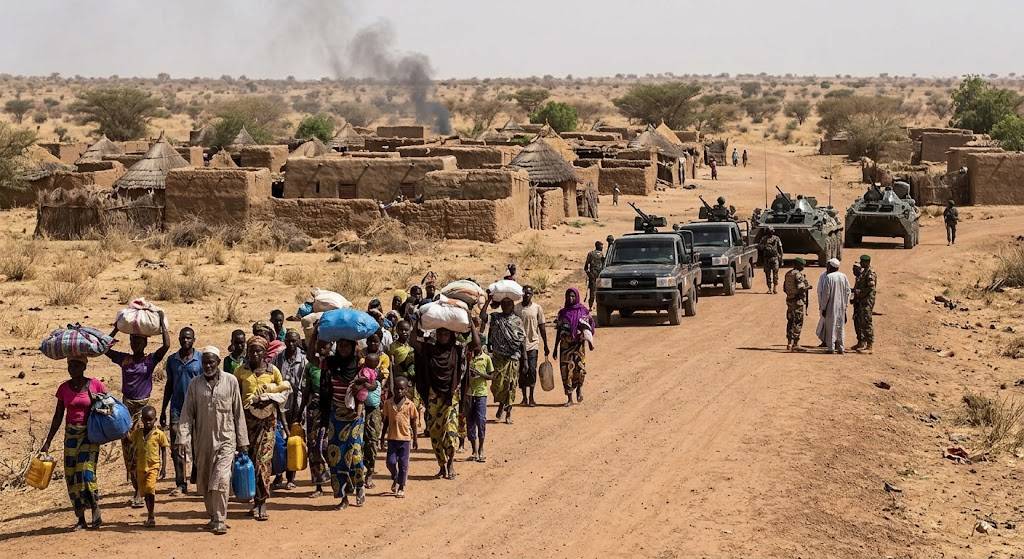
However, stabilizing Tabaski sheep prices cannot be achieved without continued regional cooperation. The vital supply corridors connecting Sahelian production areas to Ivorian markets remain indispensable, and their smooth operation is critical for ensuring adequate supply. Security challenges in certain parts of the Sahel, intermittent border closures, and rising transport costs exert pressure on profit margins, ultimately affecting consumers in Abidjan.
Consequently, the CNLVC plans to combine the mobilization of national supply with rigorous surveillance of import channels and a determined fight against speculative practices. This multi-faceted approach reflects a structural understanding of the high cost of living, where short-term, ad-hoc regulation is no longer sufficient. For industry operators, the credibility of this system will be measured by the authorities’ ability to prevent a price surge comparable to those witnessed in previous years, when the cost of a medium-sized sheep frequently surpassed 150,000 FCFA in Abidjan’s markets.
The equation remains challenging. It necessitates a significant scaling up of local livestock operations, close coordination with Sahelian partners, and heightened vigilance over distribution margins. In the short term, the perception of Ivorian households’ purchasing power will be determined in the livestock pens and market stalls. The CNLVC is determined to transform the upcoming Tabaski into a clear demonstration of its stabilization strategy’s effectiveness.